Chimney Anatomy: 10 Parts Every Homeowner Should Know
| Factor | Older/historic masonry | Modern masonry |
|---|---|---|
| Mortar binder | Lime-based, low or no Portland cement | Portland-cement-based, harder curing |
| Mortar flexibility | Softer, some self-healing of hairline cracks | Rigid once cured, cracks stay cracked |
| Brick type | Handmade or soft-mud, lower fire temperature | Extruded, wire-cut, higher fire temperature |
| Brick porosity | More absorbent, prone to spalling | Denser, less water uptake |
| Typical liner status | Often unlined, undersized, or original clay tile | Liner sized and installed to current standards |
| Repair priority | Match mortar chemistry, not just color | Standard modern mortar mixes generally compatible |
| Common failure pattern | Brick face spalling; joint self-healing can mask real deterioration | Joint cracking tends to precede brick damage |
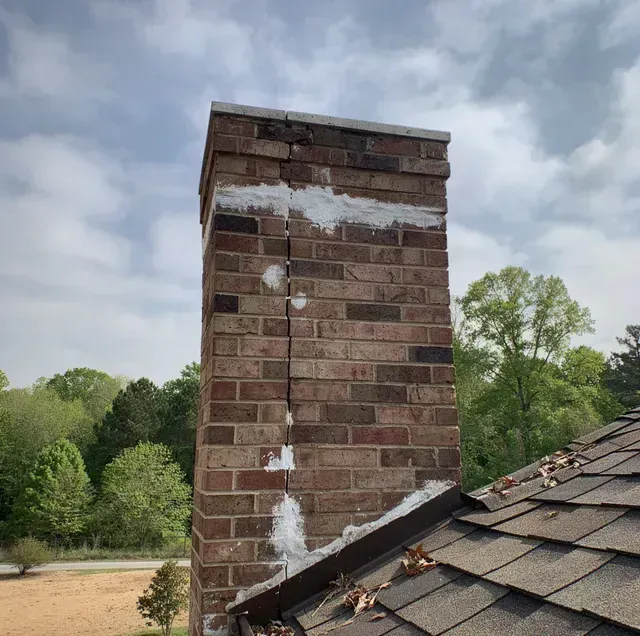
Older chimneys were often built on shallower footings than current standards call for, and after decades of ground movement and the chimney's own weight, some settling is common: a slight lean, a visible gap where the chimney meets the roofline, or a stair-step crack pattern following the mortar joints diagonally. A small, stable lean or an old, dormant crack isn't automatically an emergency, but telling "old and stable" from "active and worsening" benefits from a hands-on inspection rather than a guess from the ground.
A technician can often get a first read on mortar type without lab testing. Dragging a metal key or nail across a joint that leaves a visible scratch and a little powder points toward a softer, lime-rich mix, while a joint that resists scratching and holds a sharp edge points toward a harder, Portland-heavy mix. This test doesn't replace a proper inspection or lab analysis of the actual composition, but it's a useful first check before assuming a chimney can be treated like standard modern construction.
The inspection report shows up as a PDF, or the technician is standing in your living room with a flashlight, and somewhere in the explanation a word goes by that you don't recognize. The crown has a hairline crack. There's old animal debris on the smoke shelf. The chase cover is rusting through. You nod, because stopping to ask "wait, what is that" mid-conversation feels like admitting you don't know your own house, and you file the term away to look up later. Most homeowners never actually look it up. They just wait for the next report and hope the same words come with enough context to guess.
A chimney is a system with distinct parts, each doing a specific job, and knowing what they're called and where they sit makes every future conversation with a technician faster and less confusing. This is a reference, not a repair guide: think of it as the map you wish you'd had the first time someone pointed a flashlight up your flue and started using words you'd never heard before. We'll work from the top of the chimney down to the floor of the fireplace, since that's roughly the order a technician walks through during an inspection.
Chimney Cap
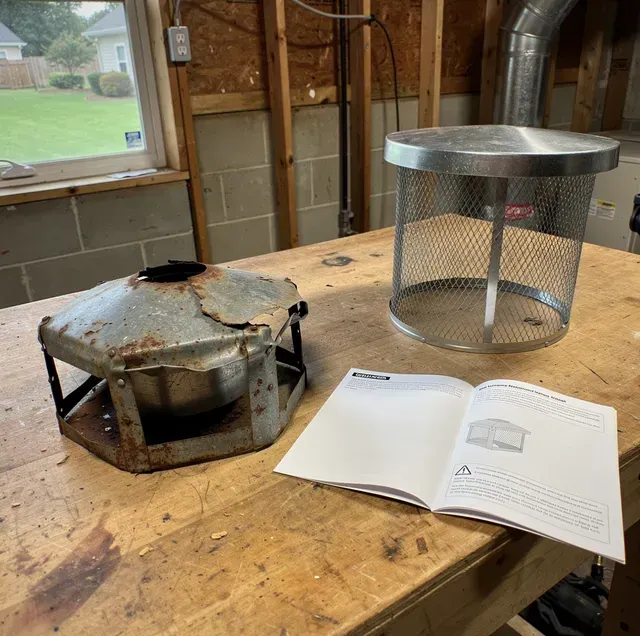
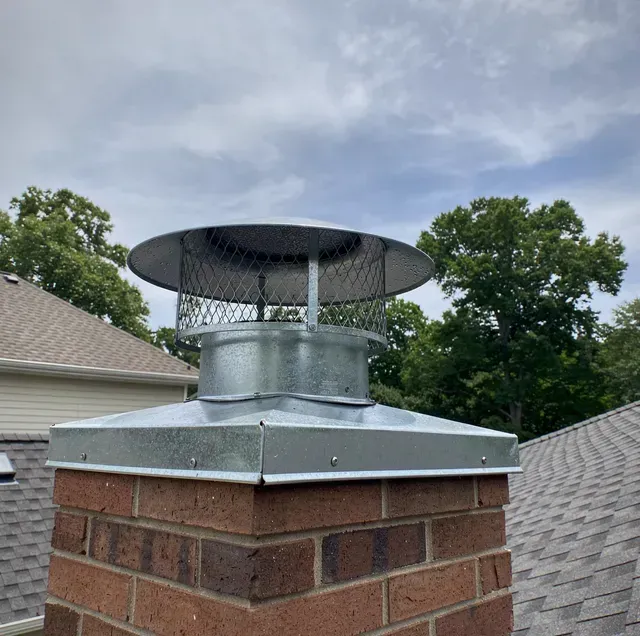
The cap sits at the very top of the flue, usually a metal frame with a mesh screen on the sides and a solid cover overhead. The cap's job is to keep rain, snow, and debris out of the flue while stopping birds, squirrels, and raccoons from treating an open pipe like a ready-made den. It also acts as a spark arrestor, the mesh catching embers before they can land on a roof. A chimney without a cap, or with one that's crushed or rusted open, is one of the most common reasons animals end up nesting inside a flue.
Chimney Crown
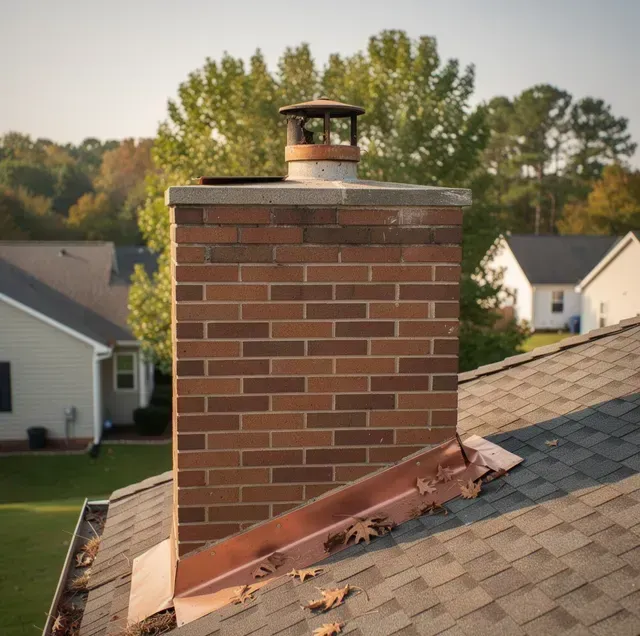
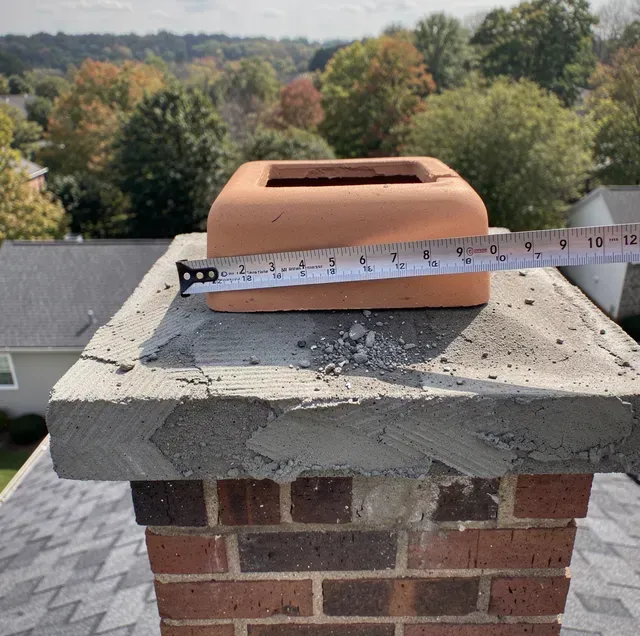
Just below the cap, the crown is the solid slab, usually poured concrete or a mortar wash, that caps off the top of the masonry chimney itself and sheds water away from the flue tiles and the brick below it. The crown's job is to act as the roof of the chimney, sloping away from the flue opening so water runs off instead of pooling. A cracked or poorly sloped crown is one of the single biggest sources of water intrusion into a masonry chimney, since water that gets past it travels straight down through the brick, the flue, or both.
Chase and Chase Cover
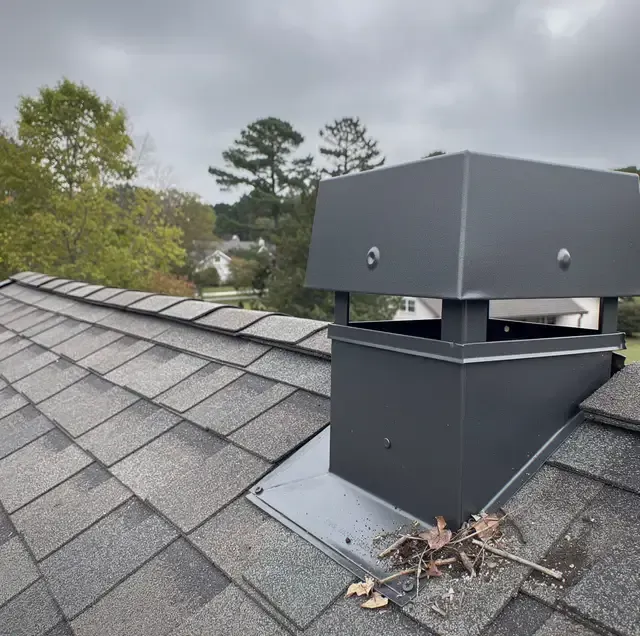
Masonry chimneys have a crown; factory-built (prefabricated) fireplace systems have a chase instead. The chase is the boxed enclosure, typically framed and sided to match the house, that surrounds the metal flue pipe running up from a factory-built fireplace or insert. The chase's job is to protect and conceal the flue pipe, the way masonry protects a brick chimney's liner. On top of the chase sits a chase cover, usually galvanized steel, stainless steel, or copper, doing the same water-shedding job a crown does on a masonry stack. Chase covers are thinner and more exposed than a poured crown, so they tend to rust or seal-fail on a shorter timeline.
Flashing
Flashing is the layered metal seal where the chimney passes through the roofline, tucked partly under the shingles and partly against the masonry or chase. Flashing's job: it's built in two interlocking pieces, step flashing woven into the roof shingles course by course and counter flashing set into the masonry above it, so water sheds down and off the roof instead of finding the gap where two very different building materials meet. Because it's assembled from small overlapping pieces rather than one continuous barrier, flashing is also one of the parts most likely to loosen, rust, or open a gap over time.
Flue and Liner
The flue is the vertical shaft that carries combustion gases and smoke up and out of the house, and the liner is the material lining the inside of that shaft: clay tile, stainless steel, or a cast-in-place cementitious coating, depending on the chimney's age and how it was built or relined. The liner's job: it's the actual barrier between hot combustion byproducts and the porous masonry or framing around the flue, and without an intact one, heat and moisture reach materials that were never meant to sit that close to it. Liner condition and type matter enough that they deserve their own deep look, so we'll keep this to the basics here: every working fireplace or appliance needs one, and it's the part a technician's camera inspection is checking most closely.
Smoke Chamber
Below the flue, where the straight vertical shaft transitions down into the wider firebox opening, is the smoke chamber, a funnel-shaped space usually built from corbelled (stepped-in) brick and then parged, or smoothed over, with a layer of mortar. The smoke chamber's job: it compresses smoke and combustion gases from the wide firebox opening into the narrower flue above, and a rough, unparged interior with exposed brick corners disrupts that airflow, which is part of why an older or poorly built smoke chamber can make a fireplace smoke into the room even when the flue itself is clear.
Smoke Shelf
At the bottom of the smoke chamber, directly behind the damper, sits the smoke shelf, a horizontal ledge formed where the vertical back wall of the firebox meets the sloped front wall of the smoke chamber. The smoke shelf's job is to deflect downdrafts and cold air coming down the flue back upward instead of letting them push smoke into the room, acting like a small backstop at the base of the chamber. It's also where debris collects: soot, small tile fragments, and occasionally nesting material end up sitting on the shelf, out of sight unless a technician looks up with a light or a camera.
Damper
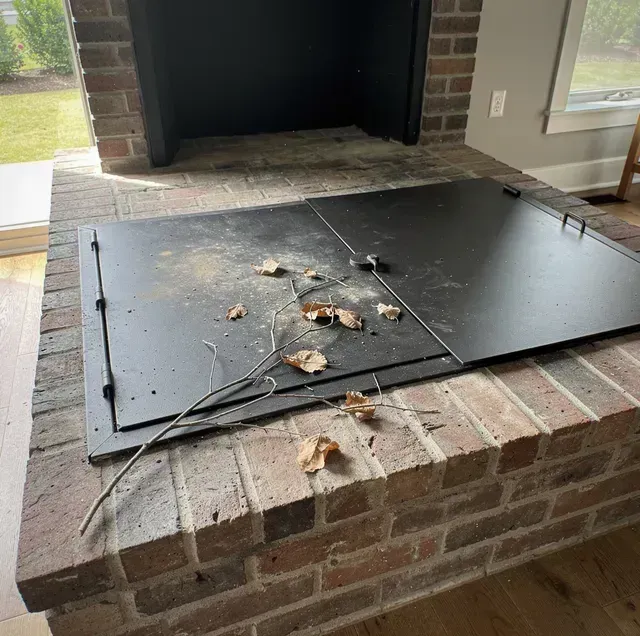
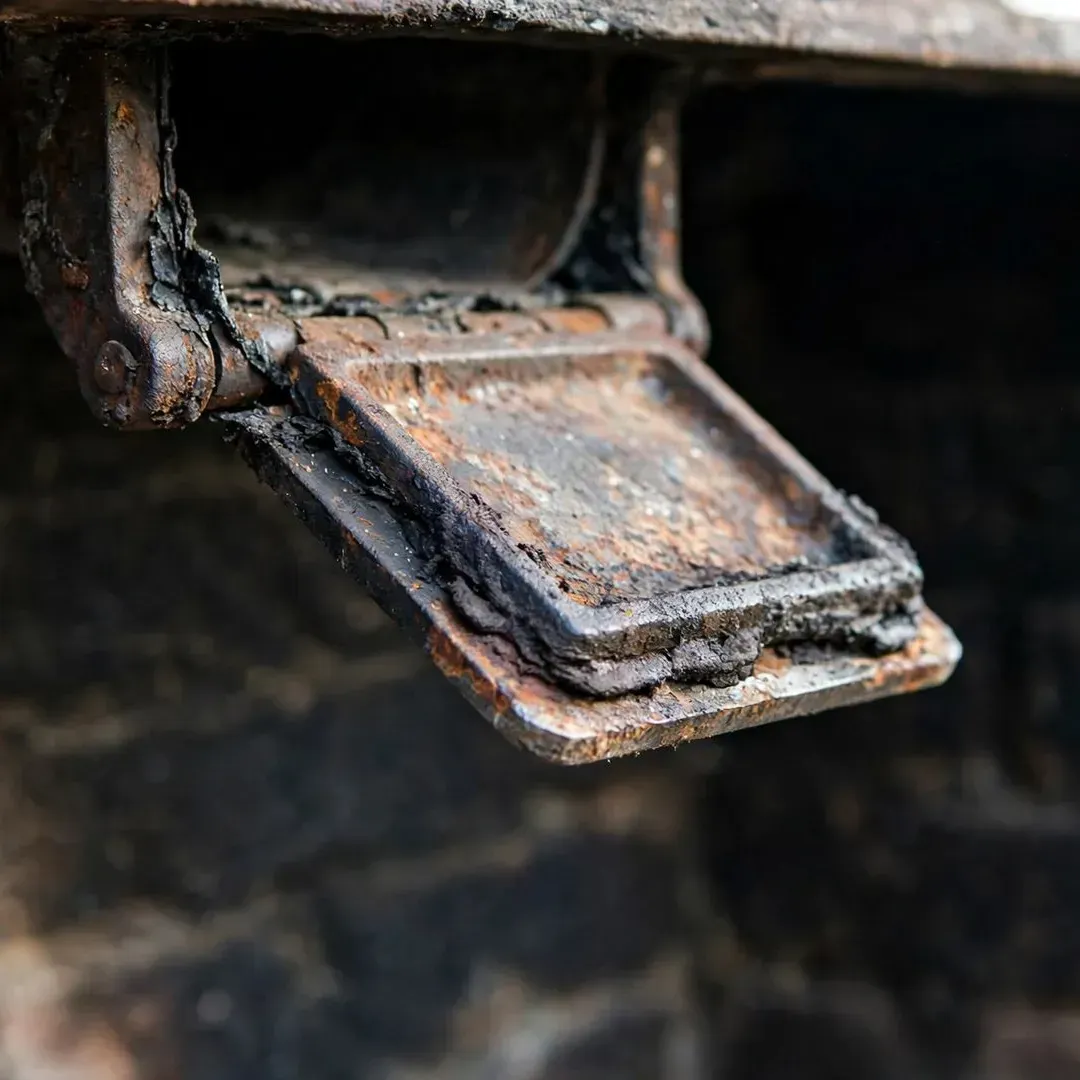
The damper is the movable plate that opens and closes the path between the firebox and the flue above it. Traditional dampers are a hinged metal flap mounted at the throat, right in front of the smoke shelf at essentially the same level; newer systems often use a top-mount damper instead, a sealing plate at the very top of the flue operated by a cable or lever from the firebox. The damper's job: it closes off the flue when there's no fire burning, so conditioned indoor air doesn't pour straight up the chimney, and it opens fully to let smoke and gases draft out when you do have a fire going. A damper that won't seat properly, whether warped, rusted, or coated in old creosote, wastes energy and can also affect how well a fireplace drafts once lit.
Firebox
The firebox is the chamber where the fire itself actually burns, lined with firebrick, a dense, heat-rated brick, and set together with refractory mortar rather than standard masonry mortar, since ordinary mortar breaks down under direct flame contact. The firebox's job: it contains combustion heat and directs it, and the smoke it produces, up toward the damper and smoke chamber above, all while protecting the surrounding structural masonry from temperatures a regular brick wall was never built to handle.
Hearth Extension
The hearth extension is the fire-resistant surface, usually brick, tile, or stone, that extends out from the firebox opening onto the floor of the room, typically both in front of and to the sides of the opening. The hearth extension's job is to protect the floor and nearby combustibles from embers, sparks, and radiant heat that land or radiate outward while a fire is burning, which is why its size is scaled to the firebox opening rather than left to preference. It's a separate structural piece from the firebox itself and can develop its own cracks or settling issues independent of anything happening higher in the system.
Chimney Parts at a Glance
| Part | What It Does | What a Technician Checks For |
|---|---|---|
| Cap | Keeps out rain, debris, and animals; arrests sparks | Rust, crushed mesh, missing or undersized cap |
| Crown | Sheds water off the top of a masonry chimney | Cracks, poor slope, separation from the flue |
| Chase/chase cover | Encloses and caps a factory-built flue pipe | Rust-through, gaps, failed seals |
| Flashing | Seals the roofline where the chimney passes through | Lifted edges, rust, gaps at the counter-flashing line |
| Flue/liner | Carries and contains combustion gases | Cracked tile, corrosion, thinning, offsets |
| Smoke chamber | Funnels gases from firebox width to flue width | Rough or unparged brick, corbel gaps |
| Smoke shelf | Deflects downdrafts; collects debris | Buildup, nesting material, structural cracks |
| Damper | Opens/closes the path to the flue | Warping, rust, incomplete seal, creosote coating |
| Firebox | Contains the fire itself | Cracked or missing firebrick, mortar joint gaps |
| Hearth extension | Protects the floor from heat and embers | Cracking, settling, undersized coverage |
Frequently Asked Questions
If a chimney has a top-mount damper instead of a throat damper, does it still have a smoke shelf?
Yes, the smoke shelf itself doesn't go away, but a top-mount damper changes how the two parts relate to each other. With a traditional throat damper, the damper and shelf sit right next to each other, so debris on the shelf and a damper that won't seal are often checked together. With a top-mount damper sealing the very top of the flue instead, the smoke shelf sits much farther below the sealing point, inside a column of flue that stays exposed to outside air and debris year-round even when the damper up top is fully closed.
What's the real difference between a cap and a crown?
The cap is the removable metal piece with mesh screening that sits directly over the flue opening; the crown is the solid, non-removable slab underneath it that covers the entire top surface of the masonry chimney, flue and all. You can replace a cap in an afternoon. Replacing or resurfacing a crown is masonry work.
Do factory-built fireplaces have all ten of these parts?
Not exactly the same set. A factory-built system uses a chase and chase cover instead of a masonry crown, and its metal flue pipe is typically a listed, insulated assembly rather than a tile- or masonry-lined shaft, so there's no traditional smoke chamber or smoke shelf the way a masonry fireplace has. The firebox, damper, and hearth extension are still present in some form on most models.
Why does the hearth extension have to be a specific size instead of however big looks right?
Sizing generally scales with the firebox opening: as a rough industry guideline, a larger fireplace opening calls for the extension to reach further out from the opening and further to each side than a smaller one would need, since embers and radiant heat travel outward roughly in proportion to how large the fire in front of them can get. A hearth extension built too small for its opening leaves a gap of unprotected flooring right where sparks are most likely to land, which is one of the first things a technician measures on an older fireplace that's never been inspected.
Can a single chimney have more than one flue running through it?
Yes, this is common in older homes with a fireplace and a furnace or water heater vented through the same masonry structure. Each appliance is meant to have its own separate, dedicated flue; a shared flue is one of the first things a technician flags, since combustion gases from each appliance can interfere with the other's draft.
What does a technician see when they look into the smoke chamber that a homeowner can't from the hearth?
Standing at the hearth, you're looking up at the underside of the smoke shelf at best. A technician using a flashlight and mirror, or a camera on a longer inspection, can see whether the corbelled brick was parged smooth during construction, spot gaps between courses, and confirm there's no accumulated debris sitting on the shelf itself, none of which is visible from floor level even with the damper wide open.
Putting the Map to Use
None of these parts work in isolation. A crown that's cracked sends water into a liner it was never meant to touch, and a smoke shelf buried in debris changes how well the damper and firebox below it perform even though neither one is technically broken. The next time an inspection report or a technician's explanation mentions a part by name, you'll know roughly where it sits and what job it's doing, which makes it a lot easier to understand why a recommended repair matters instead of taking it on faith.
Schedule a full chimney inspection — have a CSIA-certified technician walk you through every part of your system, from the cap to the hearth extension. Perfect Chimney Cleaning serves Greensboro, High Point, and Winston-Salem. Call (336) 604-6711.
Recent Posts