Chimney Care for Empty Homes: What Vacancy Hides
| Factor | Older/historic masonry | Modern masonry |
|---|---|---|
| Mortar binder | Lime-based, low or no Portland cement | Portland-cement-based, harder curing |
| Mortar flexibility | Softer, some self-healing of hairline cracks | Rigid once cured, cracks stay cracked |
| Brick type | Handmade or soft-mud, lower fire temperature | Extruded, wire-cut, higher fire temperature |
| Brick porosity | More absorbent, prone to spalling | Denser, less water uptake |
| Typical liner status | Often unlined, undersized, or original clay tile | Liner sized and installed to current standards |
| Repair priority | Match mortar chemistry, not just color | Standard modern mortar mixes generally compatible |
| Common failure pattern | Brick face spalling; joint self-healing can mask real deterioration | Joint cracking tends to precede brick damage |
Older chimneys were often built on shallower footings than current standards call for, and after decades of ground movement and the chimney's own weight, some settling is common: a slight lean, a visible gap where the chimney meets the roofline, or a stair-step crack pattern following the mortar joints diagonally. A small, stable lean or an old, dormant crack isn't automatically an emergency, but telling "old and stable" from "active and worsening" benefits from a hands-on inspection rather than a guess from the ground.
A technician can often get a first read on mortar type without lab testing. Dragging a metal key or nail across a joint that leaves a visible scratch and a little powder points toward a softer, lime-rich mix, while a joint that resists scratching and holds a sharp edge points toward a harder, Portland-heavy mix. This test doesn't replace a proper inspection or lab analysis of the actual composition, but it's a useful first check before assuming a chimney can be treated like standard modern construction.
At the bottom of the smoke chamber, directly behind the damper, sits the smoke shelf, a horizontal ledge formed where the vertical back wall of the firebox meets the sloped front wall of the smoke chamber. The smoke shelf's job is to deflect downdrafts and cold air coming down the flue back upward instead of letting them push smoke into the room, acting like a small backstop at the base of the chamber. It's also where debris collects: soot, small tile fragments, and occasionally nesting material end up sitting on the shelf, out of sight unless a technician looks up with a light or a camera.
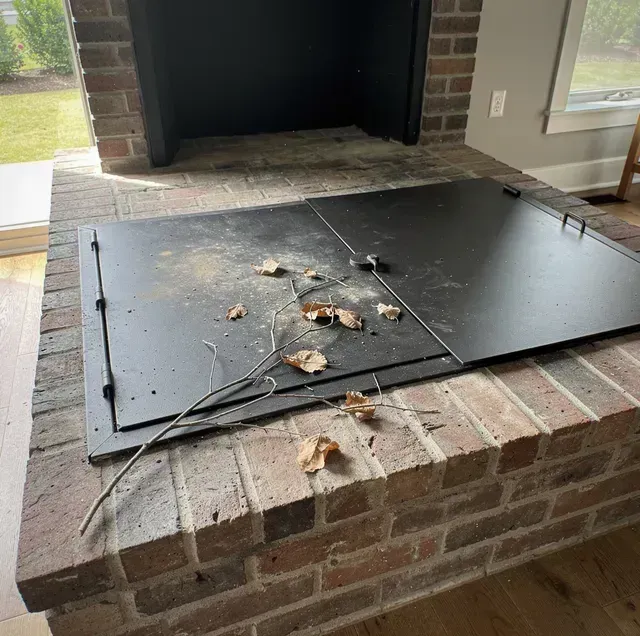
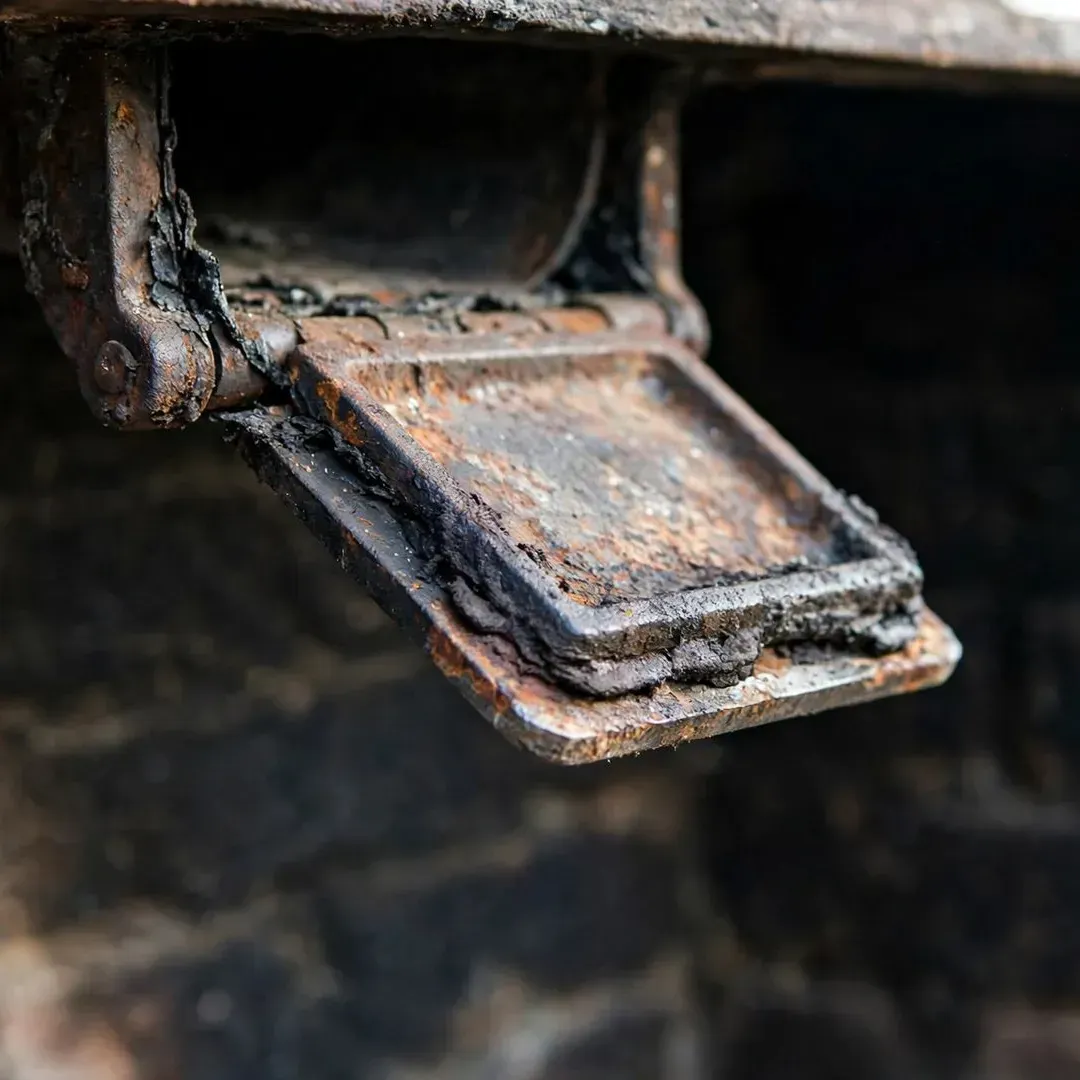
The damper is the movable plate that opens and closes the path between the firebox and the flue above it. Traditional dampers are a hinged metal flap mounted at the throat, right in front of the smoke shelf at essentially the same level; newer systems often use a top-mount damper instead, a sealing plate at the very top of the flue operated by a cable or lever from the firebox. The damper's job: it closes off the flue when there's no fire burning, so conditioned indoor air doesn't pour straight up the chimney, and it opens fully to let smoke and gases draft out when you do have a fire going. A damper that won't seat properly, whether warped, rusted, or coated in old creosote, wastes energy and can also affect how well a fireplace drafts once lit.
Hearth Extension
A chimney that never draws a fire still has a job to do. It's a chimney whether or not anyone is burning wood in it: a masonry stack shedding rain, a flue holding back combustion byproducts from a furnace or water heater, a chase wall separating the outdoors from the framing behind it. None of that stops when the house sits empty. If anything, an unoccupied chimney has less going for it than one in daily use, because daily use is often what surfaces a small problem while it's still a small one. Someone smells something. Someone notices a damper sticking. Someone hears scratching. Take the people out of the house, and the chimney keeps aging, but the early-warning system goes quiet.
This matters for a specific set of properties: a vacation home that sits closed up for stretches between visits, a house between tenants or mid-renovation, an inherited or estate property nobody has moved into yet, or a long-term rental where the owner rarely sets foot on the property. In every one of these, the chimney's physical condition and the owner's awareness of that condition drift apart, and the gap is where damage compounds.
The Myth of the Low-Maintenance Empty Chimney
It's tempting to assume a chimney that isn't being used needs less attention than one that's fired up every week through the burning season. Less use, less wear, right? That logic holds for some parts of a home. It does not hold for a chimney, because most of what actually damages a chimney has nothing to do with whether a fire was ever lit in it.
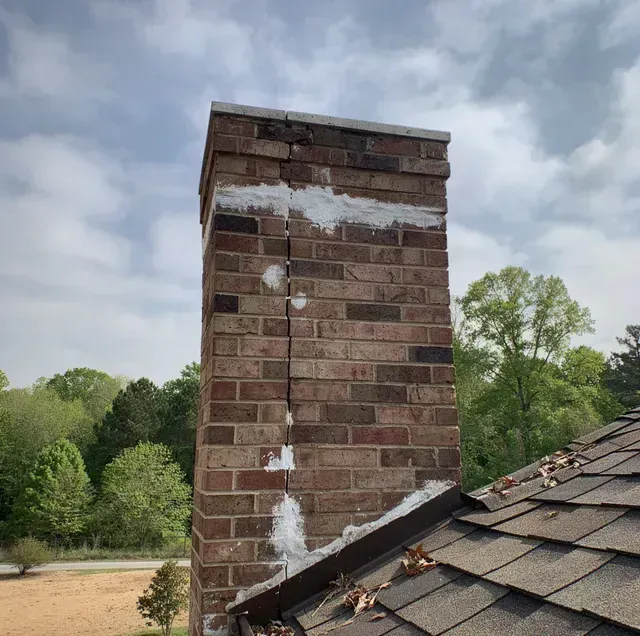
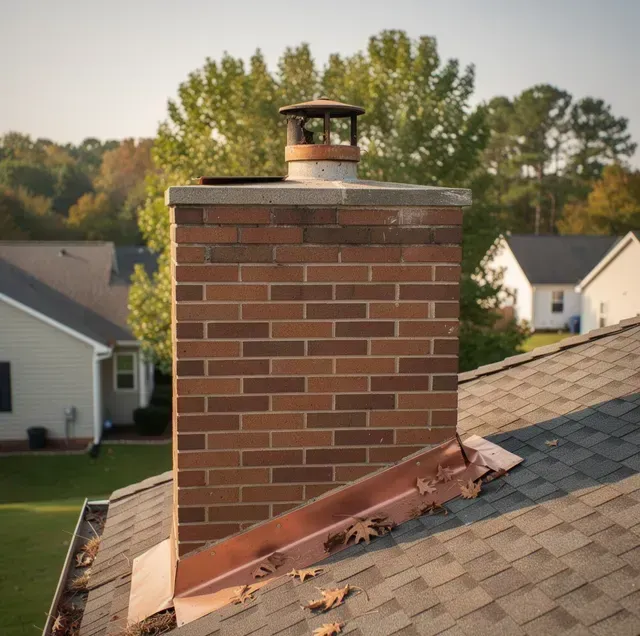
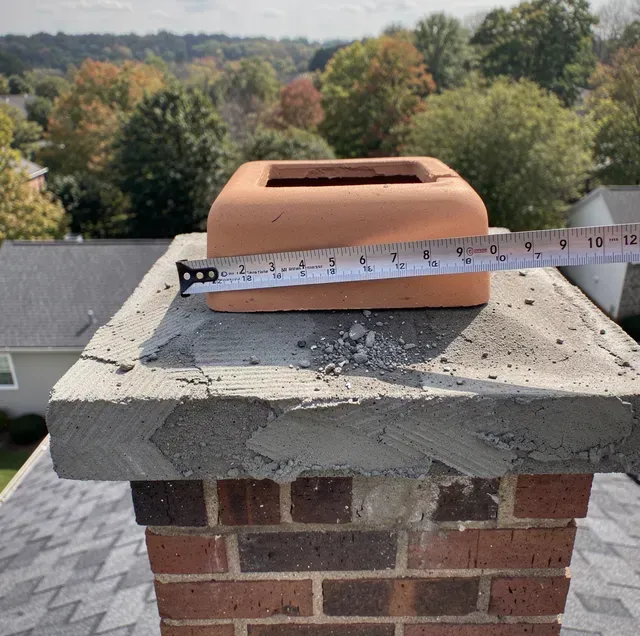
Water doesn't check the occupancy calendar. Rain and moisture work on a masonry crown, the mortar joints, and the flashing whether the fireplace below has been used once or a hundred times this year. A hairline crack in the crown lets water in gradually, and that water freezes and expands inside the mortar joints during cold snaps, then thaws and lets more water in behind it. Repeat that cycle over a few unattended seasons, and you go from a hairline crack to spalling brick faces and crumbling mortar joints, not because anyone burned a fire wrong, but because nobody was around to catch the crown crack at the hairline stage.
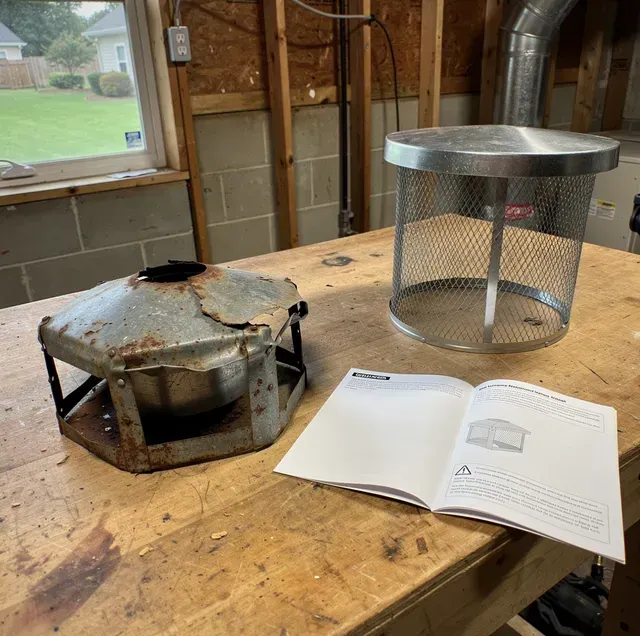
Animals don't check the occupancy calendar either. A chimney without a cap, or with a cap that's come loose, reads to a raccoon or a chimney swift as a sheltered vertical cavity, exactly what it's looking for. An occupied home usually catches this fast: you hear movement in the flue, or smell something animal coming down through the damper, and you call someone. In a vacant or lightly visited property, an animal can build a nest, raise a litter, and move on, sometimes more than once, before anyone who'd notice sets foot near the fireplace again.
The Specific Risks of a Closed-Up Chimney
A handful of problems show up disproportionately in chimneys attached to properties nobody occupies full-time, precisely because they depend on nobody noticing for a while.
A damper that seizes from disuse: a damper left untouched for months can develop enough resistance from rust or a slightly shifted plate that it jams half-open or grinds hard enough to bend if forced. In a weekly-use home, someone finds this the first time they reach for the handle. On a property visited every few months, whoever discovers it is usually standing there already planning to build a fire, which is the worst possible moment to find out.
Dried nesting material becomes its own fire hazard: A nest built and abandoned over a season doesn't just block airflow while it's fresh. It dries into loose, kindling-like debris sitting directly in the flue path, and if the fireplace does eventually get used again without a sweep first, that material is exactly the kind of unexpected fuel a technician checks for before signing off on that first fire.
A leak that goes undetected for months: In an occupied home, a brown ring on the ceiling near the chimney chase gets noticed within days, maybe a week. In a property that's checked on monthly or seasonally, that same leak can run for the entire interval between visits. Water tracking down inside a chimney chase doesn't stay contained to the chimney; it wicks into adjacent framing, insulation, and drywall, and by the time it's visible on a ceiling, it's usually been active considerably longer than the stain suggests.
Efflorescence and spalling that go unaddressed: the white chalky mineral deposits that show up on brick after water has moved through it and evaporated. On an occupied property, an owner might spot this on a monthly walk around the house and ask about it early. On a vacant one, efflorescence can progress to actual spalling, the brick face flaking or popping off, before anyone who'd flag it walks past.
None of these risks require a fire to have ever been lit. They're structural and environmental, and vacancy just removes the person who would otherwise catch them early.
Building a Maintenance Schedule Without Being On-Site
The fix isn't visiting more often; for a true vacation home or a distant rental, that's often not realistic. The fix is decoupling chimney maintenance from your own physical presence.
Put a standing annual inspection on the calendar: not a "when I'm in town" one. The single biggest mistake owners of intermittently-occupied properties make is scheduling chimney service around their own visits instead of the calendar. If you only think about the chimney when you happen to be there, you're back to relying on chance timing. A standing annual (or, for a heavily-used flue, more frequent) inspection scheduled in advance catches the crown crack, the loose cap, or the early nest before the next season of freeze-thaw cycles or animal activity does more damage.
Give a caretaker or property manager a short, specific visual checklist: not a vague "keep an eye on things." Ask them to look at four things on each visit: is the cap still sitting square on the flue (a knocked-loose or missing cap is visible from ground level with a pair of binoculars, no ladder needed), is there any staining on ceilings or walls near where the chimney passes through the house, does the damper move freely if the fireplace is safe to test it, and is there any debris, droppings, or nesting material visible at the firebox opening. A caretaker who knows what to look for catches problems between professional visits; one who's just told to "check on the house" usually won't think to look at the chimney at all.
Log what you find, even informally: A photo of the crown or the cap from each caretaker visit, saved with a date, lets you or a technician compare condition over time instead of relying on memory. A crack that looks the same as last year is a different situation than one that's visibly wider.
Long-Term Tenants Are a Different Case Than Vacancy
A long-term tenant living in the property changes the picture, but not as much as owners sometimes assume. A tenant who uses the fireplace regularly will often notice and report obvious problems: smoke backing up into the room, a strong odor, visible water intrusion. That's a real advantage over true vacancy.
What a tenant usually won't do is proactively schedule or flag preventive maintenance. Reporting responsibilities for something like an annual chimney inspection are typically spelled out in the lease, and exactly who's expected to notice what, and who's expected to arrange service, varies by agreement, so don't assume your particular lease covers it any specific way without checking your own paperwork. What you can control regardless of how the lease is written: keep the annual inspection on your own calendar as the owner, rather than assuming a tenant will think to request one, and give the tenant a simple way to reach you or your property manager if they notice anything unusual, since even a hands-off tenant will usually report a smell or a leak if they know who to tell.
Frequently Asked Questions
How often should a vacant or vacation property's chimney be inspected?
Once a year at minimum for a stack that isn't in regular use, on a fixed calendar date rather than one timed around your own visits, plus a targeted look after any major storm. That combination catches both the slow freeze-thaw damage that accumulates over a full season and any sudden storm-related issue that shows up between scheduled visits.
What does a technician need if the owner can't be on-site for the inspection?
Access is the main thing: a lockbox code, a key left with a caretaker or property manager, or coordination through a management company that already holds one. Beyond that, ask for the visit to be recorded the same way it would be for someone standing there watching, dated photos of the crown, cap, and any findings, plus a written report emailed or sent digitally, so a remote owner can review exactly what a technician saw without having to take a phone summary on faith.
What does a chimney cap actually protect against, beyond keeping animals out?
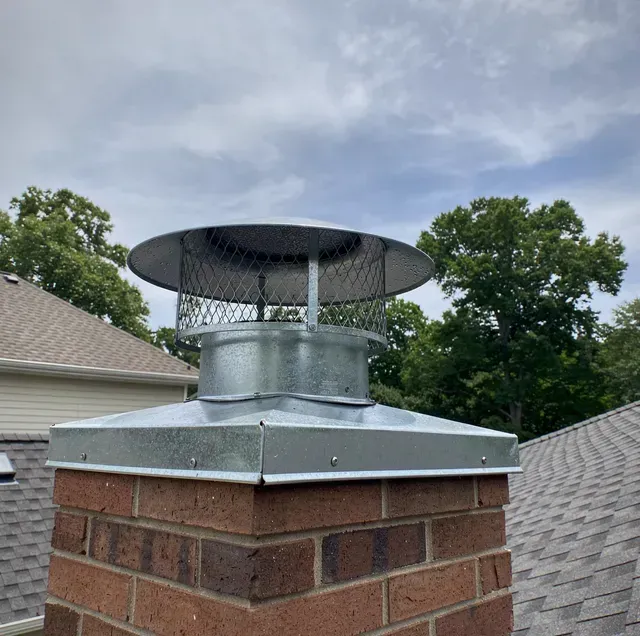
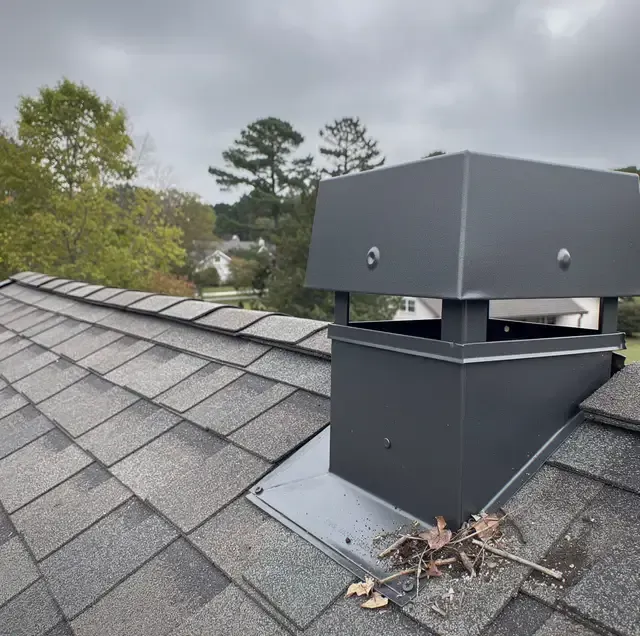
A properly fitted cap also blocks rain and snow from entering the flue directly, reduces downdrafts that can push cold air or debris back into the house, and stops sparks from an active fire from landing on a roof, so a loose or missing cap on a vacant property is both an animal-entry risk and a weatherproofing failure at the same time.
Is a damper that won't open a safety issue or just an inconvenience?
Both, and on an unattended property the inconvenience angle compounds in a way it wouldn't in a home someone's using daily. A damper stuck even slightly open lets conditioned or unconditioned air move freely up the flue for months between visits, and nobody notices until a caretaker happens to feel a draft near the fireplace or an HVAC technician flags an unusual air-loss pattern during an unrelated visit. Clearing the cause is a separate, usually quick fix once someone's actually there to do it.
What should someone do if a caretaker reports animal sounds or smells in the flue?
Don't try to flush, smoke out, or remove the animal directly. Nesting animals, especially with young present, should be handled by a technician who can identify the species, confirm whether it's protected under wildlife regulations, and remove and cap the chimney afterward so the same nesting cycle doesn't repeat next season.
Does a chimney need special preparation before a property sits vacant for an extended period?
A pre-vacancy inspection is worth scheduling specifically because it establishes a written baseline: a technician can confirm the cap is secure, the crown is sound, and the damper is functioning before the property goes unmonitored, so the next inspection has something concrete to compare against instead of guessing how long an issue has been developing.
Chimneys don't pause for empty rooms, and neither does the weather working on them. A standing schedule, a caretaker who knows what to look for, and one baseline inspection before a long stretch of vacancy closes most of the gap that distance and absence otherwise leave open.
Schedule a standing annual inspection for your vacant, vacation, or rental property — protect the chimney even when nobody's watching it day to day. Perfect Chimney Cleaning serves Greensboro, High Point, and Winston-Salem. Call (336) 604-6711.
Recent Posts