Is every type of masonry a candidate for this treatment?
| Factor | Older/historic masonry | Modern masonry |
|---|---|---|
| Mortar binder | Lime-based, low or no Portland cement | Portland-cement-based, harder curing |
| Mortar flexibility | Softer, some self-healing of hairline cracks | Rigid once cured, cracks stay cracked |
| Brick type | Handmade or soft-mud, lower fire temperature | Extruded, wire-cut, higher fire temperature |
| Brick porosity | More absorbent, prone to spalling | Denser, less water uptake |
| Typical liner status | Often unlined, undersized, or original clay tile | Liner sized and installed to current standards |
| Repair priority | Match mortar chemistry, not just color | Standard modern mortar mixes generally compatible |
| Common failure pattern | Brick face spalling; joint self-healing can mask real deterioration | Joint cracking tends to precede brick damage |
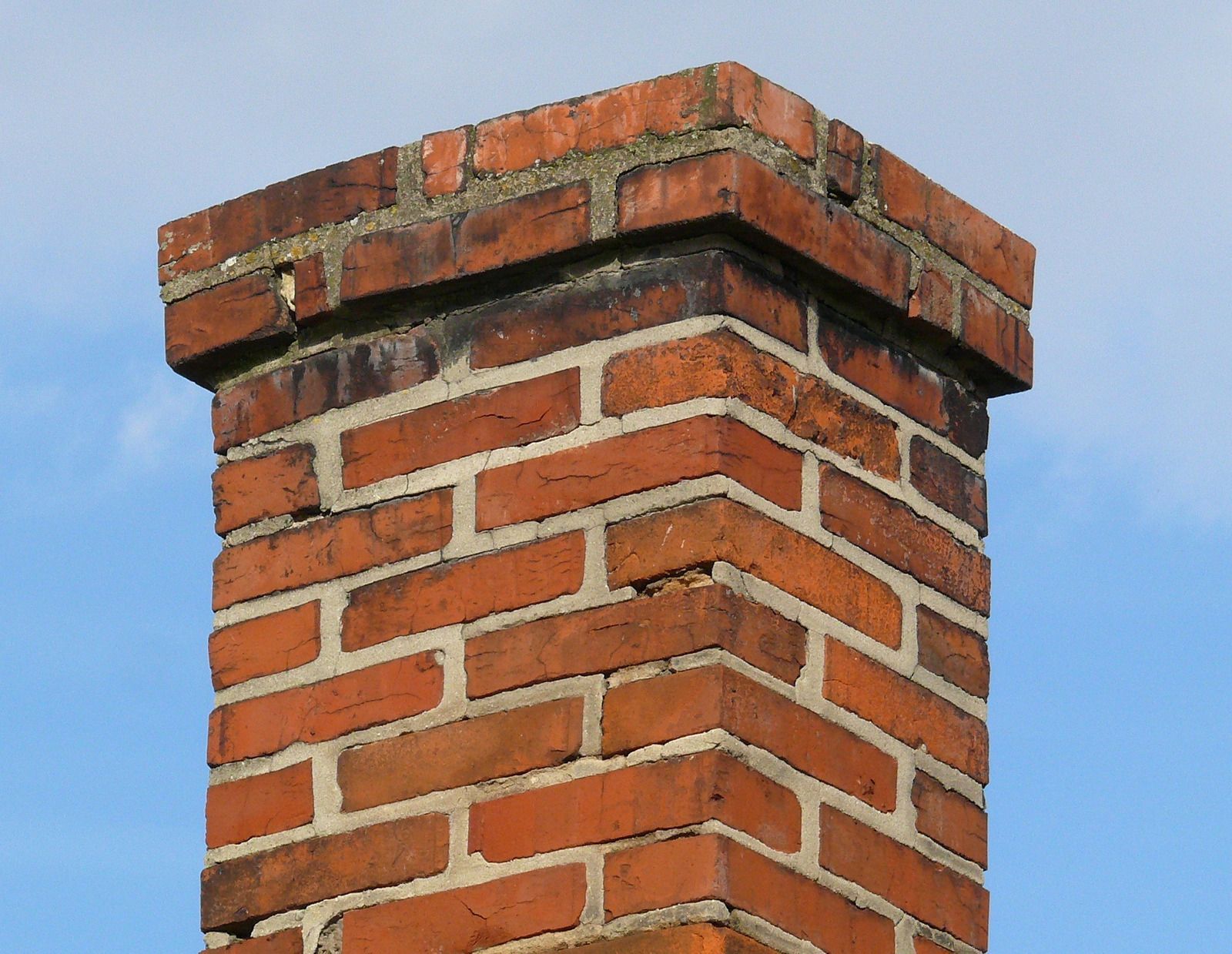
Older chimneys were often built on shallower footings than current standards call for, and after decades of ground movement and the chimney's own weight, some settling is common: a slight lean, a visible gap where the chimney meets the roofline, or a stair-step crack pattern following the mortar joints diagonally. A small, stable lean or an old, dormant crack isn't automatically an emergency, but telling "old and stable" from "active and worsening" benefits from a hands-on inspection rather than a guess from the ground.
A technician can often get a first read on mortar type without lab testing. Dragging a metal key or nail across a joint that leaves a visible scratch and a little powder points toward a softer, lime-rich mix, while a joint that resists scratching and holds a sharp edge points toward a harder, Portland-heavy mix. This test doesn't replace a proper inspection or lab analysis of the actual composition, but it's a useful first check before assuming a chimney can be treated like standard modern construction.
The damper is the movable plate that opens and closes the path between the firebox and the flue above it. Traditional dampers are a hinged metal flap mounted at the throat, right in front of the smoke shelf at essentially the same level; newer systems often use a top-mount damper instead, a sealing plate at the very top of the flue operated by a cable or lever from the firebox. The damper's job: it closes off the flue when there's no fire burning, so conditioned indoor air doesn't pour straight up the chimney, and it opens fully to let smoke and gases draft out when you do have a fire going. A damper that won't seat properly, whether warped, rusted, or coated in old creosote, wastes energy and can also affect how well a fireplace drafts once lit.
Hearth Extension
When a Post-Renovation Inspection Is (and Isn't) Warranted
The hearth extension, the noncombustible floor pad in front of the firebox opening, catches stray ash, bark, splinters, and the occasional ember that pops clear of the fire. A quick vacuum with a shop vac or a canister vacuum's brush attachment once a week during active burning keeps this debris from working into carpet fibers or wood flooring at the hearth's edge, and it's your chance to glance for embers that landed outside the firebox and cooled without your noticing. Check that logs, kindling, and any decorative items on the mantel or nearby furniture haven't crept closer to the opening than the several feet of clearance most fireplace manufacturers and fire-safety groups recommend as a baseline. This is also a good moment to make sure nothing- a rug corner, a stack of kindling, a pet bed- has migrated into that clearance zone since the last time you checked.
Waterproofing is a preventive and protective treatment for masonry that's fundamentally in good shape but exposed to the elements, not a repair for masonry that's already showing damage. If the brick or mortar has visible deterioration such as spalling, crumbling joints, or a cracked crown, that damage needs to be addressed on its own terms before waterproofing goes on top of it, since sealing over a compromised surface just locks moisture problems in rather than out. Once repairs are handled, waterproofing is a reasonable next step for extending the life of the masonry and reducing how much water it absorbs going forward, particularly on a chimney with no roof overhang or nearby shelter shielding it from direct weather. It's also a sensible addition anytime a chimney gets rebuilt or has significant tuckpointing done, since new mortar is at its most porous in the first year or two.
Set the red flags aside for a moment, because it helps to know what you're aiming for, not just what you're avoiding. A technician doing this job the right way walks you through the visit almost like a translator: here's what I found, here's what it means, here's what happens if it's left alone versus addressed. If a camera scan turns something up, you see the footage, or at minimum get a clear description tied to a specific location in the flue, not a vague reference to "damage up there." Recommendations get written down, often in a service report you keep, so you have a record to compare against next year rather than a verbal claim you have to just remember and trust.
Pricing is explained before work starts, and changes to that price come with a reason you can follow, not a mandatory bundle sprung mid-visit. And critically, nothing about the timeline pressures you into deciding on the spot. A technician confident in the finding doesn't need you to decide before he's back in the truck.
You saw the ad: a chimney sweep for less than the cost of a dinner out, a number so low it barely covers the technician's drive time. A truck shows up, and twenty minutes into what was supposed to be a basic cleaning, you're being told your flue is cracked, your damper is a fire hazard, and that advertised price covers none of it. The tech wants an answer before he leaves, because "this truck won't be back in your area for a while." If that scene sounds familiar, or you're trying to avoid living it, you're not overreacting. The chimney sweep trade has a low barrier to entry in a lot of states, and that gap between "anyone with a ladder and a shop-vac" and a properly trained technician is exactly where bad actors operate.
Most sweeps are honest tradespeople doing careful, unglamorous work inside a flue you can't see into yourself. But because you generally can't verify what's happening forty feet up a chimney, the trade has a small but persistent problem with operators who lean on that information gap instead of correcting it. This guide walks through the patterns that show up again and again, so you can tell the difference between a technician building trust and one working an angle.
The Bait-and-Switch Price
The ad, the flyer, the door hanger: an unrealistically low number for a "basic sweep," sometimes barely more than a service call fee. It's not a mistake. It's a lead-generation tactic built on the assumption that once a tech is standing in your living room, most people won't send him back out over a price change.
The switch happens on-site. The advertised service turns out to require an "essential" add-on the ad never mentioned: a deodorizer treatment, a "safety inspection surcharge," a cleaning method upgrade because your chimney "doesn't qualify" for the basic version advertised. None of this is illegal on its own, and plenty of legitimate businesses do charge more for larger or dirtier jobs than a base rate assumes. The red flag isn't that the price changed. It's that the change is framed as mandatory, sprung after the appointment is already underway, and tied to findings the tech won't document.
A legitimate technician quotes a base service clearly, explains upfront what could change that number (a heavily creosoted flue, an unusually tall chimney, add-on services you'd actually want), and doesn't need you to have already committed a technician's time before those numbers surface.
Scare Tactics Without Evidence
This is the pattern that does the most damage, because it works on real fear. Chimney fires and carbon monoxide poisoning are genuine risks, which is exactly why some operators lean on them: telling a homeowner their chimney could catch fire tonight, or that they're breathing dangerous levels of CO right now, creates urgency that shuts down normal decision-making.
The tell isn't that a technician raises a safety concern. A legitimate tech absolutely will, if the flue actually shows glazed creosote or a cracked liner. The tell is being told something is dangerous with nothing to back it up: no photo, no video, no plain-language explanation of what was found and where. If a technician tells you your flue is a fire risk but can't show you what he's looking at, or brushes off a request to see it with "you wouldn't understand the footage anyway," that's the moment to stop and ask more questions, not sign anything.
No Verifiable Credentials
Ask a legitimate sweep about training, and you'll get a straight answer: a certification body (commonly CSIA, the Chimney Safety Institute of America) and how long they've held it. CSIA certification isn't a one-time company logo; it requires periodic continuing education, so a certified tech can usually speak to what's changed recently in liner materials or venting standards without fumbling.
A tech who can't name a certifying body, gets vague or irritated when asked, or claims certification "doesn't really matter for a job this simple" is a flag. So is a company whose trucks, uniforms, or paperwork carry no license or certification number at all, when your state or local jurisdiction requires one.
No Insurance, No Real Business Address
If a chimney inspection camera drops into your flue and gets lodged there, or a technician's ladder scratches your siding, who pays for it? A legitimate company carries liability insurance and can produce proof of it if you ask, because they expect to be asked. An operator who dodges the question, or who's clearly a single unmarked truck with no listed business address you could find and visit, has nothing backing up the work if something goes wrong.
An unmarked vehicle by itself isn't automatically a scam; some small, honest operations run lean. But paired with reluctance to name a business address, a landline, or any online presence beyond a phone number, it stops being a coincidence.
Refusing to Show You the Evidence
Modern chimney inspections, especially anything beyond a routine cleaning, commonly involve a camera scan of the flue interior. That footage exists specifically so a homeowner isn't asked to take a stranger's word for what's forty feet overhead. A technician recommending flue repair, liner replacement, or a full rebuild should be able to show you what triggered that recommendation, whether that's a photo, recorded video, or, at minimum, a clear, plain-language walkthrough of what was found and where.
"You can't understand it without training" is a deflection, not an answer. You don't need to be a certified sweep to look at a photo of a cracked flue tile and understand there's a crack. A technician who can't or won't translate a technical finding into something you can see and grasp is either hiding a weak diagnosis or hoping you won't push back.
Same-Day-Only Pricing and No Time to Decide
"This price is only good if you sign today." "I can't hold this rate once I leave." These lines exist to prevent you from doing the one thing that protects you most: getting a second opinion. A real repair recommendation, a liner replacement, a rebuild, doesn't expire in the next twenty minutes. Chimneys develop problems over months and years; almost nothing found during an inspection requires an on-the-spot signature to remain safe until tomorrow.
There are exceptions. A confirmed hazard, like a chimney fire that already happened or a flue actively venting carbon monoxide, might reasonably call for not using the fireplace until it's addressed. But "don't use the fireplace until this is fixed" is different from "sign this repair contract before I leave the driveway." The first is caution. The second is a sales tactic.
What a Legitimate Visit Actually Looks Like
Set the red flags aside for a moment, because it helps to know what you're aiming for, not just what you're avoiding. A technician doing this job the right way walks you through the visit almost like a translator: here's what I found, here's what it means, here's what happens if it's left alone versus addressed. If a camera scan turns something up, you see the footage, or at minimum get a clear description tied to a specific location in the flue, not a vague reference to "damage up there." Recommendations get written down, often in a service report you keep, so you have a record to compare against next year rather than a verbal claim you have to just remember and trust.
Pricing is explained before work starts, and changes to that price come with a reason you can follow, not a mandatory bundle sprung mid-visit. And critically, nothing about the timeline pressures you into deciding on the spot. A technician confident in the finding doesn't need you to decide before he's back in the truck.
Red Flag vs. What a Legitimate Technician Does
| Red Flag | What a Legitimate Technician Does Instead |
|---|---|
| Rock-bottom advertised price, then "mandatory" add-ons once the tech is on-site | States the base price and what could change it before the appointment; add-ons are optional and explained, not sprung |
| Claims of imminent fire or CO danger with no proof | Shows photos or video tied to the specific finding, or explains it in plain language you can follow |
| Vague or evasive about certification and training | Names the certifying body (e.g., CSIA), can describe what the credential covers |
| No mention of insurance, no findable business address | Carries liability coverage and can provide proof if asked; operates from a verifiable business |
| Refuses to show camera footage or "you wouldn't understand it" | Walks you through findings, translating technical detail into plain terms |
| "This price is only good if you sign today" | Gives you time to think it over; urgency is reserved for genuine active hazards, not routine repairs |
| Unmarked vehicle, cash-only, no paperwork | Provides a written estimate or service report you can keep |
A Few Practical Ways to Vet a Sweep Before You Book
Checking a company's standing takes a few minutes and heads off most of the above. Look up online reviews for specific complaints, not just the star rating. Confirm the business has a physical address you can find, not just a phone number. Ask about certification and insurance before scheduling, not after a technician is in your driveway. If your state or municipality licenses chimney sweeps, that license number should be something the company provides without hesitation, and a short phone call asking directly usually tells you a lot from how readily it gets answered.
Frequently Asked Questions
Is it normal for a chimney sweep to recommend a repair during a routine cleaning?
Yes, and it's not automatically a red flag. A technician doing a Level 1 inspection alongside the cleaning typically checks accessible components like the damper, crown, and cap as standard practice, and any of those can legitimately need attention. The distinction is documentation: a legitimate recommendation comes with a specific finding you can see or have explained, tied to a named part (a cracked crown, a warped damper), not a general claim that something is "unsafe."
What's the difference between a Level 1 and Level 2 inspection, and does that matter for spotting a scam?
A Level 1 inspection covers what's visible without tools or demolition, using a flashlight and mirror from the firebox and roofline. A Level 2 uses a video camera to travel the full interior of the flue, including bends and sections a mirror can't reach, and is typically recommended after a chimney fire, before a home sale, or when a fuel or appliance type changes. If a technician recommends major repair work but never mentions which level of inspection led to that conclusion, or can't say why a Level 2 scan wasn't done to confirm a Level 1 suspicion, that's worth asking about directly.
Can a chimney sweep legally remove my chimney cap or damper and tell me it's mandatory to replace it same-day?
A technician can recommend replacement, but there's no legitimate reason removal or replacement has to happen in the same visit as the sweep, especially for a cap, which is an exterior component with no impact on whether the flue is currently safe to use for that day's fire. If a part is pulled off during the visit and you're told it can't go back on until you pay for a replacement, ask to have the original reinstalled while you get a second opinion; a functioning original part is safer than an open flue top.
Do chimney sweeps need a state license, or is certification like CSIA enough on its own?
It varies. Some states and municipalities require a specific contractor or trade license to operate legally, separate from a national certification like CSIA. CSIA certification demonstrates training and passing a standardized exam, but it isn't the same as a state business license. Checking both certification and any local licensing requirement gives a fuller picture than either alone.
If I already paid for work I suspect was unnecessary, what should I do first?
Start by requesting the documentation you should have received: the service report, any photos or video from the visit, and an itemized invoice. A legitimate business will have these on file even after the fact. Comparing that record against a second technician's independent assessment (a fresh inspection, ideally with its own camera footage) is the most concrete way to find out whether the original recommendation held up, before deciding what to do next.
Does a cheap advertised price always mean the company is dishonest?
Not always. A lower price can reflect lower overhead, a smaller operation, or an introductory offer for a new customer. What separates that from bait-and-switch is whether the number holds once the tech is in your home: a fair operator's final invoice roughly matches what was advertised for the scope described, while a bait-and-switch operator's final number depends on pressure applied on-site rather than what the chimney actually needed.
Trusting a stranger with a forty-foot column you can't see into is uncomfortable by nature, which is exactly why the industry has real bad actors alongside a lot of solid, careful technicians. The difference almost always shows up in the same handful of places: whether the price holds, whether findings come with evidence, whether credentials hold up to a direct question, and whether the homeowner gets room to think before being asked to decide. A technician with nothing to hide has no reason to rush you past any of that.
Book a chimney inspection with a technician who shows you the evidence, not just a verdict — CSIA-certified, transparent pricing, no pressure. Perfect Chimney Cleaning serves Greensboro, High Point, and Winston-Salem. Call (336) 604-6711.
Recent Posts