Severe Weather Chimney Prep: 4 Checks Before Storms Hit
| Factor | Older/historic masonry | Modern masonry |
|---|---|---|
| Mortar binder | Lime-based, low or no Portland cement | Portland-cement-based, harder curing |
| Mortar flexibility | Softer, some self-healing of hairline cracks | Rigid once cured, cracks stay cracked |
| Brick type | Handmade or soft-mud, lower fire temperature | Extruded, wire-cut, higher fire temperature |
| Brick porosity | More absorbent, prone to spalling | Denser, less water uptake |
| Typical liner status | Often unlined, undersized, or original clay tile | Liner sized and installed to current standards |
| Repair priority | Match mortar chemistry, not just color | Standard modern mortar mixes generally compatible |
| Common failure pattern | Brick face spalling; joint self-healing can mask real deterioration | Joint cracking tends to precede brick damage |
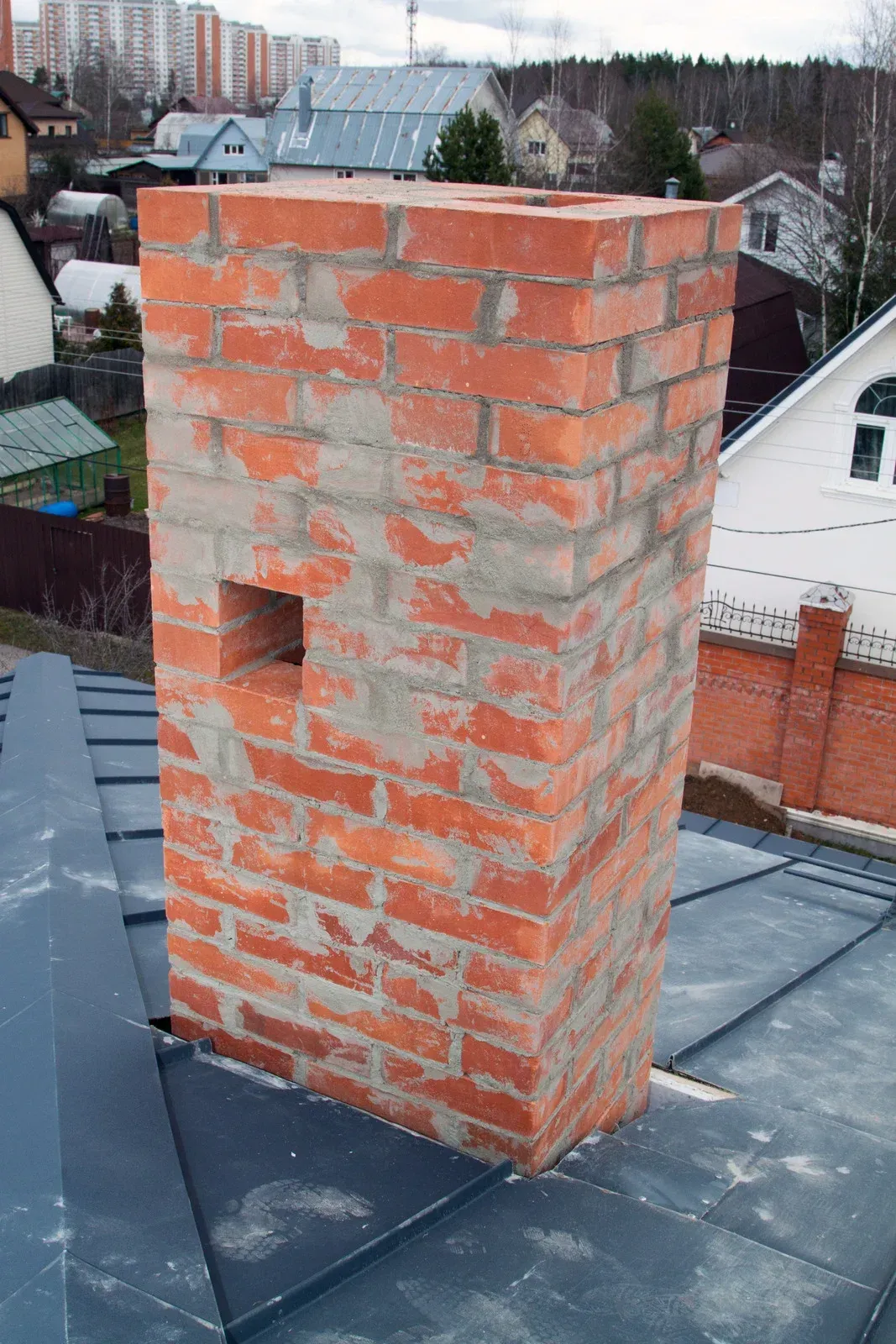
Older chimneys were often built on shallower footings than current standards call for, and after decades of ground movement and the chimney's own weight, some settling is common: a slight lean, a visible gap where the chimney meets the roofline, or a stair-step crack pattern following the mortar joints diagonally. A small, stable lean or an old, dormant crack isn't automatically an emergency, but telling "old and stable" from "active and worsening" benefits from a hands-on inspection rather than a guess from the ground.
A technician can often get a first read on mortar type without lab testing. Dragging a metal key or nail across a joint that leaves a visible scratch and a little powder points toward a softer, lime-rich mix, while a joint that resists scratching and holds a sharp edge points toward a harder, Portland-heavy mix. This test doesn't replace a proper inspection or lab analysis of the actual composition, but it's a useful first check before assuming a chimney can be treated like standard modern construction.
The damper is the movable plate that opens and closes the path between the firebox and the flue above it. Traditional dampers are a hinged metal flap mounted at the throat, right in front of the smoke shelf at essentially the same level; newer systems often use a top-mount damper instead, a sealing plate at the very top of the flue operated by a cable or lever from the firebox. The damper's job: it closes off the flue when there's no fire burning, so conditioned indoor air doesn't pour straight up the chimney, and it opens fully to let smoke and gases draft out when you do have a fire going. A damper that won't seat properly, whether warped, rusted, or coated in old creosote, wastes energy and can also affect how well a fireplace drafts once lit.
Hearth Extension
When a Post-Renovation Inspection Is (and Isn't) Warranted
The hearth extension, the noncombustible floor pad in front of the firebox opening, catches stray ash, bark, splinters, and the occasional ember that pops clear of the fire. A quick vacuum with a shop vac or a canister vacuum's brush attachment once a week during active burning keeps this debris from working into carpet fibers or wood flooring at the hearth's edge, and it's your chance to glance for embers that landed outside the firebox and cooled without your noticing. Check that logs, kindling, and any decorative items on the mantel or nearby furniture haven't crept closer to the opening than the several feet of clearance most fireplace manufacturers and fire-safety groups recommend as a baseline. This is also a good moment to make sure nothing- a rug corner, a stack of kindling, a pet bed- has migrated into that clearance zone since the last time you checked.
Waterproofing is a preventive and protective treatment for masonry that's fundamentally in good shape but exposed to the elements, not a repair for masonry that's already showing damage. If the brick or mortar has visible deterioration such as spalling, crumbling joints, or a cracked crown, that damage needs to be addressed on its own terms before waterproofing goes on top of it, since sealing over a compromised surface just locks moisture problems in rather than out. Once repairs are handled, waterproofing is a reasonable next step for extending the life of the masonry and reducing how much water it absorbs going forward, particularly on a chimney with no roof overhang or nearby shelter shielding it from direct weather. It's also a sensible addition anytime a chimney gets rebuilt or has significant tuckpointing done, since new mortar is at its most porous in the first year or two.
Reading Your Results
| Red Flag | What a Legitimate Technician Does Instead |
|---|---|
| Rock-bottom advertised price, then "mandatory" add-ons once the tech is on-site | States the base price and what could change it before the appointment; add-ons are optional and explained, not sprung |
| Claims of imminent fire or CO danger with no proof | Shows photos or video tied to the specific finding, or explains it in plain language you can follow |
| Vague or evasive about certification and training | Names the certifying body (e.g., CSIA), can describe what the credential covers |
| No mention of insurance, no findable business address | Carries liability coverage and can provide proof if asked; operates from a verifiable business |
| Refuses to show camera footage or "you wouldn't understand it" | Walks you through findings, translating technical detail into plain terms |
| "This price is only good if you sign today" | Gives you time to think it over; urgency is reserved for genuine active hazards, not routine repairs |
| Unmarked vehicle, cash-only, no paperwork | Provides a written estimate or service report you can keep |
Checking a company's standing takes a few minutes and heads off most of the above. Look up online reviews for specific complaints, not just the star rating. Confirm the business has a physical address you can find, not just a phone number. Ask about certification and insurance before scheduling, not after a technician is in your driveway. If your state or municipality licenses chimney sweeps, that license number should be something the company provides without hesitation, and a short phone call asking directly usually tells you a lot from how readily it gets answered.
Set the red flags aside for a moment, because it helps to know what you're aiming for, not just what you're avoiding. A technician doing this job the right way walks you through the visit almost like a translator: here's what I found, here's what it means, here's what happens if it's left alone versus addressed. If a camera scan turns something up, you see the footage, or at minimum get a clear description tied to a specific location in the flue, not a vague reference to "damage up there." Recommendations get written down, often in a service report you keep, so you have a record to compare against next year rather than a verbal claim you have to just remember and trust.
Pricing is explained before work starts, and changes to that price come with a reason you can follow, not a mandatory bundle sprung mid-visit. And critically, nothing about the timeline pressures you into deciding on the spot. A technician confident in the finding doesn't need you to decide before he's back in the truck.
You step outside the morning after a rough overnight storm, coffee in hand, and do the thing most homeowners do without thinking: you look up. Shingles look mostly fine, the gutters are full of leaves and small branches, and everything seems okay from the ground. What you probably can't see from the driveway is what happened forty feet up, where your chimney took the brunt of the wind and rain the whole night through.
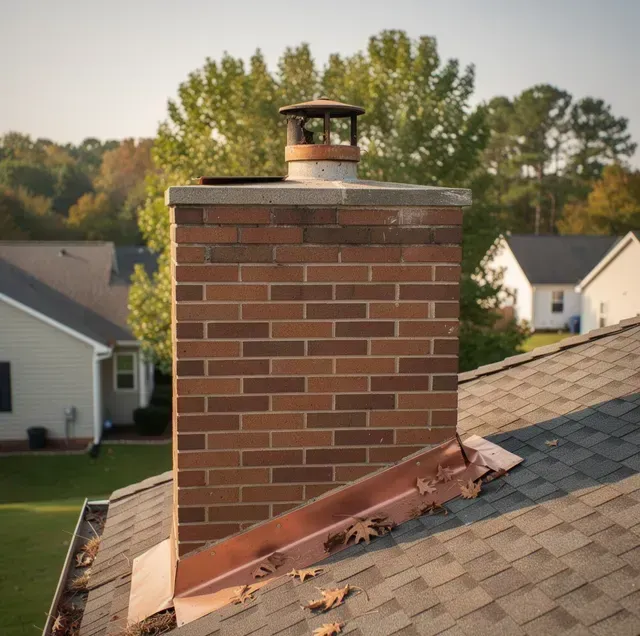
Chimneys sit at the highest, most exposed point of a roofline, and that makes them the first component to catch wind gusts, driven rain, and falling debris. Most of the time nothing happens. But severe weather doesn't need a hurricane's name attached to it to do damage. A strong spring thunderstorm, a straight-line wind event rolling through ahead of a cold front, or a slow-moving system dumping hours of heavy rain can all stress a chimney system the same way a named storm does. Hurricane remnants are just one entry on a much longer list of weather that can loosen a cap, force water past flashing, or drop debris onto a crown.
This is about what actually happens to a chimney during severe weather, and the checks worth doing before storm season builds and after any hard storm passes.
What Severe Weather Actually Does To A Chimney
Four things tend to happen, and they don't all show up the same way.
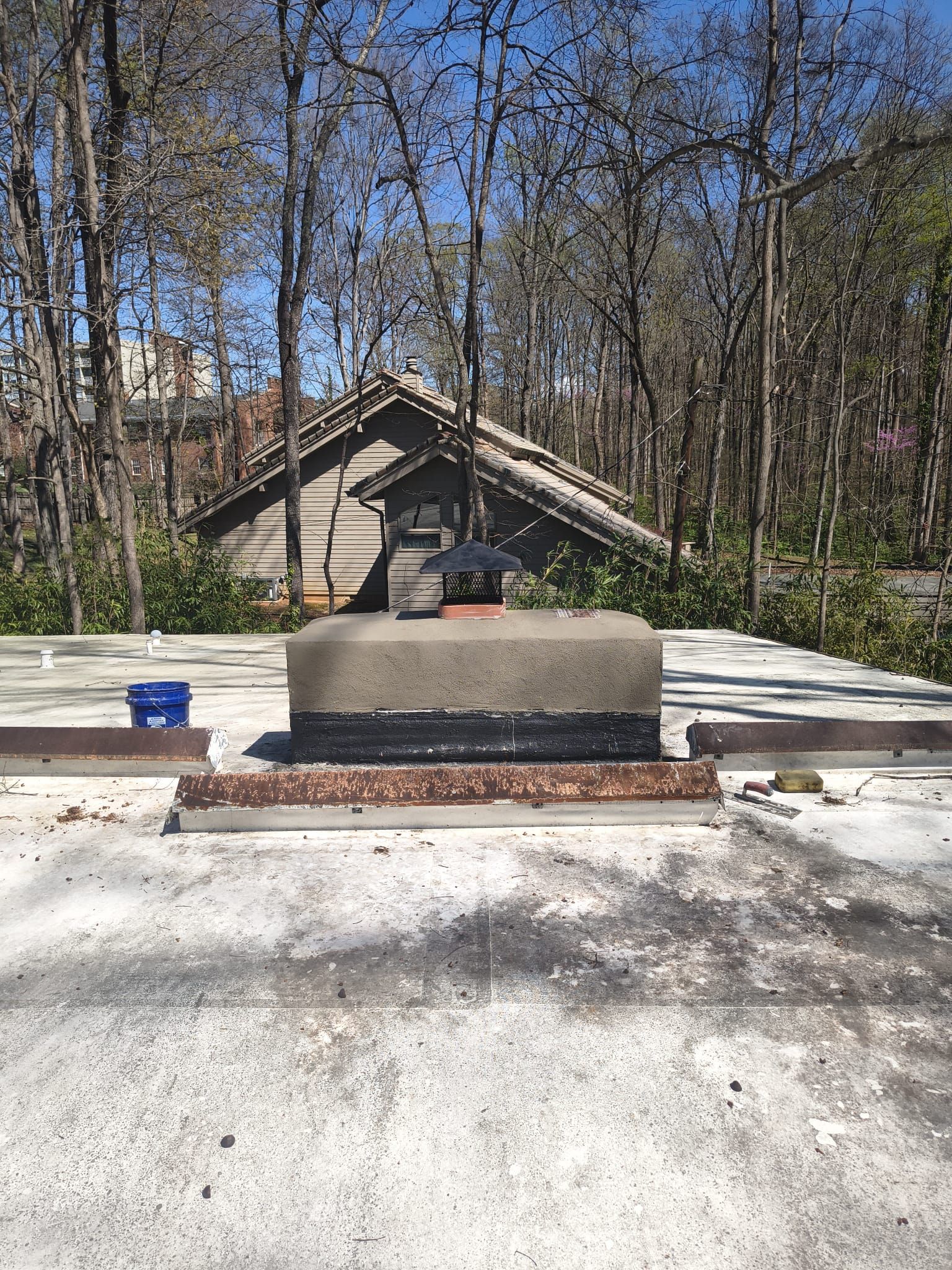
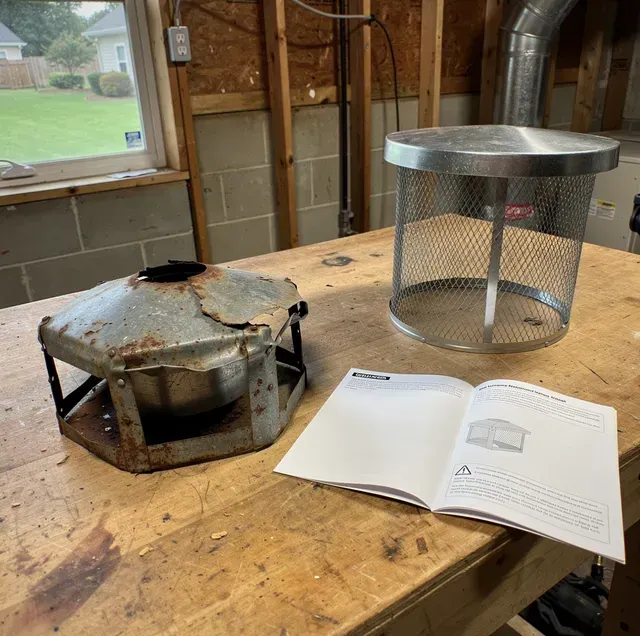
Wind stress on the cap: A chimney cap is only as good as how it's attached. Some are held on with a friction-fit skirt, others with sheet-metal screws driven into the flue tile or crown. In sustained wind, especially the kind that funnels across an open roofline or between two-story gables, a cap that's loose or under-secured can work back and forth until the fasteners strip or the skirt bends outward. Once that happens, a strong gust can lift it partway off or shift it enough to leave a gap where wind-driven rain, sparks, or animals can get in.
Wind-driven rain through flashing: Ordinary rain falls mostly straight down and sheds off a roof the way it's designed to. Wind changes that. When rain is pushed sideways or even slightly upward against a roofline, it can find its way up under the counter-flashing lip, into old nail holes, or through hairline gaps in sealant that a calm rain would never reach. Flashing that's held up fine for years of normal weather can still leak during one hard, wind-driven storm because the water is attacking it from an angle the material and seal weren't tested against.
Falling debris: Branches, loose shingle tabs from a neighbor's roof, and general storm debris are a real threat to the two most exposed parts of the system: the crown and the cap. A crown is a concrete or mortar slab, and it can handle foot traffic and hail reasonably well, but a direct hit from a falling limb can crack it or chip the edge where it overhangs the brick. A cap's mesh screen is thinner still, and a heavy branch strike can dent or collapse it.
Lightning:
This one is worth mentioning briefly because a chimney is frequently the tallest point on a house. A direct strike can crack a crown, scorch masonry, or damage a metal liner. It's not a common event, but homeowners in storm-prone areas sometimes ask about it, and the honest answer is that a dedicated lightning protection system (a grounded air terminal tied into the home's grounding) is something an electrician or lightning-protection specialist installs as an option, not something a chimney service provides for a typical home.
Before Storm Season Arrives
The best time to deal with any of this is before a warning is even on the radar. A few checks, done once a year, catch most of what severe weather would otherwise find on its own.
Cap fastening: Confirm it's actually secured, not just present. If it was installed years ago, the screws or rivets holding it can corrode or back out over time, especially in a spark arrestor cap that vibrates slightly in every stiff breeze. A technician can check this from the roof in a few minutes; from the ground, a pair of binoculars pointed at the cap on a calm day can sometimes reveal visible gaps or rust streaks around the mounting points.
Flashing and waterproofing: Look at the counter-flashing where it meets the brick, the step flashing along the roofline, and any visible sealant or caulk lines. Cracked, chalky, or peeling sealant is a sign it's aged past the point of being reliable in a hard, wind-driven rain even if it hasn't leaked yet in ordinary weather. A masonry waterproofing treatment applied to the stack itself is a separate step from flashing repair, but both address the same underlying vulnerability: water finding a path in.
Overhanging branches:
Trim any that overhang or lean toward the chimney. This is a general safety step, not a service a chimney company performs. Smaller limbs within reach of the roofline can often be cut back from the ground with an extendable pole saw; anything large enough to do real damage if it snapped, or anything requiring a ladder near a roof edge, is worth handing to a certified arborist or tree service instead.
Before Any Major Storm Warning
Once a storm watch or warning is actually posted, there isn't much construction work left to do, but a short walk-around still matters. Clear leaves and debris out of the gutters and valley near the chimney so water has somewhere to go instead of pooling against the flashing. Take a quick look at the crown and cap from the ground for anything already loose or shifted, since a component that's marginal in calm weather is the one most likely to fail once wind picks up. If you've been putting off a flashing repair or a cap replacement, a fast storm warning isn't the moment to fix it, but it is worth noting so it gets addressed as soon as the weather clears.
After The Storm Passes
The inspection habit that catches the most damage early is the one most homeowners skip: actually looking again once the storm is over, not just once during the season.
Cap position: From the ground, check whether the cap still sits square and centered on the flue. A cap that's rotated, tilted, or gone is an obvious sign of wind damage and an open invitation for the next rain.
New water stains: A stain on the ceiling near the chimney chase, a damp patch on the wall where the flue runs, or fresh discoloration around the firebox that wasn't there before a storm usually points to water getting past flashing or through a cracked crown. These stains often show up a day or two after the rain, once the moisture has had time to travel through drywall or masonry.
Roof debris: A branch wedged against the base, granules or shingle pieces piled against the flashing, or leaves packed into the corner where the chimney meets the roofline can all trap moisture against the masonry long after the storm itself has passed. Clearing that debris promptly prevents a slow, secondary leak from a storm that technically didn't cause any damage on its own.
If any of these checks turn up something questionable, a professional inspection can sort out what's cosmetic from what actually needs repair before the next system rolls through.
Frequently Asked Questions
How can I tell if my chimney cap is loose without climbing on the roof?
Two ground-level checks help. During the day, look through the fireplace opening with the damper open; daylight flickering or visible movement at the top of the flue can indicate a shifted cap. On a windy evening, listen for a rattling or ticking sound coming from the flue, which often means a cap is working loose against its mounting screws before it fails outright.
Is it normal to hear a whistling or humming sound from the chimney during high wind?
A faint whistle during a strong gust is often just air moving across the cap's mesh screen or an irregular edge on the crown, and it can come and go with wind speed without meaning anything is wrong. What's worth flagging is a whistle or hum that's new, louder than it used to be, or that starts happening at wind speeds that never triggered it before, since that pattern can mean a fastener has backed out or the cap has shifted just enough to open a small gap for air to pass through.
What's the actual difference between a chimney crown and a chimney cap?
The crown is the concrete or mortar slab that caps the entire masonry stack and sheds water away from the brick; the cap is the metal cover with a mesh screen that sits directly over the flue opening. A cracked crown from freeze-thaw cycling or a storm impact can let water into the masonry itself even when the cap is fully intact, which is why both get checked separately during an inspection.
Does the mesh screen on a cap protect against storm debris, or just embers and animals?
Its main job is keeping sparks in and birds, squirrels, and debris out, but the mesh (commonly a stainless-steel screen with roughly 3/4-inch openings) is thin enough that a direct hit from a falling branch or heavy hail can dent or tear it. A damaged screen usually still blocks large debris but can let smaller embers or rain through, so it's worth a visual check after any storm with falling limbs.
A branch actually fell and is resting against the chimney after a storm. Is it safe to remove it myself right away?
Not immediately. Roof surfaces are often still wet or icy right after a storm, footing near a roof edge is less stable than it looks, and additional limbs can still come down if wind is lingering or another line of weather is close behind. Wait until conditions have fully settled, take a photo of the debris and its position for your own records before anything gets moved, and treat anything resting against the crown, cap, or flashing as a job for someone with the right equipment rather than a quick solo climb.
Why does my fireplace smell musty after a heavy storm?
A damp, musty odor after rain often means water reached the firebox or smoke chamber rather than just the exterior masonry. A common cause is a damper left open during the storm with no cap in place to block rain, or water tracking down through a compromised crown or flashing seam. If the smell lingers more than a day or two after the weather clears, it's worth having the flue checked rather than waiting for it to fade on its own.
Severe weather isn't a once-a-year event tied to a single season anymore, and a chimney doesn't need a named storm to take damage. A loose cap, aging flashing, or an overhanging branch is a risk in a March thunderstorm the same way it is in a fall system, and the checks that catch those problems early don't change with the calendar. Building the habit of a pre-season look and a post-storm walk-around is what keeps a chimney doing its job quietly, storm after storm, instead of surprising you with a stain on the ceiling.
Book a post-storm chimney inspection — a technician checks your cap, crown, and flashing for wind or water damage before small issues become bigger repairs. Perfect Chimney Cleaning serves Greensboro, High Point, and Winston-Salem. Call (336) 604-6711.
Recent Posts