CSIA-Certified Chimney Tech: How to Verify It Before You Book
| Factor | Older/historic masonry | Modern masonry |
|---|---|---|
| Mortar binder | Lime-based, low or no Portland cement | Portland-cement-based, harder curing |
| Mortar flexibility | Softer, some self-healing of hairline cracks | Rigid once cured, cracks stay cracked |
| Brick type | Handmade or soft-mud, lower fire temperature | Extruded, wire-cut, higher fire temperature |
| Brick porosity | More absorbent, prone to spalling | Denser, less water uptake |
| Typical liner status | Often unlined, undersized, or original clay tile | Liner sized and installed to current standards |
| Repair priority | Match mortar chemistry, not just color | Standard modern mortar mixes generally compatible |
| Common failure pattern | Brick face spalling; joint self-healing can mask real deterioration | Joint cracking tends to precede brick damage |
Older chimneys were often built on shallower footings than current standards call for, and after decades of ground movement and the chimney's own weight, some settling is common: a slight lean, a visible gap where the chimney meets the roofline, or a stair-step crack pattern following the mortar joints diagonally. A small, stable lean or an old, dormant crack isn't automatically an emergency, but telling "old and stable" from "active and worsening" benefits from a hands-on inspection rather than a guess from the ground.
A technician can often get a first read on mortar type without lab testing. Dragging a metal key or nail across a joint that leaves a visible scratch and a little powder points toward a softer, lime-rich mix, while a joint that resists scratching and holds a sharp edge points toward a harder, Portland-heavy mix. This test doesn't replace a proper inspection or lab analysis of the actual composition, but it's a useful first check before assuming a chimney can be treated like standard modern construction.
The damper is the movable plate that opens and closes the path between the firebox and the flue above it. Traditional dampers are a hinged metal flap mounted at the throat, right in front of the smoke shelf at essentially the same level; newer systems often use a top-mount damper instead, a sealing plate at the very top of the flue operated by a cable or lever from the firebox. The damper's job: it closes off the flue when there's no fire burning, so conditioned indoor air doesn't pour straight up the chimney, and it opens fully to let smoke and gases draft out when you do have a fire going. A damper that won't seat properly, whether warped, rusted, or coated in old creosote, wastes energy and can also affect how well a fireplace drafts once lit.
Hearth Extension
When a Post-Renovation Inspection Is (and Isn't) Warranted
The hearth extension, the noncombustible floor pad in front of the firebox opening, catches stray ash, bark, splinters, and the occasional ember that pops clear of the fire. A quick vacuum with a shop vac or a canister vacuum's brush attachment once a week during active burning keeps this debris from working into carpet fibers or wood flooring at the hearth's edge, and it's your chance to glance for embers that landed outside the firebox and cooled without your noticing. Check that logs, kindling, and any decorative items on the mantel or nearby furniture haven't crept closer to the opening than the several feet of clearance most fireplace manufacturers and fire-safety groups recommend as a baseline. This is also a good moment to make sure nothing- a rug corner, a stack of kindling, a pet bed- has migrated into that clearance zone since the last time you checked.
Waterproofing is a preventive and protective treatment for masonry that's fundamentally in good shape but exposed to the elements, not a repair for masonry that's already showing damage. If the brick or mortar has visible deterioration such as spalling, crumbling joints, or a cracked crown, that damage needs to be addressed on its own terms before waterproofing goes on top of it, since sealing over a compromised surface just locks moisture problems in rather than out. Once repairs are handled, waterproofing is a reasonable next step for extending the life of the masonry and reducing how much water it absorbs going forward, particularly on a chimney with no roof overhang or nearby shelter shielding it from direct weather. It's also a sensible addition anytime a chimney gets rebuilt or has significant tuckpointing done, since new mortar is at its most porous in the first year or two.
Reading Your Results
| Red Flag | What a Legitimate Technician Does Instead |
|---|---|
| Rock-bottom advertised price, then "mandatory" add-ons once the tech is on-site | States the base price and what could change it before the appointment; add-ons are optional and explained, not sprung |
| Claims of imminent fire or CO danger with no proof | Shows photos or video tied to the specific finding, or explains it in plain language you can follow |
| Vague or evasive about certification and training | Names the certifying body (e.g., CSIA), can describe what the credential covers |
| No mention of insurance, no findable business address | Carries liability coverage and can provide proof if asked; operates from a verifiable business |
| Refuses to show camera footage or "you wouldn't understand it" | Walks you through findings, translating technical detail into plain terms |
| "This price is only good if you sign today" | Gives you time to think it over; urgency is reserved for genuine active hazards, not routine repairs |
| Unmarked vehicle, cash-only, no paperwork | Provides a written estimate or service report you can keep |
Checking a company's standing takes a few minutes and heads off most of the above. Look up online reviews for specific complaints, not just the star rating. Confirm the business has a physical address you can find, not just a phone number. Ask about certification and insurance before scheduling, not after a technician is in your driveway. If your state or municipality licenses chimney sweeps, that license number should be something the company provides without hesitation, and a short phone call asking directly usually tells you a lot from how readily it gets answered.
Set the red flags aside for a moment, because it helps to know what you're aiming for, not just what you're avoiding. A technician doing this job the right way walks you through the visit almost like a translator: here's what I found, here's what it means, here's what happens if it's left alone versus addressed. If a camera scan turns something up, you see the footage, or at minimum get a clear description tied to a specific location in the flue, not a vague reference to "damage up there." Recommendations get written down, often in a service report you keep, so you have a record to compare against next year rather than a verbal claim you have to just remember and trust.
Pricing is explained before work starts, and changes to that price come with a reason you can follow, not a mandatory bundle sprung mid-visit. And critically, nothing about the timeline pressures you into deciding on the spot. A technician confident in the finding doesn't need you to decide before he's back in the truck.
| Symptom | Likely Cause | What to Do |
|---|---|---|
| White, chalky staining on the brick | Efflorescence: water moving through porous masonry and leaving mineral deposits behind as it evaporates | Leak detection to find the entry point, then a breathable waterproofing treatment |
| Rust stains or flaking metal around the damper or firebox | Water reaching the damper assembly, firebox, or metal chimney components | Damper inspection and repair, plus a check of the cap and crown for openings |
| Crumbling, flaking, or pitted brick faces (spalling) | Repeated saturation, worsened by freeze-thaw cycling, pushing the brick's face apart from the inside | Masonry repair, or a partial to full rebuild in advanced cases |
| Cracks or erosion in the chimney crown | The concrete or mortar wash at the top of the stack has failed, letting rain track straight into the flue | Crown repair or replacement, paired with a properly fitted cap |
| Water stains on the ceiling or wall near the fireplace | Flashing where the chimney meets the roofline has separated, corroded, or was installed poorly | Leak detection to confirm the source, then flashing repair |
| A musty, damp smell from the fireplace, especially after rain | Trapped moisture in the flue liner, firebox, or smoke chamber that never fully dries out | A Level 2 inspection of the interior, plus waterproofing if the masonry is porous |
What Comes After the Inspection
A decal on a truck door never peels off just because a credential behind it lapsed. Neither does a badge on a website or a line on a business card. Once those get printed, they sit there whether the person currently on staff holds a current certification or not, which means none of them actually answer the question a homeowner cares about: Is the technician standing on my roof today certified right now, not two years ago, not in general, but today?
That distinction gets lost easily, because "CSIA-certified" gets used as shorthand for the whole company. It isn't. It's a credential the Chimney Safety Institute of America issues to one person at a time, officially called Certified Chimney Sweep, or CCS. A business can be entirely honest when it says "our technicians are CSIA-certified" and still mean only the owner holds it, while the two-person crew showing up for your sweep is still working toward it. Neither situation is dishonest on its own. What matters is whether you know which one you're getting before someone's on your roof.
The Company Isn't the Technician
Ask a company, "Are you CSIA-certified?" and you'll almost always get yes. That question is easy to answer honestly in a way that still tells you nothing useful, because certification lives with individuals, not businesses. A company with three trucks and eight employees might have exactly one CCS holder on payroll, usually the owner or a senior lead, while the rest of the crew learned on the job under that person's supervision.
That's not automatically a problem. Plenty of legitimate operations run this way, with a certified lead technician overseeing less-experienced crew members who are building toward their own certification. The problem is when a homeowner assumes "the company is certified" means "the person doing my inspection is certified," books on that assumption, and never finds out otherwise.
The fix is a more specific question at booking: not "are you certified," but "will the technician you're sending be CSIA-certified, and is that person's certification current?" A company with nothing to hide answers this without hesitation, usually by naming the tech and confirming their status on the spot. A company that dodges, changes the subject to years in business, or repeats "we're a certified company" without addressing the individual question, has told you something too, just not in words.
What a Current Credential Sounds Like
There's a noticeable difference between how a currently certified technician talks about their credential and how someone stretching the truth does. A tech who's actually current can usually state it specifically: when they certified, roughly when they last renewed, and that they can produce their certification card or ID on request. Someone bluffing tends to stay vague, leaning on phrases like "we've been doing this for years" or "the company's been certified forever" instead of anything about themselves personally.
A current CCS card carries the technician's name, a unique certification ID number, and an expiration date, the same way a driver's license does. A tech who holds a live credential can typically produce that card, or reference the number, without digging through paperwork or calling the office to check. That's not a trick question you're springing on them; it's information any currently certified sweep should have on hand, the same way a locksmith with an active bonding number rattles it off without pausing to think.
Check It Yourself Instead of Taking the Truck's Word for It
You don't have to rely entirely on what a company tells you over the phone. CSIA maintains a public way to search whether a name or company currently holds an active certification, separate from anything printed on a truck or a website. It's worth a quick look before or after you book, especially if a company's answer to the individual-technician question felt rehearsed rather than specific. A five-minute check against an independent source settles a question that a decal or a badge simply can't, since neither of those updates itself the moment a credential lapses.
Why the Decal, the Badge, and the Business Card Aren't Proof
None of this means a company advertising CSIA certification is lying to you. It means those materials were printed once, at some point, and nobody peels a decal off a truck the week a credential expires. A website badge gets uploaded when a certification is earned and often just stays there, unattended, long after. A business card handed to you at the door was printed in a batch, possibly years ago. All three are marketing assets, not a live status check, and treating any of them as proof by themselves skips the one question that actually matters: Is this specific person certified right now?
Two Things to Ask When You Call to Book
You don't need a script, just two specific questions instead of one vague one. First: "Is the technician you're sending certified, and is that certification current?" Second, if the answer is yes: "Can you give me their name so I can note it for the appointment?" A company that hesitates on the second question after answering yes to the first is worth a follow-up, since a name is a small, ordinary thing to share when the answer is actually true. Write the name down. If a different person shows up on the day of service, that's a fair moment to ask, politely, whether the tech who's actually there holds the same current certification you were told about on the phone.
One Question Worth Adding to the List
It's reasonable to ask when a technician last renewed their certification, since the credential requires periodic renewal to stay active rather than being earned once and kept forever. You don't need the full renewal mechanics to ask the question; a tech who's current can give you a rough timeframe without hesitating. If it's useful context, the certifying exam itself tests more than chimney fundamentals: alongside a closed-book section on chimney and venting basics, candidates also sit an open-book section on the International Residential Code, using their own copy of the code text. That practical, code-literate half of the exam is part of why a currently certified tech tends to explain a finding in terms you can follow rather than just pointing and saying it's a problem.
Frequently Asked Questions
Does everyone on a multi-person crew need to hold the certification personally?
Not necessarily. It's common for a certified lead technician to supervise one or two helpers or apprentices who are still working toward their own certification, and that arrangement isn't itself a red flag. What matters is whether the certified tech is actually present and directly involved in your inspection, not just listed on the company roster while someone else runs the visit solo.
What actually appears on a technician's certification card?
A current card carries the technician's name, a unique certification ID number specific to that individual, and an expiration date. That ID number is what makes a status check meaningful: it identifies one person's credential, not a company-wide claim, and a tech who's current can usually reference it without needing to call the office first.
Are there other CSIA credentials a technician might mention besides chimney sweep certification?
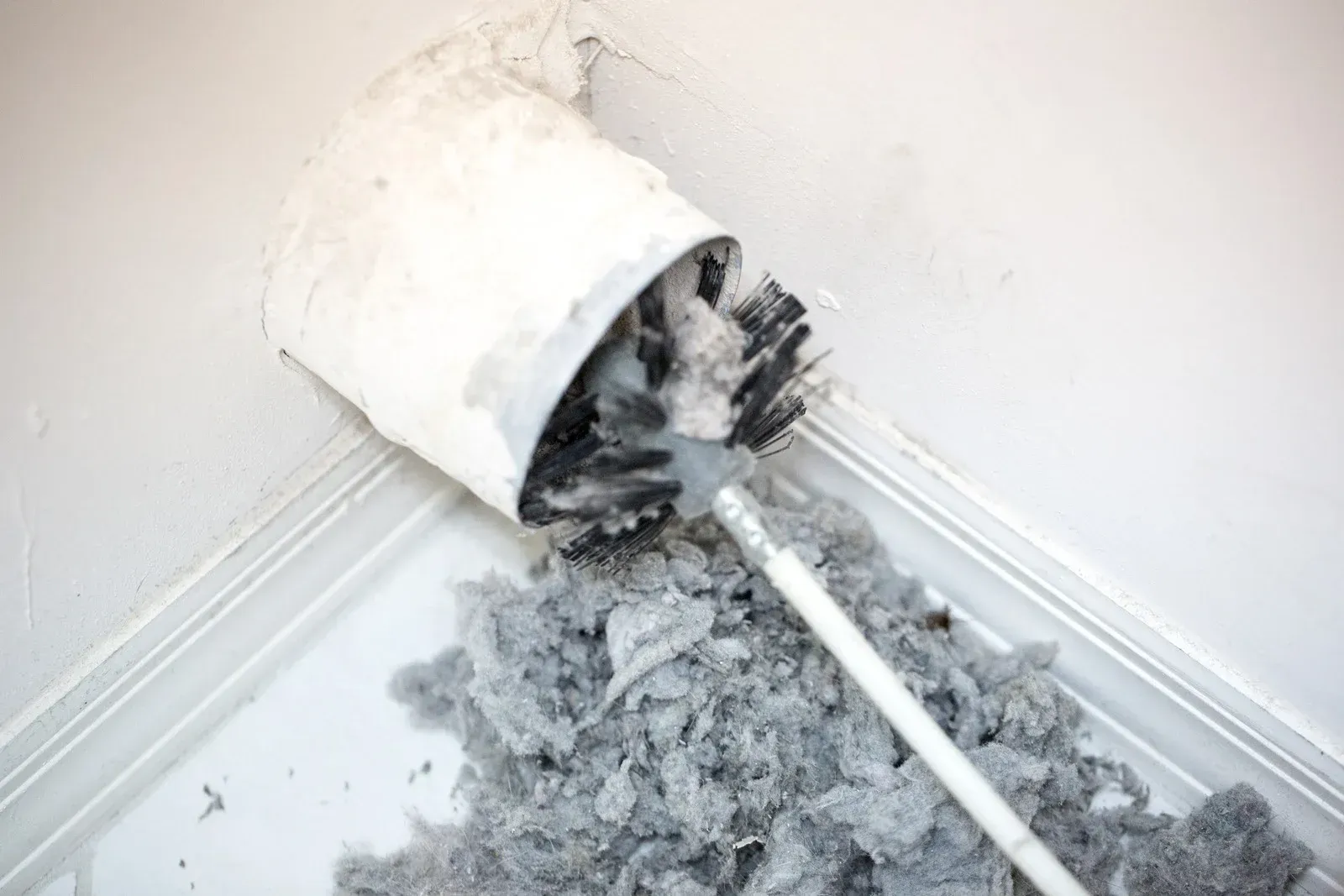
Yes. CSIA also issues a separate Certified Dryer Exhaust Technician credential, aimed specifically at dryer vent inspection and cleaning rather than chimney and fireplace work. A technician who mentions this one alongside their CCS isn't padding their resume; it's a distinct exam covering a different system, and it's relevant if dryer vent cleaning is part of what you're booking.
What does the open-book part of the certifying exam actually involve?
Candidates bring their own copy of the International Residential Code into that portion of the exam and are tested on applying it, rather than reciting it from memory. That mirrors real fieldwork: a tech references code text to support a finding instead of quoting numbers off the top of their head, which is part of why a certified tech's explanation tends to hold up when you ask a follow-up question.
Does the level of inspection performed (Level 1, 2, or 3) say anything about the technician's certification?
No, those describe the scope of the visit itself, based on things like whether the home is being sold or a chimney fire is suspected, not the credential of the person performing it. A certified technician can conduct any level of inspection appropriate to the situation; an uncertified one might follow the same checklist format without the same tested understanding of what a given finding actually means.
What if a technician passed the exam recently but doesn't have a physical card yet?
There's typically a short gap between passing and receiving the printed card, since it has to be issued and mailed after the exam result is confirmed. A newly certified tech in that window can usually still confirm their pass, and a homeowner who wants extra certainty can check the public status lookup directly rather than waiting on the physical card to arrive.
A decal on a truck tells you a company has, at some point, employed a certified technician. It doesn't tell you who's coming to your house this week. Ask for the name, ask if that person's certification is current, and don't feel like you're being difficult for wanting a more specific answer than a logo.
Book with a verified CSIA-certified technician — ask for certified service by name and get a straight answer before anyone climbs on your roof. Perfect Chimney Cleaning serves Greensboro, High Point, and Winston-Salem. Call (336) 604-6711.
Recent Posts