
July 24, 2026

Can Lightning Damage Your Chimney? 5 Signs to Check

Two chimneys can take a comparable hit in the same storm and come away looking nothing alike. One loses a fist-sized chunk of crown in a single violent blowout, obvious from the driveway the next morning. The other ends up with hairline cracks scattered across half a dozen mortar joints and nothing that reads as dramatic at a glance. The difference usually isn't the strength of the strike; it's whether the masonry was wet or dry when it happened, which is part of why lightning damage to a chimney gets missed for weeks at a time. The dramatic version gets noticed. The scattered version looks a lot like ordinary weathering until someone gets a camera on it.


A direct strike on any single chimney in any single year is uncommon, but a chimney's height puts its odds well above the rest of the roofline, since a strike making contact with a house tends to hit whatever's tallest first. Here's what's actually happening when lightning meets masonry, what it leaves behind, and how to tell a strike apart from ordinary storm wear.

Why Your Chimney Is a Prime Target

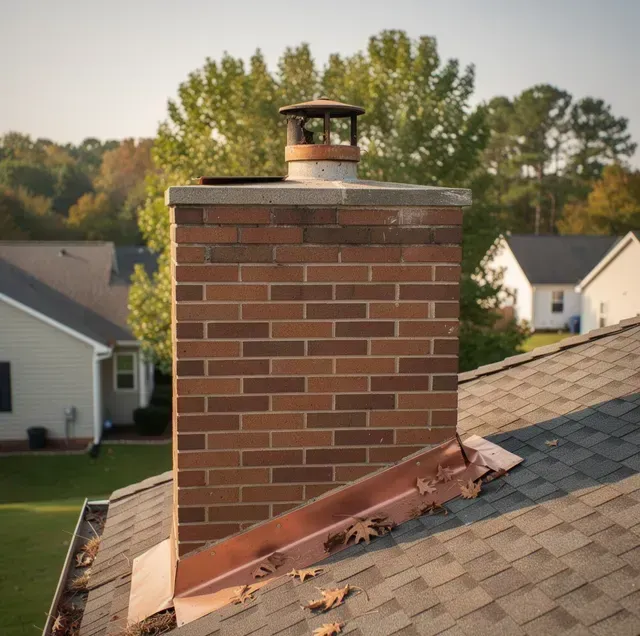
Lightning is looking for the shortest, most conductive path to ground, and on most rooflines the chimney is the tallest thing around, often by several feet. Height alone raises the odds. Add the fact that a chimney frequently carries a metal chimney cap, a metal chase cover, or a stainless steel liner running down the flue, and you have a structure that combines elevation with a built-in conductor. None of this means a chimney "attracts" lightning in some magnetic sense. It means that when a strike is going to happen to a house, the tallest, most conductive point on that house is the statistically likely place for it to make contact.


That metal liner is also a conductive path running from the roofline down into the house, not just a feature of the exterior stack. Current that finds it at the top can travel the length of it, which is one reason a suspected strike is worth checking against any appliance connected to that flue, not just the visible masonry (more on that below).

What Actually Happens When Lightning Hits Masonry

Brick and mortar are poor conductors when they're dry. A strike on a bone-dry chimney tends to concentrate at whatever metal it can find, arcing through a liner, jumping across flashing, or tracking along a length of embedded rebar in a crown, because metal offers far less resistance than fired clay brick. That concentrated energy is what produces the more violent, localized damage: a blown-out section of crown, a liner with a pinhole burned clean through it.


Wet masonry behaves differently, though not because water competes with metal as the preferred path. Even soaked, brick and mortar remain far more resistive than a steel liner or embedded rebar, so current still finds metal first and travels through it preferentially. What changes is how much pore water the surrounding masonry is carrying when that current arrives. A saturated chimney holds far more moisture in its pores than a dry one, and all of it is candidate fuel for the flash-to-steam reaction described below, spread across a wider area of brick rather than concentrated at a single metal point. The result tends to look less like one dramatic blowout and more like cracking scattered through multiple courses of brick and several mortar joints at once. This is one reason two chimneys hit by comparable strikes can end up with very different-looking damage: one took the hit dry, one took it soaked.


Either way, what actually causes the visible destruction is usually flash heating. A lightning channel briefly reaches temperatures far hotter than a blowtorch, and moisture trapped inside the pores of brick, mortar, or concrete converts to steam almost instantly. That steam has nowhere to go, so it forces its way out, taking chips, chunks, or entire faces of masonry with it. The technical term for it is spalling, the same failure mode you get from years of freeze-thaw cycling, except a lightning strike does in a fraction of a second what frost damage does over several winters.

The Damage Patterns a Strike Leaves Behind

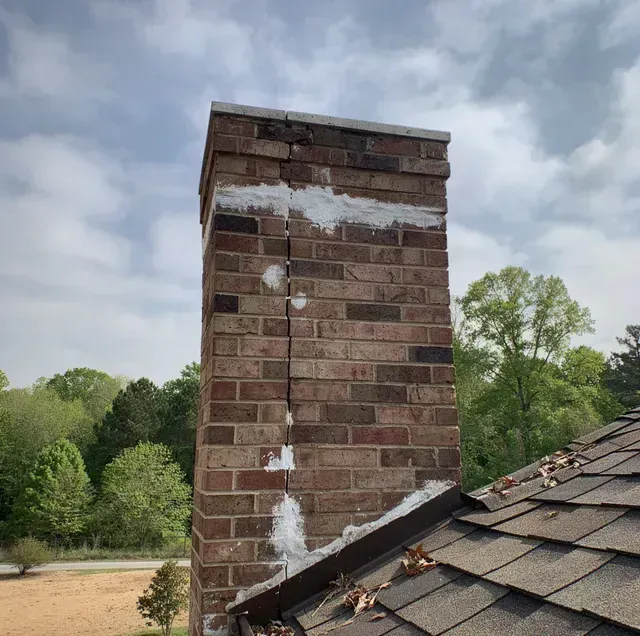
  • Explosive spalling on brick or the crown: Chunks of masonry blown off the face of the stack or off the concrete crown at the top, sometimes found on the roof or in the yard, with fresh, light-colored broken surfaces where old brick was exposed.
  • Cracked or shattered flue tiles: Clay tile liners can split along a joint or crack straight through, and because the tiles sit stacked inside the flue, a crack partway down is invisible from the top and often invisible from the firebox too.
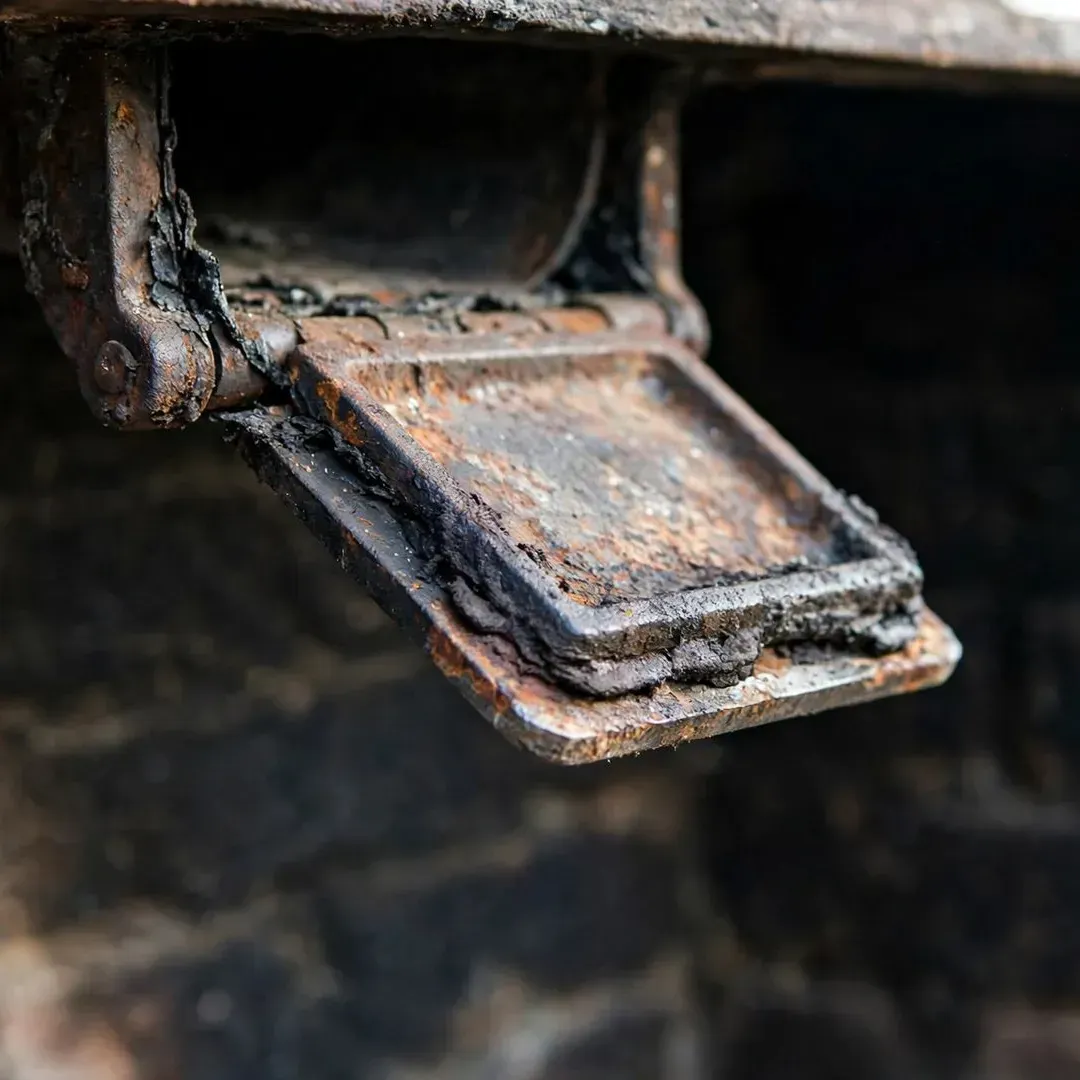
  • Pinholed or melted spots on a metal liner: A stainless steel liner can develop a small burned-through hole or a discolored, distorted patch where current arced through it, most often near a seam or a connector.
  • Scorched or blown-out mortar joints: Mortar is more porous than the brick around it, so it's often the first thing to fail, leaving a joint that looks crumbled, discolored, or missing compared to its neighbors.
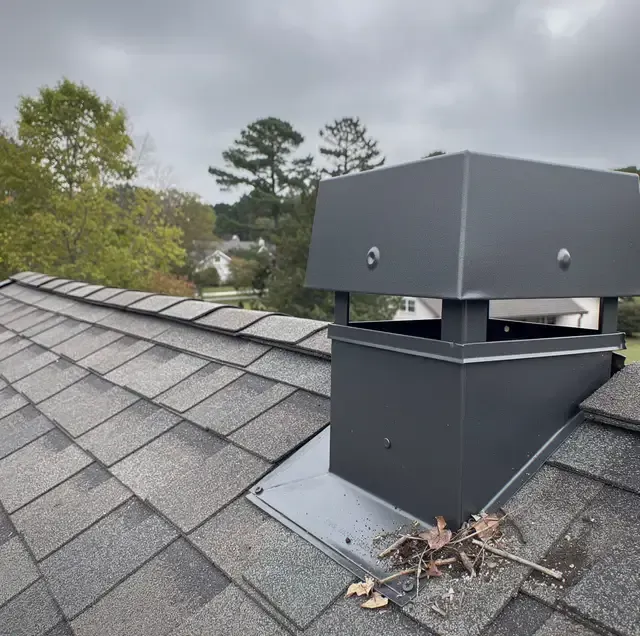
  • A cap or crown blasted off entirely: Sometimes the most obvious sign is the simplest one: the chimney cap that was screwed or bolted down is gone, or the crown has a visible fracture running across it.

How to Tell It Was Lightning, Not Just Storm Wear

Wind, hail, and falling limbs damage chimneys too, so the question homeowners usually ask is how to know which one they're dealing with. A few clues point specifically to a strike rather than ordinary storm battering.

What you notice What it likely means What to do
A sharp, metallic or ozone-like smell near the chimney right after the storm Air ionized by the strike itself, similar to the smell near an electrical short Note the timing and check for visible damage before the next fire
Dark scorch or char marks on brick, the cap, or crown Direct contact point where current entered the masonry Schedule an inspection before using the fireplace again
Brick, tile, or mortar debris scattered on the roof or in the yard Spalling from flash heating, not gradual weathering Have the flue scoped, since debris often means a tile broke somewhere above it too
A single loud crack reported at the time, distinct from rolling thunder Consistent with a nearby or direct strike Even with no visible exterior damage, a proactive inspection is worth booking
The cap or chase cover missing after a storm with no obvious wind damage elsewhere Possible strike blast rather than wind lift Check the flue interior, not just the missing part, before assuming it was only wind

Why a Level 2 Inspection Is the Right Call After a Strike

Industry guidance, referenced broadly under standards like NFPA 211, treats any event that could have affected the flue's structural integrity- a chimney fire, a significant weather event, or storm impact- as a reason for a Level 2 inspection rather than a routine visual check. A Level 2 inspection uses a video camera scanned down the full length of the flue, because the damage that matters most- a cracked tile a few feet below the crown, a pinhole in a liner where it bends behind a wall- is exactly the damage you cannot see by looking up from the firebox or down from the roof with a flashlight. Soot and creosote coating the flue walls can also visually blend a hairline crack into the surrounding surface until a camera pass exposes it in detail.


Skipping that step and just patching what's visible from outside leaves the possibility that combustion byproducts, or in a wood-burning flue, actual flame and heat, are reaching a gap in the liner that sits against wood framing or roof decking. That's the real reason a strike gets treated as a full-inspection trigger rather than a cosmetic repair.

Frequently Asked Questions

  • Is there anything that actually reduces the odds of a strike or protects the chimney if one happens?

    A dedicated lightning protection system, a network of grounded air terminals (commonly called lightning rods) tied into the home's grounding, gives a strike an intentional, low-resistance path to ground instead of leaving the chimney to take the full hit. That's a specialized installation handled by an electrician or a lightning-protection contractor, not something a chimney service installs. What a chimney company can do is confirm, after any suspected strike, that the flue and any connected appliance came through it undamaged.

  • Can a lightning strike start a chimney fire?

    Yes, if there's enough creosote built up inside the flue. The heat and arcing from a strike can ignite deposits that a normal fire wouldn't have reached, which means a chimney with heavy creosote buildup going into a strike is at higher risk for a secondary fire than a flue that was recently swept.

  • I didn't hear anything, but a storm rolled through with nearby strikes. Should I still get it checked?

    It's worth it. Technicians doing a post-storm check also look inside the attic space around the chimney chase for daylight coming through an unexpected gap or debris that migrated down from a cracked upper section of tile, both of which can show up even when nobody in the house heard or felt a direct hit.

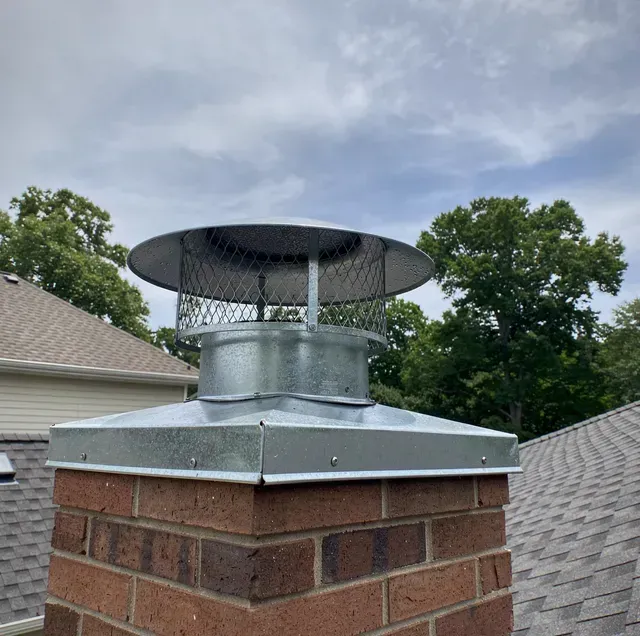
  • Could the cap's mesh screen take damage that still passes a ground-level look?

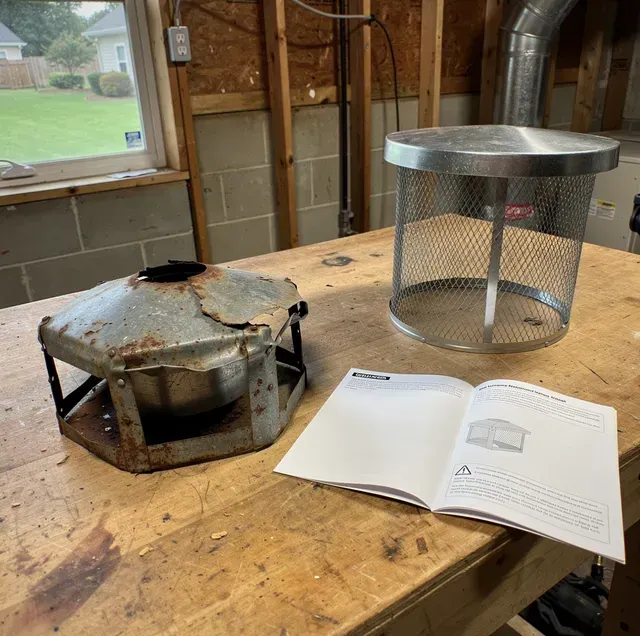
    Yes. A spark-arrestor mesh can get pitted, partially melted, or have several strands fused together by a strike without the cap looking obviously wrong from the ground, since the damage is often concentrated in the mesh weave rather than the cap's outer frame. A mesh that's lost sections like this stops doing its job (keeping sparks in and debris out) even though the cap appears intact from a distance, which is one more reason a suspected strike calls for a closer look than a glance up from the yard.Not always right away. If mold has already established itself in insulation or framing before the leak was fixed, the smell can persist because the fix addressed the water source, not the material that's already affected. A smell that continues for more than a couple of weeks after a repair, especially one that seems to circulate through the HVAC system rather than staying localized, is a reason to have the affected cavity checked rather than assume it's air freshener territory.

  • Does a strike damage a cast-in-place liner the same way it damages a clay tile or metal one?

    Not quite. Clay tile tends to crack or shatter along a joint, and a metal liner tends to pinhole or scorch at a concentrated point, but a cast-in-place liner is a continuous cementitious coating rather than jointed sections or a single conductive tube, so strike damage to it usually shows up as localized flaking or a section where the smooth cast surface has separated from the masonry underneath. That difference is part of why a camera inspection after a strike needs to account for which liner type is actually in the flue rather than checking for one universal damage signature.

  • Can strike damage happen with zero visible cracks anywhere?

    Yes. A hairline fracture running along a mortar joint inside the flue can be dark with soot and blend into the surrounding surface well enough that a flashlight from the firebox won't catch it. That's specifically what the camera pass in a Level 2 inspection is built to find, since it can travel the joint at close range under direct light instead of relying on a distant view.

  • Could a strike affect a gas fireplace or insert connected to the chimney, not just the masonry?

    It can. Current traveling down a metal liner can jump to metal components on a connected gas insert, including its electronic ignition module or control board. After a suspected strike on a chimney with a gas appliance attached, it's worth having the insert's ignition system checked along with the flue itself, rather than assuming only the masonry needs a look.

Most homeowners never think about their chimney and a storm in the same sentence until a strange smell or a missing chunk of brick forces the question. The masonry itself won't tell you what happened in plain language, but the pattern of damage almost always will, if someone gets a camera down the flue to read it.

Book a Level 2 inspection after a suspected strike — get a camera scan of the flue and, if applicable, a check of any connected gas appliance. Perfect Chimney Cleaning serves Greensboro, High Point, and Winston-Salem. Call (336) 604-6711.

Recent Posts

August 8, 2026
Smoky, slow fires coat your flue in creosote. Learn the wood, airflow, and build tricks that keep a fire hot, clean, and safer to run.
Close-up of a weathered brick wall with cracked, crumbling mortar and damaged bricks.
August 1, 2026
A chimney cap is the small screen at the top of your flue. See the four things it keeps out of your home and how to tell when yours has failed.
Brick fireplace with glowing embers and wisps of smoke rising from burning logs
July 30, 2026
Smoke rolling into your living room instead of up the chimney points to a draft or pressure problem. Learn the seven causes and how to fix each one.
Close-up of a charred, cracked tunnel floor with soot-covered debris and light at the far end
July 27, 2026
Wondering what that black crust in your chimney is? Learn how creosote forms, its three stages, why it ignites, and how to keep buildup in check.
Top view of a metal chimney or pipe opening surrounded by cracked concrete and terracotta tiles
July 14, 2026
Not sure what a chimney liner does or whether yours is failing? Learn what the flue liner protects, the three common types, and the warning signs to watch.
Close-up of a brick tunnel interior with a dark metal chute overhead and sunlight at the far end
July 18, 2026
Booking a chimney inspection and unsure what they look at? See what gets checked, the three inspection levels, and which one your situation calls for.
Clogged dryer vent hose with lint buildup in a laundry room
July 15, 2026
Clothes drying slower, a hot laundry room, or a burning smell? Learn the warning signs of a clogged dryer vent before lint turns into a house fire.
Metal vent cap on a brick chimney against the sky.
July 12, 2026
A chimney that looks fine from the hearth can still hide damage a yearly visit catches early. See what a full annual check actually covers.
Close-up of a weathered red brick column with dark wooden beams and graffiti marks
July 9, 2026
A musty smell near the fireplace can mean more than a wet flue. See where chimney-leak mold actually grows and what stops it early.
Modern gas fireplace with bright flames in a brick wall, with a small control panel nearby
July 6, 2026
A flickering yellow pilot light or stale air near your fireplace can signal carbon monoxide behind a blocked chimney. Know the signs and when to evacuate.
Show More