Chimney Inspection After a Renovation: Do You Need One?
| Factor | Older/historic masonry | Modern masonry |
|---|---|---|
| Mortar binder | Lime-based, low or no Portland cement | Portland-cement-based, harder curing |
| Mortar flexibility | Softer, some self-healing of hairline cracks | Rigid once cured, cracks stay cracked |
| Brick type | Handmade or soft-mud, lower fire temperature | Extruded, wire-cut, higher fire temperature |
| Brick porosity | More absorbent, prone to spalling | Denser, less water uptake |
| Typical liner status | Often unlined, undersized, or original clay tile | Liner sized and installed to current standards |
| Repair priority | Match mortar chemistry, not just color | Standard modern mortar mixes generally compatible |
| Common failure pattern | Brick face spalling; joint self-healing can mask real deterioration | Joint cracking tends to precede brick damage |
Older chimneys were often built on shallower footings than current standards call for, and after decades of ground movement and the chimney's own weight, some settling is common: a slight lean, a visible gap where the chimney meets the roofline, or a stair-step crack pattern following the mortar joints diagonally. A small, stable lean or an old, dormant crack isn't automatically an emergency, but telling "old and stable" from "active and worsening" benefits from a hands-on inspection rather than a guess from the ground.
A technician can often get a first read on mortar type without lab testing. Dragging a metal key or nail across a joint that leaves a visible scratch and a little powder points toward a softer, lime-rich mix, while a joint that resists scratching and holds a sharp edge points toward a harder, Portland-heavy mix. This test doesn't replace a proper inspection or lab analysis of the actual composition, but it's a useful first check before assuming a chimney can be treated like standard modern construction.
The damper is the movable plate that opens and closes the path between the firebox and the flue above it. Traditional dampers are a hinged metal flap mounted at the throat, right in front of the smoke shelf at essentially the same level; newer systems often use a top-mount damper instead, a sealing plate at the very top of the flue operated by a cable or lever from the firebox. The damper's job: it closes off the flue when there's no fire burning, so conditioned indoor air doesn't pour straight up the chimney, and it opens fully to let smoke and gases draft out when you do have a fire going. A damper that won't seat properly, whether warped, rusted, or coated in old creosote, wastes energy and can also affect how well a fireplace drafts once lit.
Hearth Extension
Not every renovation touches your chimney, but more of them do than most homeowners realize. A crew can be nowhere near your fireplace and still loosen a seal, block a clearance, or disconnect a line that your chimney depends on. The trick is knowing which projects carry that risk and which ones don't, so you're not paying for an inspection you don't need or skipping one you do.
Here's how to work through it: match your recent project against the list below, understand what that specific work can disturb, and use the guidance at the end to decide whether a follow-up inspection makes sense before you build your next fire.
Roof Replacement or Repair Near the Chimney
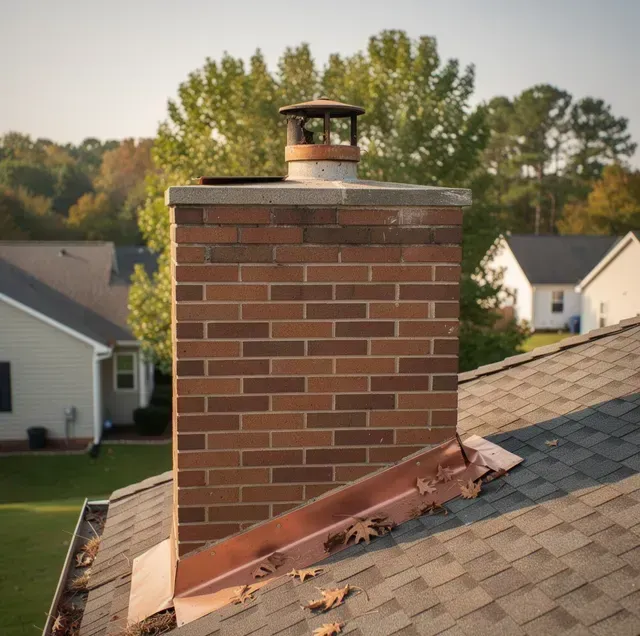
A new roof almost always means new flashing, and flashing is the single most common casualty of a re-roofing job. Flashing is the layered metal that seals the joint where your chimney's masonry meets the roof deck: step flashing woven into each course of shingles, plus counter-flashing set into a mortar joint or under the chimney crown to shed water over the step flashing below. It's a two-piece system, and it only works if both pieces overlap correctly.
Roofing crews replace shingles for a living, but chimney flashing is a different trade with different tolerances. It's common for a roofer to reuse old counter-flashing, caulk over a gap instead of re-cutting the reglet it sits in, or leave the step flashing loose where it tucks against the brick. None of that shows up as a problem on day one. It shows up as a stain on your ceiling three storms later, once water has had time to find the shortcut.
If your roof was replaced or repaired anywhere within a few feet of the chimney, that's a strong case for a follow-up check, specifically a look at the flashing seal, not necessarily a full inspection of the whole system.
Siding Replacement or Re-Siding Around the Chase
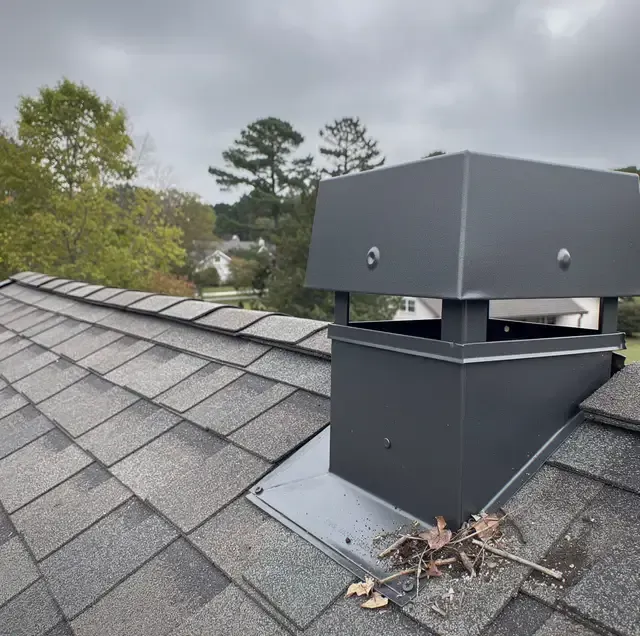
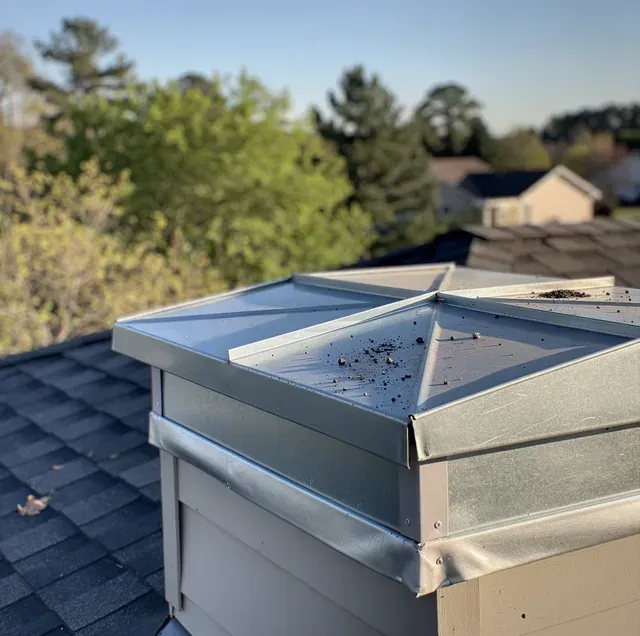
A factory-built, prefab fireplace usually sits in a wood-framed chase that's wrapped in the same siding as the rest of the house, and that chase has its own flashing where it meets the roof and where the siding meets the chase cap on top. Re-siding crews cut, pry, and refasten around that chase the same way they do around a window or a dryer vent, and the chase cap and its flashing are easy to bump loose or reseal poorly in the process.
There's also a clearance issue that's easy to overlook. Manufacturers specify a minimum air gap between combustible framing, the wood chase structure, siding, trim, and the metal flue pipe running up through it. If a re-siding crew adds furring strips, thicker sheathing, or extra trim board to build out the wall, that added thickness can eat into the clearance the flue pipe was originally installed with. It's a small measurement, but it's the kind of thing that matters when that pipe is carrying combustion byproducts.
Siding work around a masonry chimney is lower risk since there's no chase to disturb, but siding work around a prefab chase is worth a clearance and flashing check afterward.
New HVAC System or Furnace Tie-In
This is the renovation category most likely to affect a gas appliance and the one homeowners are least likely to connect to their chimney. If your furnace vents into a masonry flue, either on its own or sharing a chimney with your water heater, swapping that furnace for a new high-efficiency model can change how the whole flue behaves. Many new high-efficiency furnaces vent through PVC pipe directly outside instead of up the chimney, which means a flue that used to carry two appliances now carries one, or none. An oversized, now-orphaned flue can cool exhaust gases too quickly and cause them to condense and backdraft instead of drawing properly.
Picture it like a straw: draw air through a narrow straw, and it moves with purpose, but blow the same breath through a wide pipe, and it barely stirs. A flue sized for two appliances' worth of exhaust behaves the same way once one of them is gone.
Any time an HVAC contractor disconnects, resizes, or reroutes a vent connector at the chimney, that connection and the flue's draft need to be checked before you rely on it again, whether it's for a furnace, a water heater, or a gas log set.
Adding an Addition or Bump-Out Near the Chimney
An addition changes the roofline, and a changed roofline changes how wind moves across your house. Chimneys are designed with a rule of thumb in mind: the flue outlet needs to clear the roofline by at least a set height and horizontal distance so nearby structures don't create wind turbulence that pushes exhaust back down the flue. Build a two-story addition next to a chimney that used to have an open roof on that side, and you can turn a chimney that drew perfectly fine for years into one that smokes on windy days.
Addition framing can also land new joists, blocking, or ductwork directly against or through the required clearance zone around the chimney or flue, especially if the addition ties into the existing roof structure right at the chimney chase.
If your addition changed the roofline near the chimney, added a wall or ceiling adjacent to the chase, or ran new framing close to the flue, that combination of draft and clearance is worth having checked before your next fire.
Attic Insulation Work
Blown-in or batt insulation added during an energy-efficiency upgrade is one of the quieter risks on this list because the work happens in the attic, far from the fireplace itself, and most crews never think about the chimney at all. The problem is clearance. Insulation contractors are focused on R-value coverage, and it's easy for loose-fill insulation to migrate against a metal flue pipe or get packed directly up to a masonry chimney where manufacturers and safety guidelines call for a clear air gap.
It's also common for insulation to bury or block the damper's cable or the fresh-air intake tied to a gas appliance, neither of which is visible again until someone goes looking.
If your attic got new or topped-up insulation and a chimney or flue pipe is running through that attic, it's worth a look to confirm the clearance around it is still intact, and nothing got packed against the pipe.
When a Post-Renovation Inspection Is (and Isn't) Warranted
Run your project against these four questions:
Did the work happen within roughly six feet of the chimney, chase, or flue pipe? If a crew was cutting, drilling, or fastening anything near that footprint, from either inside or on the roof, that's reason enough for a check.
Did the project add material near the flue, whether siding thickness, insulation, or framing? Anything added close to a flue pipe can eat into a clearance that was fine before.
Did an appliance connection change? A new furnace, water heater, or gas insert that ties into (or out of) an existing flue changes how that flue is sized to perform, regardless of whether any physical work touched the chimney itself.
Did the roofline or nearby structure change? New rooflines and additions can alter wind patterns around the flue outlet even when nobody touched the chimney directly.
If you answered yes to any of these, a follow-up inspection is the reasonable next step, and it doesn't need to be a full top-to-bottom evaluation if the renovation was localized; a targeted check of the affected area is often enough. If your project was well away from the chimney system, say a kitchen remodel on the far side of the house with no new HVAC tie-in, there's usually no need to schedule anything extra.
Frequently Asked Questions
Does a re-roofing contract usually include chimney flashing replacement?
Not automatically. Many roofing contracts exclude chimney flashing as a line item or only cover the step flashing woven into the shingles, leaving the counter-flashing set into the mortar joint out of scope. It's worth asking your roofer, before the job starts, whether flashing replacement is included and whether it carries a separate warranty from the shingles, since the two are often covered under different terms.
How soon after the renovation should the inspection happen?
There's no need to rush it same-day unless you plan to burn a fire immediately. A good window is anytime before the appliance's first use after the project wraps, since a Level 1 inspection of the accessible areas can typically be scheduled and completed within a single visit.
Can this be combined with a regular annual cleaning?
If your annual cleaning is due within a couple of months of the renovation, yes, combining them into one visit saves a trip. If the renovation involved a roofline change, a new HVAC tie-in, or work close to the flue, don't wait for the annual date; those specific triggers warrant a look sooner regardless of when the chimney was last serviced.
The crew said they never touched the chimney. Is a check still worth it?
Possibly, yes. Vibration from nearby work, like a nail gun, a pressure washer against the brick, or heavy foot traffic on the roof, can hairline-crack a chimney crown or loosen mortar joints without anyone physically working on the chimney itself. If the work happened within several feet, a quick visual check costs little and rules this out.
Does replacing just a water heater (not the furnace) matter here?
It can. If your water heater and furnace share a single flue, changing the water heater to a different venting type, such as a power-vent model that no longer uses the shared chimney, changes how much exhaust that flue is now handling on its own, the same undersizing or oversizing issue that comes up with furnace replacements.
What are the practical signs that a flue's draft was thrown off by nearby work?
Watch for a puff of smoke or a burning smell drifting back into the room when the appliance first fires up, visible condensation streaking down inside a metal flue pipe, or soot collecting faster than usual around a gas appliance's draft hood. Any of those point to a draft or clearance problem worth having checked rather than worked around.
The chimney and the rest of the house are more connected than they look from the outside. A renovation crew doing excellent work in their own trade can still leave your flue in a state it wasn't designed for, simply because checking chimney clearance isn't part of their job. Closing that gap with one focused inspection after the project wraps costs you far less than finding out the hard way, mid-winter, with a room full of smoke or a stain spreading across the ceiling.
Get your flashing checked and traced — a CSIA-certified technician can pinpoint whether it's the flashing, the crown, or the cap letting water in before it spreads further. Perfect Chimney Cleaning serves Greensboro, High Point, and Winston-Salem. Call (336) 604-6711.
Recent Posts