Hotel & B&B Fireplace Safety: What Guests Never See
| Factor | Older/historic masonry | Modern masonry |
|---|---|---|
| Mortar binder | Lime-based, low or no Portland cement | Portland-cement-based, harder curing |
| Mortar flexibility | Softer, some self-healing of hairline cracks | Rigid once cured, cracks stay cracked |
| Brick type | Handmade or soft-mud, lower fire temperature | Extruded, wire-cut, higher fire temperature |
| Brick porosity | More absorbent, prone to spalling | Denser, less water uptake |
| Typical liner status | Often unlined, undersized, or original clay tile | Liner sized and installed to current standards |
| Repair priority | Match mortar chemistry, not just color | Standard modern mortar mixes generally compatible |
| Common failure pattern | Brick face spalling; joint self-healing can mask real deterioration | Joint cracking tends to precede brick damage |
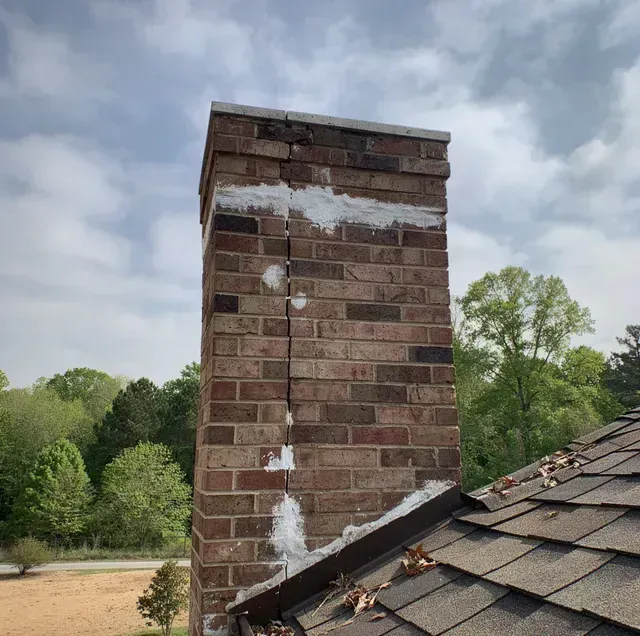
Older chimneys were often built on shallower footings than current standards call for, and after decades of ground movement and the chimney's own weight, some settling is common: a slight lean, a visible gap where the chimney meets the roofline, or a stair-step crack pattern following the mortar joints diagonally. A small, stable lean or an old, dormant crack isn't automatically an emergency, but telling "old and stable" from "active and worsening" benefits from a hands-on inspection rather than a guess from the ground.
A technician can often get a first read on mortar type without lab testing. Dragging a metal key or nail across a joint that leaves a visible scratch and a little powder points toward a softer, lime-rich mix, while a joint that resists scratching and holds a sharp edge points toward a harder, Portland-heavy mix. This test doesn't replace a proper inspection or lab analysis of the actual composition, but it's a useful first check before assuming a chimney can be treated like standard modern construction.
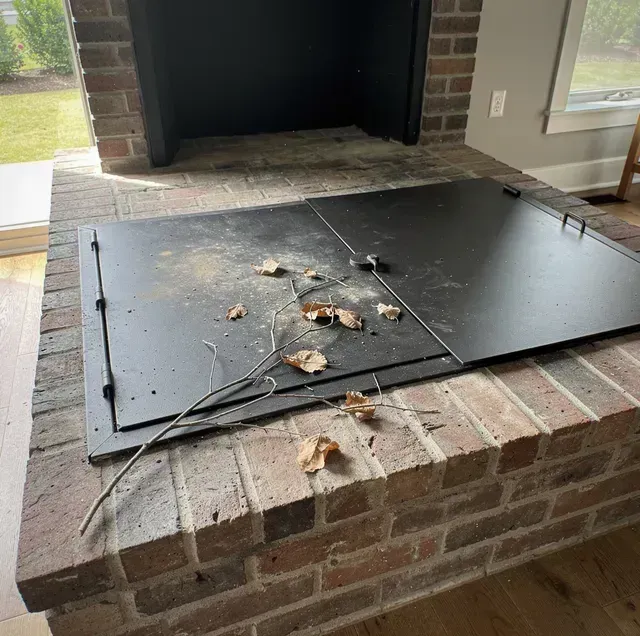
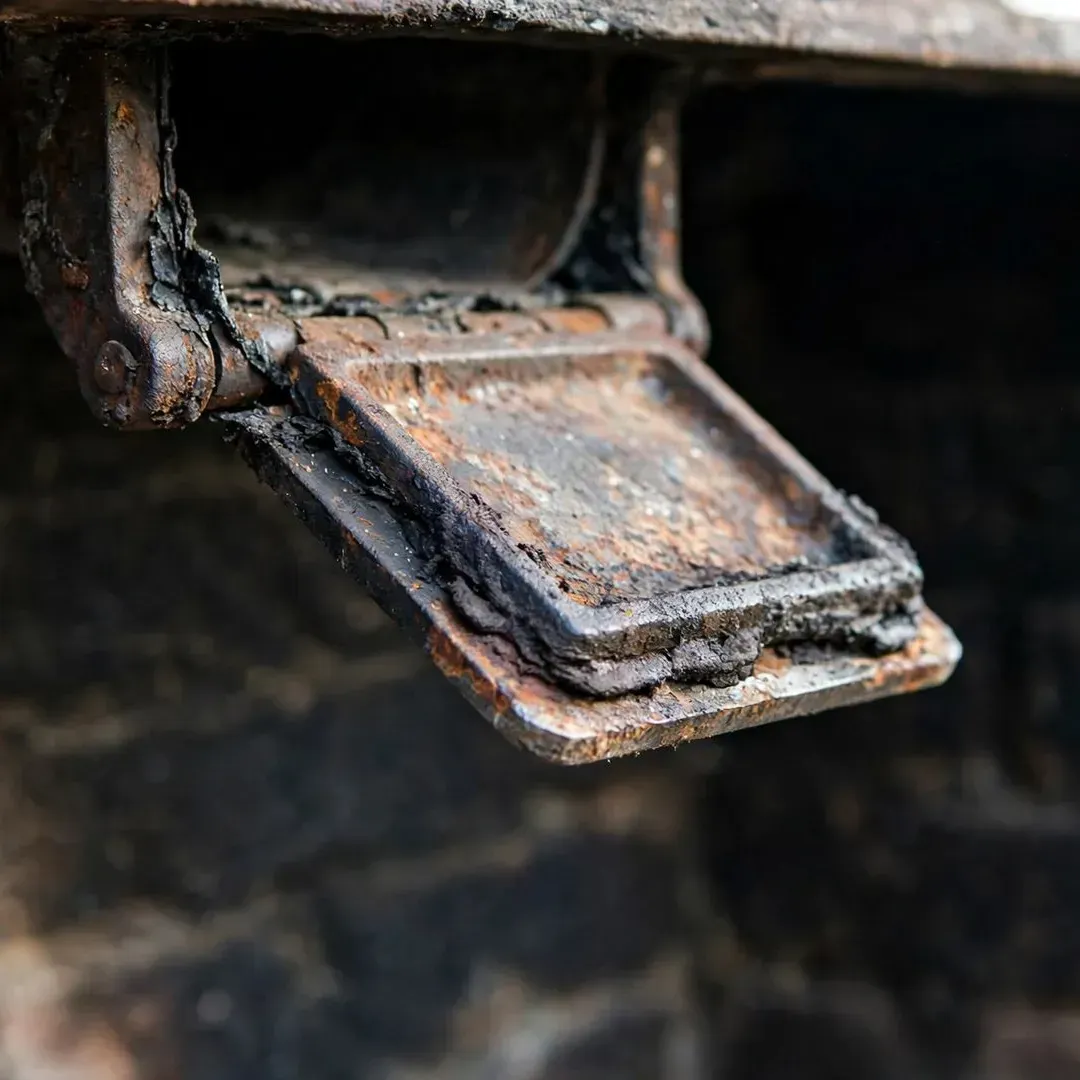
The damper is the movable plate that opens and closes the path between the firebox and the flue above it. Traditional dampers are a hinged metal flap mounted at the throat, right in front of the smoke shelf at essentially the same level; newer systems often use a top-mount damper instead, a sealing plate at the very top of the flue operated by a cable or lever from the firebox. The damper's job: it closes off the flue when there's no fire burning, so conditioned indoor air doesn't pour straight up the chimney, and it opens fully to let smoke and gases draft out when you do have a fire going. A damper that won't seat properly, whether warped, rusted, or coated in old creosote, wastes energy and can also affect how well a fireplace drafts once lit.
Hearth Extension
When a Post-Renovation Inspection Is (and Isn't) Warranted
A guest checking into a corner suite with a working fireplace doesn't ask when it was last swept. They don't know the damper sticks half-open, or that the flue in that particular room drafts poorly on a still night. They assume it works, because assuming it works is the entire point of paying for a room with a fireplace in it. That gap between what a guest assumes and what a property owner actually knows about each unit is the starting point for how chimney and fireplace safety works differently at a hotel, inn, or lodge than it does in a private home.
A homeowner with a smoky flue or a slow-closing damper lives with that flaw long enough to notice it, adjust around it, or eventually call someone. A guest gets none of that runway. They spend one or two nights in a room they've never used before, operating an appliance they didn't install and won't be around to troubleshoot if something goes wrong. That's a different kind of risk than residential wear and tear, and it calls for a different kind of maintenance program, one built around per-unit inspection, per-unit records, and a clear compliance trail rather than a single annual check on a single home.
Guests Can't Know What You Know
In a private home, the person who lights the fire is also the person who knows the chimney's quirks. At a hospitality property, those two people are rarely the same. Whoever occupies the room tonight has no history with that fireplace, no idea whether the flue was swept this season, and no reason to double-check anything before they use it. The property carries that knowledge instead, or it doesn't carry it at all.
That's the practical gap in this setting: a guest will reasonably assume a working fireplace in their room is safe to use, and the property is the only party positioned to have actually verified that ahead of time. A single-family homeowner who skips a season of maintenance mostly affects their own household. A hospitality operator who skips it is extending that same gap to every guest who books the room, plus staff who service it. It's a different maintenance category than routine home upkeep, even though the physical inspection looks similar either way.
One Property, Many Fireplaces, Many Compliance Records
A boutique inn might have working wood-burning fireplaces in six or eight guest rooms plus a larger one in the common lobby. A mountain lodge might pair guest-room gas units with a shared great-room fireplace that runs most evenings during peak season. Either way, the maintenance question stops being singular. It's not "is the chimney okay," it's "is each of these units okay, and can I prove which ones I checked, when, and what I found."
That per-unit framing matters for two reasons. First, fireplaces in the same building can be in noticeably different condition. A guest-room unit used a handful of nights a month wears very differently than a lobby fireplace lit most evenings the property is open. Treating them as one maintenance item because they're under one roof misses that. Second, if something ever goes wrong in a specific room, a specific unit, an insurer or an incident investigation is going to want to know the service history of that exact fireplace, not a general statement that "the chimneys get checked." A commercial chimney service built for multi-unit properties handles this by inspecting and sweeping each fireplace on its own annual cadence, following NFPA 211 guidance for a Level 1 sweep and inspection per unit, with camera-photo records and a written report for each individual fireplace delivered within 48 hours of the visit, not a single combined note for the whole building.
That per-unit paper trail is worth more at a hospitality property than almost anywhere else it applies. If Room 4's fireplace was serviced in March and Room 9's wasn't due until June, you want a record that shows exactly that, not a memory of "we had someone out earlier this year."
Turnover You Can't Control
A homeowner's fireplace habits are consistent because one household sets them: the same person closes the damper, the same person knows not to overload the firebox, the same person notices if something smells off. A hospitality property resets that consistency every single night. Different guests, different familiarity with fireplaces in general, and nobody tracking whether the last occupant left the damper open, jammed the screen, or reported a smoke smell to the front desk instead of maintenance.
Staff turnover compounds it: housekeeping and front-desk teams change over, and the person who trained on damper checks two years ago may not be the person restocking the room today. That's not a knock on any individual property's staff; it's a structural difference between one household operating one fireplace and a rotating cast of guests and employees operating several. It's also why basic operating guidance for staff (how to visually confirm a damper is closed after checkout, what a normal draft smells and sounds like versus what doesn't) is worth building into a housekeeping checklist rather than assuming it gets passed down informally.
The practical answer isn't tighter guest supervision, which isn't realistic or welcoming. It's inspection and maintenance frequent and thorough enough that the fireplace is in good working order regardless of who used it last or how carefully.
Gas Units in Guest Rooms Still Need a Service Cadence
Many hospitality properties lean on gas fireplaces and inserts in guest rooms specifically because they're easier to make consistent across a whole property: a wall switch or remote instead of firewood, no ash to clean between stays, and a flame that behaves the same way in every room. That consistency is a real advantage for a property managing dozens of units, but it doesn't remove the fireplace from the annual service conversation. A gas unit still vents combustion byproducts through a flue or direct-vent termination, still has components that wear or drift out of adjustment, and still belongs on the same yearly inspection cycle as a wood-burning unit, just with a different scope of work.
What a Commercial Visit Actually Covers
A commercial chimney visit for a hospitality property starts with an on-site walkthrough, so the scope reflects the property's actual mix of guest-room units and common-area fireplaces rather than a generic package. From there, the standard visit is the same NFPA 211 Level 1 sweep and inspection described above, applied unit by unit, with repair work scoped separately when the inspection turns something up: chimney caps and flashing, masonry and brick repair, liner and flue repair, fireplace repair and restoration, and full rebuilds when a chimney's condition calls for it. Each visit is scoped to the property's current unit count, which matters when room counts, renovations, or fireplace additions and removals change the picture from one year to the next.
If a visit turns up an active issue, fire damage, water intrusion, or storm damage to a chimney, that's not something that waits for the next scheduled round. 24/7 emergency response exists for exactly that gap between "found it during a routine visit" and "someone is using that room tonight."
Building the Compliance and Insurance Picture
Beyond the physical work, a hospitality property benefits from records built for how insurers, ownership groups, and property managers actually use them. That includes certificates of insurance, with additional-insured naming available so the property's own coverage lines up with the vendor's, ownership or management roll-up summaries that give a multi-unit picture at a glance instead of a stack of individual reports, and notice templates for coordinating service visits in occupied properties, so guests and staff know a technician will be on-site in a specific area without guessing why.
None of this amounts to a legal guarantee of anything. Fire codes and insurance requirements vary by jurisdiction and by policy, and this isn't legal advice. What's fair to say generally is that many jurisdictions and insurers expect regular, recorded inspection for commercial fireplace and chimney use, and a property that can produce a per-unit service history is in a far stronger position, during a renewal, an inspection, or after an incident, than one that can only say maintenance "happens periodically."
Good chimney records aren't just paperwork sitting in a file. They're the difference between telling an insurer or an investigator exactly what was checked, when, and what it showed, versus reconstructing a guess after the fact.
Frequently Asked Questions
How often should each guest-room fireplace be inspected?
The standard cadence is an annual Level 1 sweep and inspection per unit. If a specific fireplace shows an ongoing symptom, gets a new appliance installed, or has had a chimney fire, that unit typically moves up to a Level 2 inspection, which adds a full camera scan of the interior flue rather than the visual and accessible-area check that a Level 1 covers.
Does a common-area lobby fireplace need different attention than a guest-room unit?
Usually yes, in scheduling rather than method. A high-use common-area fireplace often gets a brief mid-season visual check between its full annual services, mainly to catch creosote buildup or a drafting change early rather than waiting a full year to find it. Guest-room units, seeing far less cumulative use individually, typically stay on the single annual cycle without needing that extra check.
Do gas fireplaces in guest rooms need service if guests never load them with wood?
Yes. A gas unit's annual service checks the pilot assembly, thermocouple or ignition system, glass panel seal, and the venting termination point for blockage from insects, nesting material, or debris, none of which relate to wood or ash but all of which can fail quietly in a unit that looks fine from the guest side of the glass.
What happens if a technician finds an active hazard in one unit during a routine visit?
The written report for that unit gets flagged with a clear out-of-service recommendation, dated and specific enough that front desk or housekeeping can act on it without needing to interpret a technical finding themselves, block the room, note the reason, and hold it until a follow-up visit confirms the repair. That written flag is also what a manager references when deciding whether the room can be returned to the booking rotation, rather than relying on a verbal "should be fine now" from whoever handled the repair.
Can service scope change as a property renovates or reconfigures rooms?
Yes. The next walkthrough after a renovation re-establishes the unit count and assigns new numbering to any fireplace that's been added, and a unit that's removed or bricked over during a room combination gets closed out of the active record rather than left showing as overdue on a fireplace that no longer exists. Keeping that record current matters most at ownership or management transitions, since an inherited service history is only useful if it matches what's actually still on the property.
Who actually uses the written per-unit reports besides maintenance staff?
Ownership groups and management companies commonly reference them during insurance renewal conversations, and they're useful during a change of ownership or a management transition, since a new operator inherits a recorded service history for every fireplace on the property instead of starting from zero.
A guest never sees the inspection report, the per-unit photos, or the service log behind their room's fireplace, and that's the point. The work that keeps a hospitality property's chimneys safe happens well before check-in, one unit at a time, with a record trail built for exactly the kind of scrutiny a home fireplace never faces.
Schedule a commercial chimney walkthrough — get per-unit inspection and reporting for your hotel, inn, or lodge. Perfect Chimney Cleaning serves Greensboro, High Point, and Winston-Salem. Call (336) 604-6711.
Recent Posts