What a CSIA-Certified Sweep Actually Checks, Step by Step
| Factor | Older/historic masonry | Modern masonry |
|---|---|---|
| Mortar binder | Lime-based, low or no Portland cement | Portland-cement-based, harder curing |
| Mortar flexibility | Softer, some self-healing of hairline cracks | Rigid once cured, cracks stay cracked |
| Brick type | Handmade or soft-mud, lower fire temperature | Extruded, wire-cut, higher fire temperature |
| Brick porosity | More absorbent, prone to spalling | Denser, less water uptake |
| Typical liner status | Often unlined, undersized, or original clay tile | Liner sized and installed to current standards |
| Repair priority | Match mortar chemistry, not just color | Standard modern mortar mixes generally compatible |
| Common failure pattern | Brick face spalling; joint self-healing can mask real deterioration | Joint cracking tends to precede brick damage |
Older chimneys were often built on shallower footings than current standards call for, and after decades of ground movement and the chimney's own weight, some settling is common: a slight lean, a visible gap where the chimney meets the roofline, or a stair-step crack pattern following the mortar joints diagonally. A small, stable lean or an old, dormant crack isn't automatically an emergency, but telling "old and stable" from "active and worsening" benefits from a hands-on inspection rather than a guess from the ground.
A technician can often get a first read on mortar type without lab testing. Dragging a metal key or nail across a joint that leaves a visible scratch and a little powder points toward a softer, lime-rich mix, while a joint that resists scratching and holds a sharp edge points toward a harder, Portland-heavy mix. This test doesn't replace a proper inspection or lab analysis of the actual composition, but it's a useful first check before assuming a chimney can be treated like standard modern construction.
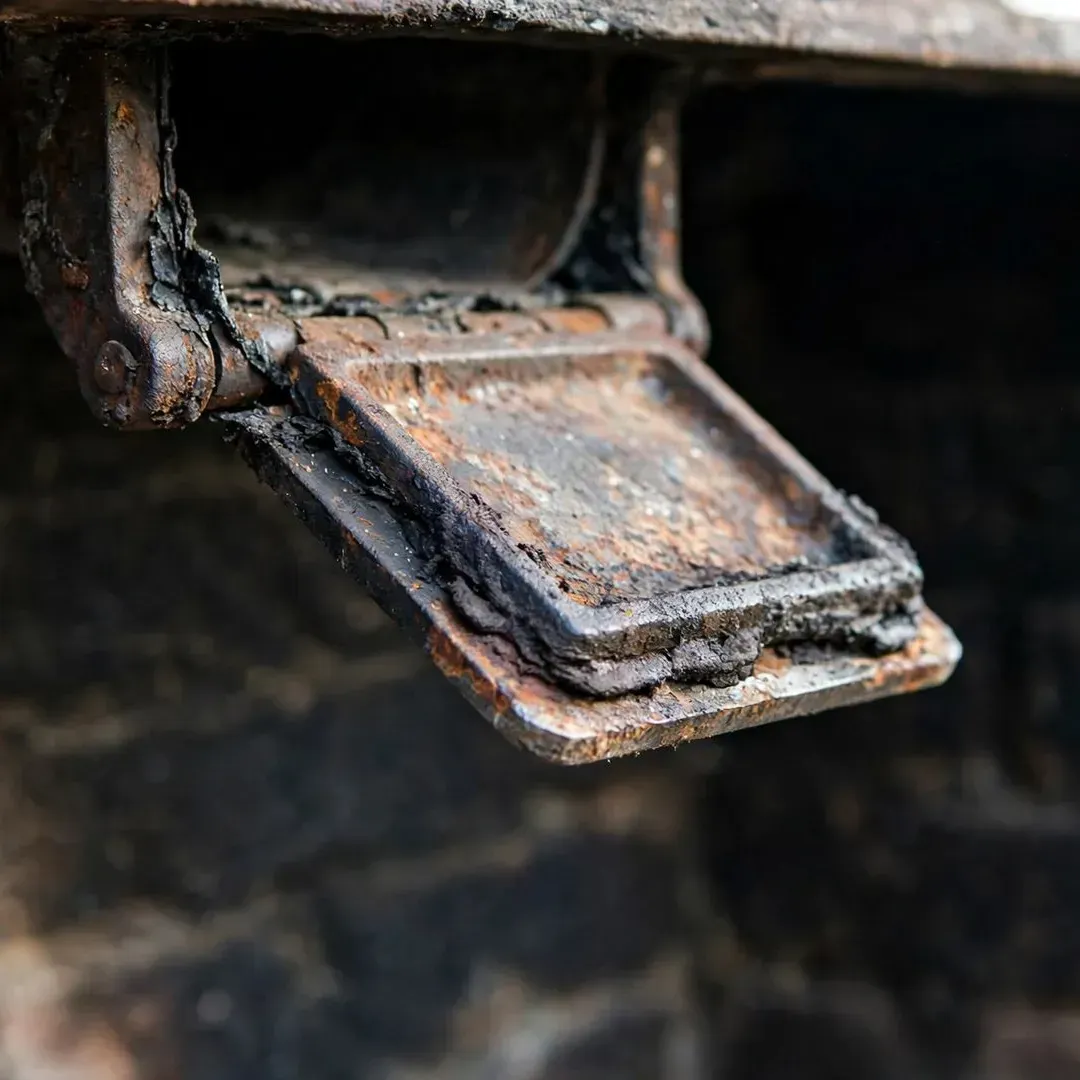
The damper is the movable plate that opens and closes the path between the firebox and the flue above it. Traditional dampers are a hinged metal flap mounted at the throat, right in front of the smoke shelf at essentially the same level; newer systems often use a top-mount damper instead, a sealing plate at the very top of the flue operated by a cable or lever from the firebox. The damper's job: it closes off the flue when there's no fire burning, so conditioned indoor air doesn't pour straight up the chimney, and it opens fully to let smoke and gases draft out when you do have a fire going. A damper that won't seat properly, whether warped, rusted, or coated in old creosote, wastes energy and can also affect how well a fireplace drafts once lit.
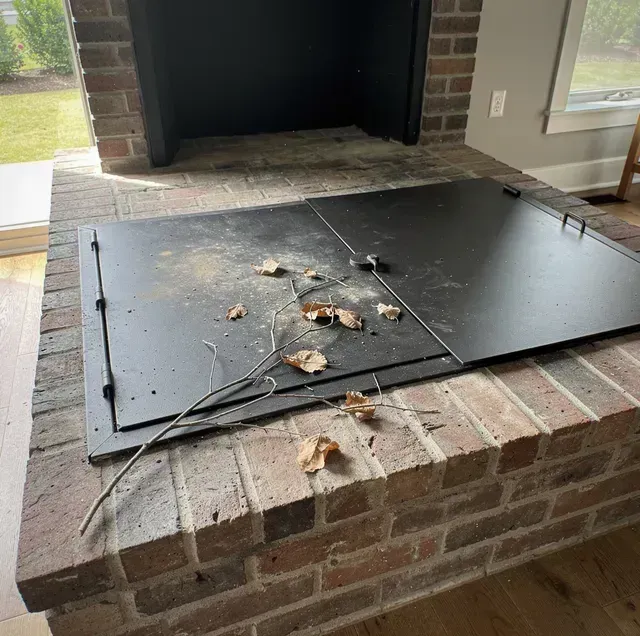
Hearth Extension
When a Post-Renovation Inspection Is (and Isn't) Warranted
Say "chimney sweep" and most people picture a broom, a bucket of soot, and maybe a top hat if they've seen too many old movies. What actually shows up at your door is closer to a systems technician running a fixed sequence: clean the flue, then work through a defined set of components in order, flagging anything that doesn't meet a known standard. The soot removal is real, but it's the smallest part of what a CSIA-certified technician is trained to do. The rest is a structured look at a system that has to move hot combustion gases safely from your firebox to open air, through masonry or metal, past framing, insulation, and roofing that all sit closer to that heat than most homeowners realize.
Here is the framework a certified sweep is actually running, from the credential itself through the visit and into the point where a routine cleaning turns into a recommendation for something more.
What the CSIA Credential Actually Covers
The Chimney Safety Institute of America has certified sweeps since the early 1980s, and the exam isn't a company-issued form. It's a standardized written test covering masonry chimney construction (clay tile liners, cast-in-place liners, mortar and firebrick behavior under heat), factory-built metal chimney systems and their listed clearances, venting theory for gas appliances, and the practical chemistry of how creosote forms and stages inside a flue. NFPA 211, the industry standard for chimney and vent-system installation and inspection, is the reference point technicians study against, not a law they cite to you, but the framework their checklist is built from.
The credential isn't permanent by default: it requires periodic renewal through continuing education, so a tech working on your chimney today is expected to be current on liner materials and venting practices that didn't exist when the fireplace was built.
Protecting the Work Area Before Any Tool Touches the Flue
Before the brushes come out, the room gets set up. A drop cloth covers the hearth and extends out onto the floor, and on many jobs the fireplace opening itself gets sealed with a containment sheet. A HEPA-filtered vacuum runs through that seal for the duration of the sweep, pulling air out of the sealed compartment so fine soot particles get drawn into the filter instead of pushed into your living room when the brush knocks material loose above. This containment step is why a professional sweep doesn't leave a layer of black dust on your mantel; a shop-vac without a HEPA filter just recirculates the finest particles right back out.
The Sweep: Matching the Brush to the Flue
Brush choice isn't one-size-fits-all, and using the wrong one can do damage. A clay tile liner can take a stiff wire brush sized about a quarter-inch over the flue's actual diameter, so the bristles make full contact with the tile walls without gouging the mortar joints between sections. A stainless-steel liner is a different story: wire bristles can scratch through its protective coating, so technicians switch to poly or nylon brushes that clean without abrading the metal. On smooth-wall metal liners, some techs run a rotary system instead, a flexible rod with a spinning brush head that follows the liner's bends without hanging up the way a straight fiberglass rod can in an offset flue. Square or oval flues get a brush shaped to match, since a round brush in a square flue only cleans the corners it happens to touch.
Walking the Level 1 Scope, Component by Component
A routine annual sweep is paired with a Level 1 inspection under NFPA 211, which covers everything readily accessible: no demolition, no removing components, just a thorough visual and physical check of the parts a technician can reach and see with a flashlight and mirror from the firebox and the roof.
Firebox and hearth: the tech checks firebrick and refractory panels for cracking or spalling, mortar joints for erosion, and confirms the hearth extension still meets the clearance the fireplace was built for.
Damper: opens fully, closes fully, and seats tight. Cast-iron and steel dampers warp from repeated heat cycling over years of use, which shows up as a gap that won't fully close even when the handle says it should.
Smoke chamber: this is the rough, angled space above the damper where the firebox narrows into the flue. It's meant to be parged, coated smooth with a heat-resistant mortar, because an unparged chamber leaves corbelled brick steps that snag creosote and embers instead of letting smoke flow straight up.
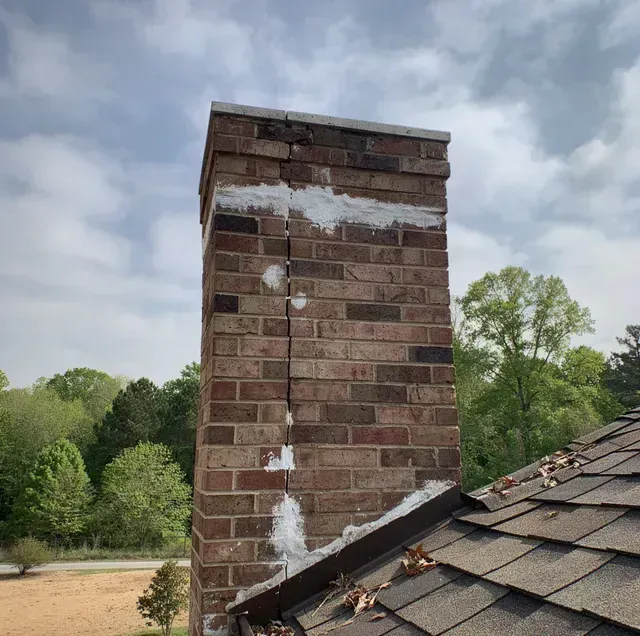
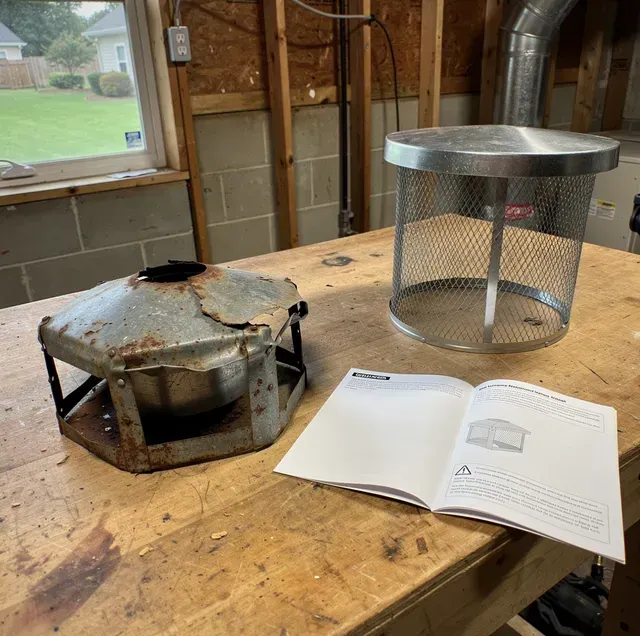
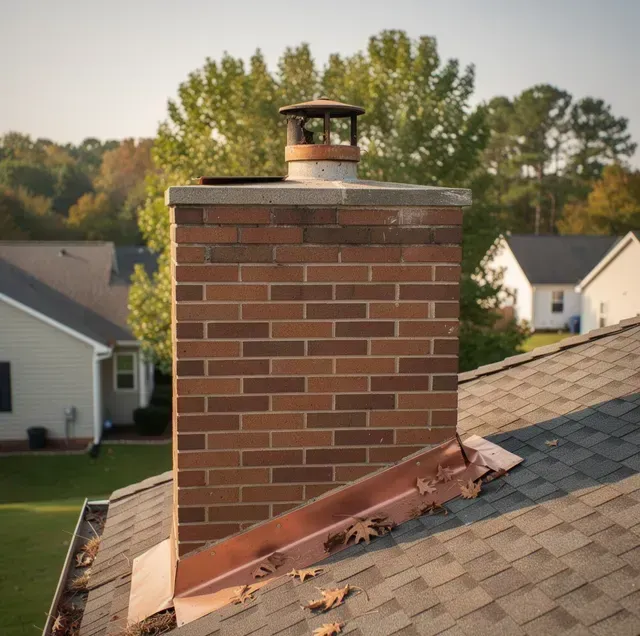
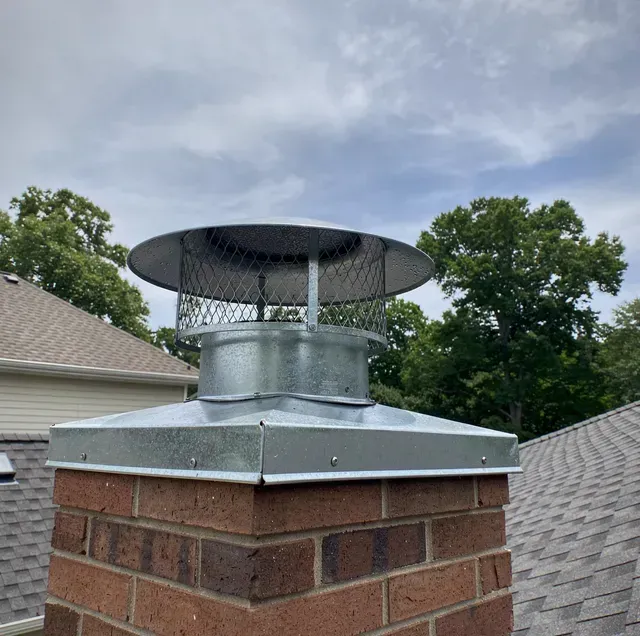
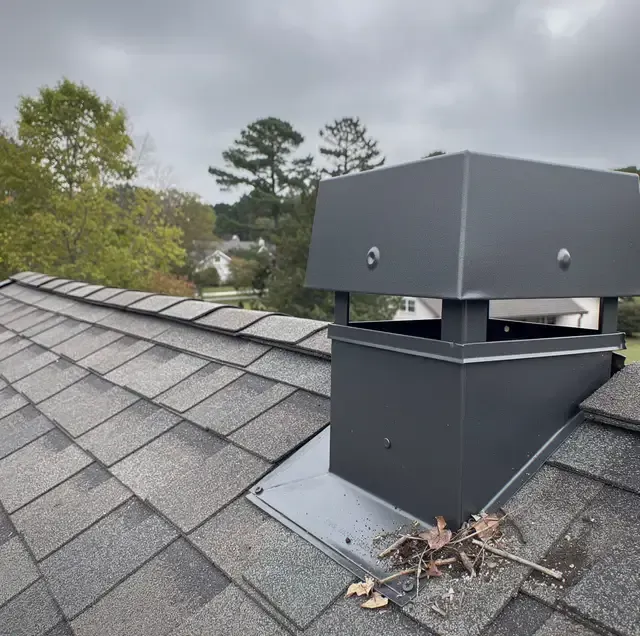
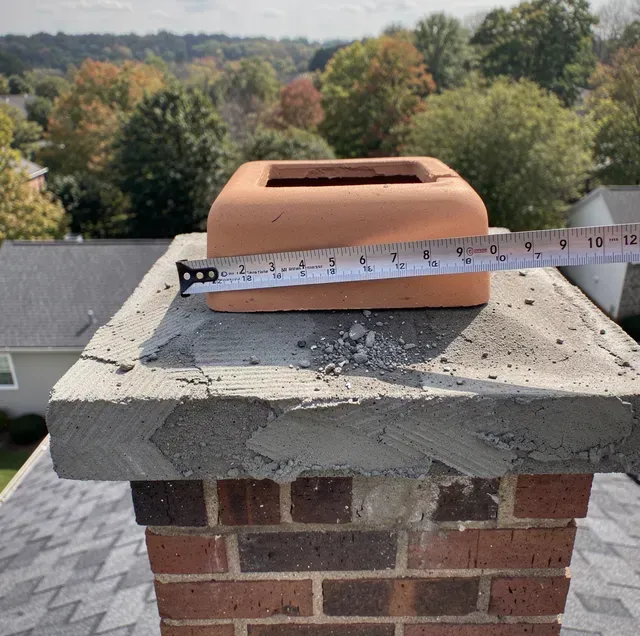
Crown and cap: the crown is the concrete or mortar slab sealing the masonry top; the cap is the separate metal cover with mesh sitting over the flue opening itself. The tech checks the crown for cracking and proper wash (the slope that sheds water away from the flue tiles) and checks the cap's mesh for rust, gaps, or crushed screen that would let sparks or animals through.
Readily accessible flue: viewed from the top down and, where possible, from below, looking for creosote staging, visible cracks or gaps in the liner, and signs of water staining that point to a leak somewhere above.
Level 1 Default Scope vs. What Pushes a Visit Toward a Level 2 Scan
| Component Checked | Stays Within Level 1 | Escalates Toward a Level 2 Camera Scan |
|---|---|---|
| Firebox & hearth | Minor mortar wear, light surface soot | Cracked refractory panels, repeated spalling |
| Damper & smoke chamber | Full travel, intact parging | Damper won’t seat, corbelled brick exposed with no parging |
| Crown & cap | Hairline surface crazing, minor rust on mesh | A crack running through the crown, missing or crushed cap |
| Readily accessible flue | Normal creosote buildup for the cleaning interval | Suspected liner gap, crack, or offset; the flashlight and mirror can’t fully see past |
| System history | No change in appliance, fuel, or ownership | Sale of the home, a fuel or appliance swap, or a suspected chimney fire |
Reading the Signs at Each Stage
The checklist only matters if the technician knows what a finding actually means. Creosote itself gets read in stages: a light, flaky, sooty coating is the easiest to remove, but as it builds and gets exposed to more heat cycles it turns tar-like and sticky, then finally glazed and hardened, almost glass-like, resisting a scraper the way the earlier stages don't. That third stage is what most concerns a certified sweep, since it's denser fuel sitting closer to ignition temperature inside a confined space.
Cracked mortar in the firebox or smoke chamber gets read against how close it sits to combustible framing. A crack that's purely cosmetic in a masonry joint away from any wood framing reads differently than the same size crack near where the chimney passes through the roofline, because that's exactly where clearance to combustibles matters most. Most factory-built systems and modern masonry construction call for a couple of inches of clearance between the flue and any wood framing it passes; a technician checking an older or altered structure is specifically looking for places where insulation, added framing, or a renovation crew's work has closed that gap down.
Liner condition gets read differently by material. A clay tile liner shows its age as cracked or spalled tile faces and gaps at the mortar joints between sections. A metal liner shows deterioration as corrosion, pitting, or a section that's come loose from its connections. A cast-in-place liner, poured directly against the masonry, tends to fail as hairline cracking that's harder to spot without a scope. None of this is guesswork; it's pattern recognition built from the same masonry and venting material the CSIA exam covers.
Draft gets a practical read during the visit too, even outside a dedicated draft complaint call. If the technician sees soot patterns that don't match a clean, upward path, or notices the smoke chamber holding residue in a spot that suggests turbulence rather than a straight column of rising gas, that gets flagged the same way a physical defect would.
When the Visit Escalates to a Camera Scan
A Level 1 inspection covers what's readily accessible, but plenty of a chimney system isn't. Offsets, bends, and sections that run behind framing or through a crawlspace or attic simply can't be judged with a flashlight and a mirror from the top or bottom. When a Level 1 finding raises a real question- a liner gap the tech can partially see but not confirm, staining that suggests water is getting in somewhere above the visible section, a sale of the home, a change from wood to gas or vice versa, or any suspicion of a chimney fire event- that's when a Level 2 video scan gets recommended. A small, rod-mounted camera travels the full interior wall of the flue, including the bends a mirror can't follow, and records what it finds so the concern is confirmed instead of guessed at.
What the Checklist Catches That the Broom Alone Doesn't
Creosote removal and the walkthrough are two separate jobs happening in the same visit, and most of what actually prevents a bigger repair later comes from the second one. An unparged smoke chamber, a hairline crown crack sitting directly over the flue versus one closer to the edge, a damper hinge that's just starting to bind: none of these change how the flue looks with the creosote cleared out, which is exactly why the walkthrough exists as its own step rather than something that happens automatically while the brushes are running.
Frequently Asked Questions
Can a routine sweep actually remove stage-three glazed creosote?
Not with a standard wire or poly brush alone. Once creosote has hardened into that glass-like glaze, a technician typically switches to a rotary chain-flail head or applies a chemical creosote modifier during a prior burn cycle to break the glaze's bond to the flue wall before mechanical brushing can clear it. That's part of why a service report sometimes recommends a follow-up visit rather than calling the flue fully clean after one pass.
Does CSIA certification also cover installing a gas fireplace or wood stove, or just sweeping and inspecting?
Not by itself. CSIA certification is built around chimney and venting inspection under NFPA 211, not appliance installation. Techs who also install gas log sets, inserts, or wood stoves often pair it with a separate NFI (National Fireplace Institute) credential, since sizing and installing an appliance is a different skill set than sweeping and inspecting the venting system it connects to.
Does the technician write anything down, or is the visit just verbal?
A CSIA-trained tech typically documents the visit with a written service report noting what was cleaned, what was inspected, and the condition of each component checked, sometimes with photos of anything unusual (a hairline crown crack, a soot pattern, a stained mortar joint). That report becomes a record you can compare against next year's visit to see whether something is stable or actively getting worse.
Does a factory-built metal chimney get the same walkthrough as a masonry one?
The stages are similar, but the reference points differ. Instead of checking mortar joints, crown wash, and tile liners, the technician checks the system against its manufacturer listing (commonly a UL 103 rating): the storm collar seal at the roofline, firestops and spacers at each floor level maintaining clearance to framing, and a spark arrestor cap matched to that specific model rather than a universal mesh cap.
Does the damper get removed to inspect the smoke chamber above it?
No. On most masonry fireplaces, the damper sits at the base of the smoke chamber, and a technician views the chamber from below with the damper propped open, checking parging and creosote buildup without pulling the damper out of its frame. Before finishing, they confirm it closes and seats fully again.
If the technician finds animal nesting material in the flue, does that change how the sweep is done?
Yes. Nesting material gets removed by hand or with a specialized tool rather than just brushed through, since compacted nesting material mixed with creosote is its own fire and blockage risk. Technicians also check that the animal itself isn't still present before starting, and if the chimney lacked a cap, that's typically flagged as the reason the animal got in to begin with.
Schedule a CSIA-certified inspection — get the full Level 1 walkthrough on your schedule. Perfect Chimney Cleaning serves Greensboro, High Point, and Winston-Salem. Call (336) 604-6711.
Recent Posts