
Dryer Vent Cleaning: Why Your Dryer Runs Twice as Long
| Factor | Older/historic masonry | Modern masonry |
|---|---|---|
| Mortar binder | Lime-based, low or no Portland cement | Portland-cement-based, harder curing |
| Mortar flexibility | Softer, some self-healing of hairline cracks | Rigid once cured, cracks stay cracked |
| Brick type | Handmade or soft-mud, lower fire temperature | Extruded, wire-cut, higher fire temperature |
| Brick porosity | More absorbent, prone to spalling | Denser, less water uptake |
| Typical liner status | Often unlined, undersized, or original clay tile | Liner sized and installed to current standards |
| Repair priority | Match mortar chemistry, not just color | Standard modern mortar mixes generally compatible |
| Common failure pattern | Brick face spalling; joint self-healing can mask real deterioration | Joint cracking tends to precede brick damage |
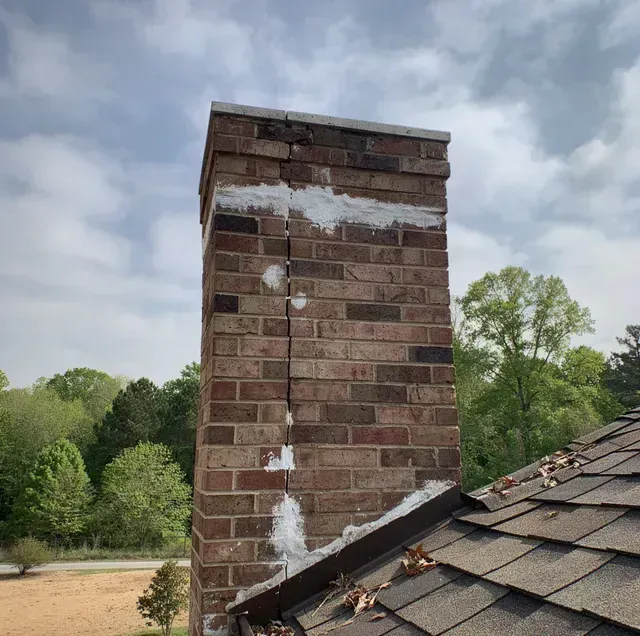
Older chimneys were often built on shallower footings than current standards call for, and after decades of ground movement and the chimney's own weight, some settling is common: a slight lean, a visible gap where the chimney meets the roofline, or a stair-step crack pattern following the mortar joints diagonally. A small, stable lean or an old, dormant crack isn't automatically an emergency, but telling "old and stable" from "active and worsening" benefits from a hands-on inspection rather than a guess from the ground.
A technician can often get a first read on mortar type without lab testing. Dragging a metal key or nail across a joint that leaves a visible scratch and a little powder points toward a softer, lime-rich mix, while a joint that resists scratching and holds a sharp edge points toward a harder, Portland-heavy mix. This test doesn't replace a proper inspection or lab analysis of the actual composition, but it's a useful first check before assuming a chimney can be treated like standard modern construction.
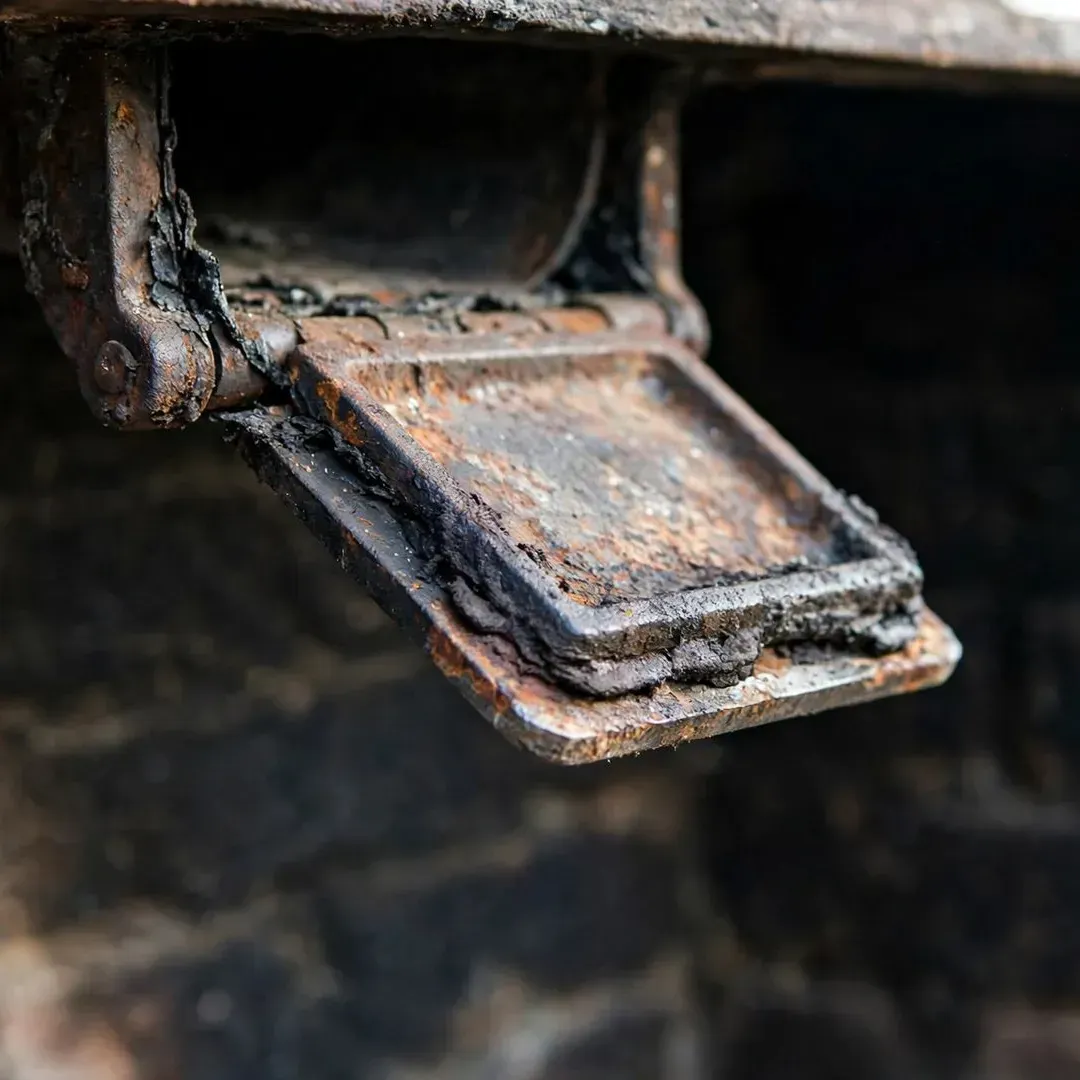
The damper is the movable plate that opens and closes the path between the firebox and the flue above it. Traditional dampers are a hinged metal flap mounted at the throat, right in front of the smoke shelf at essentially the same level; newer systems often use a top-mount damper instead, a sealing plate at the very top of the flue operated by a cable or lever from the firebox. The damper's job: it closes off the flue when there's no fire burning, so conditioned indoor air doesn't pour straight up the chimney, and it opens fully to let smoke and gases draft out when you do have a fire going. A damper that won't seat properly, whether warped, rusted, or coated in old creosote, wastes energy and can also affect how well a fireplace drafts once lit.
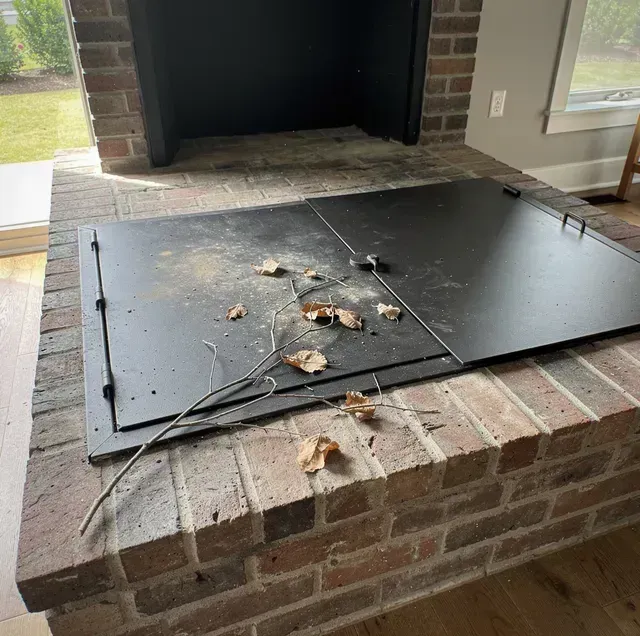
Hearth Extension
When a Post-Renovation Inspection Is (and Isn't) Warranted
You have run the same load twice, and the clothes still come out warm to the touch but not quite dry. The laundry room feels a few degrees hotter than it used to, and you have started propping the door open just to let some of that heat escape. None of this seems like an emergency, so you chalk it up to an old machine or a heavier-than-usual load of towels. More often, the dryer itself is fine. What's changed is how much air it can actually move.
Lint Builds Up Past the Trap, Not Just In It
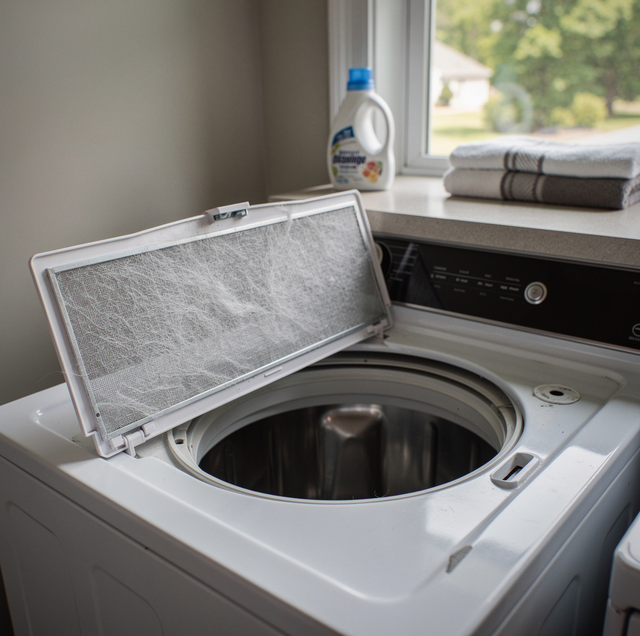
Most homeowners clean the lint trap after every load or two, which is good practice, but it only catches a fraction of what a dryer sheds. A meaningful amount of lint slips past the trap's mesh screen and rides the airflow into the duct itself: the rigid or semi-rigid metal pipe that runs from the back of the machine, through the wall or floor cavity, and out to a hood on the exterior of the house. Lint is fibrous and slightly damp when it leaves the drum, which means it clings to the interior walls of that duct rather than blowing straight through. Over months and years, it builds into a felt-like lining that narrows the passage, and the buildup is often worst at elbows, seams, and any spot where the duct run isn't a straight shot to the outside.
A dryer with a short, straight vent run to an exterior wall can go a long time before this becomes a real problem. A dryer vented through multiple turns, a long horizontal run, or up through two stories accumulates lint faster and loses efficiency sooner, sometimes within a year or two of the last cleaning.
Why a Restricted Vent Makes the Dryer Work Harder
A dryer's whole job depends on airflow: the heating element or gas burner warms the air, the drum tumbles clothes through it, and the blower pushes that hot, moisture-laden air out through the vent duct. When the duct is narrowed by lint, less air moves through per minute, so less moisture actually leaves the house. The heat and humidity that should be exhausted instead recirculate inside the drum and cabinet, which is why the machine and the room around it start to feel hotter than normal.
The dryer responds by keeping heating and running, because its sensors are simply detecting that the clothes are still damp. That means longer cycle times, more electricity or gas burned per load, and more mechanical wear per pound of laundry dried. Two components take the brunt of it: the heating element (or the burner assembly on gas units), which cycles on and off more frequently and for longer stretches trying to compensate, and the thermal fuse, a one-time safety device wired to shut the dryer down if internal temperatures climb past a safe threshold. A dryer that's tripping its thermal fuse repeatedly, or that a technician has already replaced once, is usually telling you the vent, not the fuse, is the real problem.
The Fire-Risk Side of Restricted Airflow
Lint is highly combustible, and a restricted vent compounds that risk in two ways at once: it traps more heat near the lint sitting inside the duct, and it leaves a larger accumulated fuel source to begin with. The U.S. Consumer Product Safety Commission and fire-safety organizations have tracked dryer-related fires for years and consistently point to uncleaned vents and ducts as a leading contributing factor, alongside things like improperly installed transition hoses. This isn't a rare or exotic failure mode; it's a maintenance item that gets overlooked because the lint trap gives homeowners a false sense that the whole system is being kept clean. Treating vent cleaning as routine, not urgent, is the more useful way to think about it: a periodic check rather than a crisis to wait for.
Signs Your Dryer Vent Needs Attention
A few patterns tend to show up well before a vent is fully blocked:
Drying times that keep creeping up: a load that used to take 40 minutes now routinely needs 60 or 70, or a second cycle, with no change in load size or fabric type.
A dryer or laundry room that runs noticeably hot: the top or front panel of the machine feels hot to the touch, not just warm, or the room itself heats up during a cycle.
A burning or hot-dust smell: a faint scorched smell, especially early in a cycle, that isn't coming from something caught in the drum.
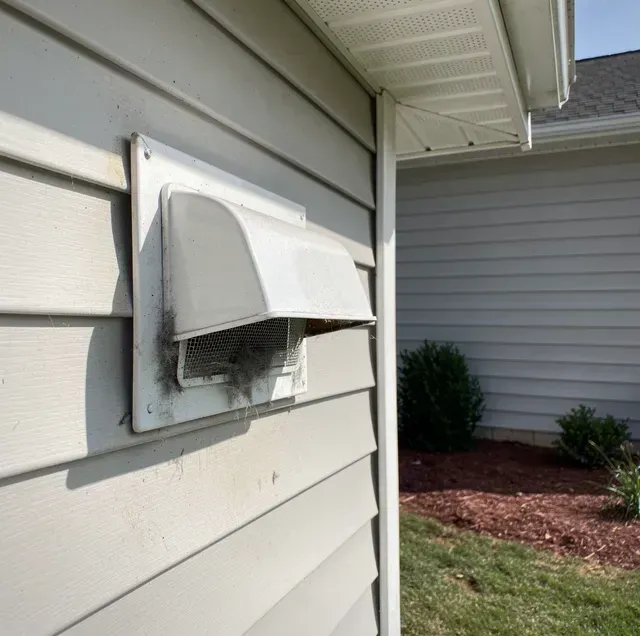
Visible lint at the exterior vent hood: lint collecting around the outside vent cap or hanging out of the louvers is a sign the duct upstream is already loaded.
The exterior hood flap not opening properly: that flap should swing open under airflow while the dryer runs; a flap that barely moves, or doesn't fully close afterward, points to reduced airflow or a damaged damper.
Any one of these on its own might not mean much. Two or more together, especially longer dry times paired with a hot cabinet, are worth acting on.
What a Professional Cleaning Actually Does
A proper dryer vent cleaning goes well past what a homeowner can reach with a vacuum hose from either end. A technician typically runs a rotary brush or an air-whip system the full length of the duct, from the back of the machine to the exterior termination, breaking up compacted lint along walls and elbows that a straight vacuum pass would miss. They'll also check the exterior vent hood and its damper for lint buildup, physical damage, or a bird or insect nest partially blocking the opening, and clear the short transition hose that connects the dryer itself to the wall or floor vent, since that flexible section clogs and kinks easily and is often the most restricted point in the whole run. On longer or more complex runs, a camera inspection can confirm the duct is fully clear rather than assuming it from reduced airflow alone.
Frequently Asked Questions
How often does a dryer vent actually need cleaning?
Most manufacturers and fire-safety guidance suggest annual cleaning for typical households, but a household doing several loads a day, a vent run longer than about 25 feet, or a run with multiple elbows can build up lint meaningfully faster and may need attention every six to eight months instead.
Is there a limit to how long a dryer vent run can be?
Most manufacturers cap a straight duct run around 25 to 35 feet, with each 90-degree elbow counted as subtracting several feet from that allowance since a bend adds resistance the blower has to work against. A run that's already near that limit on paper loses usable airflow faster as lint narrows the passage, which is part of why a longer or multi-elbow run needs more frequent cleaning than the once-a-year default.
Does the type of transition hose behind the dryer matter?
Yes: a rigid or semi-rigid metal transition hose moves air more efficiently and resists lint buildup better than the older accordion-style foil or plastic hose, which traps lint in its ridges and is also more prone to sagging or kinking behind the machine, both of which further restrict airflow.
Is a gas dryer's vent cleaning any different from an electric dryer's?
The duct-cleaning process is the same, but a gas dryer's vent also carries combustion byproducts, so a technician will typically check that the vent run has no backdraft into the home and that the exterior termination is fully clear, since restricted airflow on a gas unit affects both drying performance and safe venting of exhaust.
My dryer is stacked on top of a washer, or built into a closet. Does that change the cleaning?
It usually means an extra fitting called a periscope duct, a low-profile offset unit that lets the exhaust port on a stacked or closet-installed dryer connect to a vent opening that isn't directly behind it. That fitting has more turns packed into a short space than a standard setup, so it tends to trap lint faster and needs a technician who can access and clear that specific piece, not just the straight run behind it.
How does a technician confirm the vent is actually clear afterward, rather than just assuming it from the cleaning itself?
Some technicians check airflow with a handheld anemometer or manometer at the exterior hood before and after the cleaning, giving an actual reading rather than a visual guess. A significant jump in airflow between the before and after readings confirms the blockage was cleared; a reading that stays low even after cleaning can point to a separate issue, like a crushed section of duct or an undersized vent for the dryer's blower.
Laundry Day Shouldn't Be a Two-Cycle Chore
A dryer that needs two runs for one load isn't broken so much as it's fighting a duct that can no longer move enough air. The fix doesn't require a new machine, just a clear path from the drum to the outside. Getting that airflow back cuts drying time, eases the load on the parts doing the most work every cycle, and closes off a fire-risk factor that's easy to overlook precisely because the lint trap looks clean.
Schedule a dryer vent cleaning — get your duct, transition hose, and exterior hood professionally cleared by a CSIA-certified technician. Perfect Chimney Cleaning serves Greensboro, High Point, and Winston-Salem. Call (336) 604-6711.