Chimney Waterproofing: The Masonry Science Behind It
| Factor | Older/historic masonry | Modern masonry |
|---|---|---|
| Mortar binder | Lime-based, low or no Portland cement | Portland-cement-based, harder curing |
| Mortar flexibility | Softer, some self-healing of hairline cracks | Rigid once cured, cracks stay cracked |
| Brick type | Handmade or soft-mud, lower fire temperature | Extruded, wire-cut, higher fire temperature |
| Brick porosity | More absorbent, prone to spalling | Denser, less water uptake |
| Typical liner status | Often unlined, undersized, or original clay tile | Liner sized and installed to current standards |
| Repair priority | Match mortar chemistry, not just color | Standard modern mortar mixes generally compatible |
| Common failure pattern | Brick face spalling; joint self-healing can mask real deterioration | Joint cracking tends to precede brick damage |
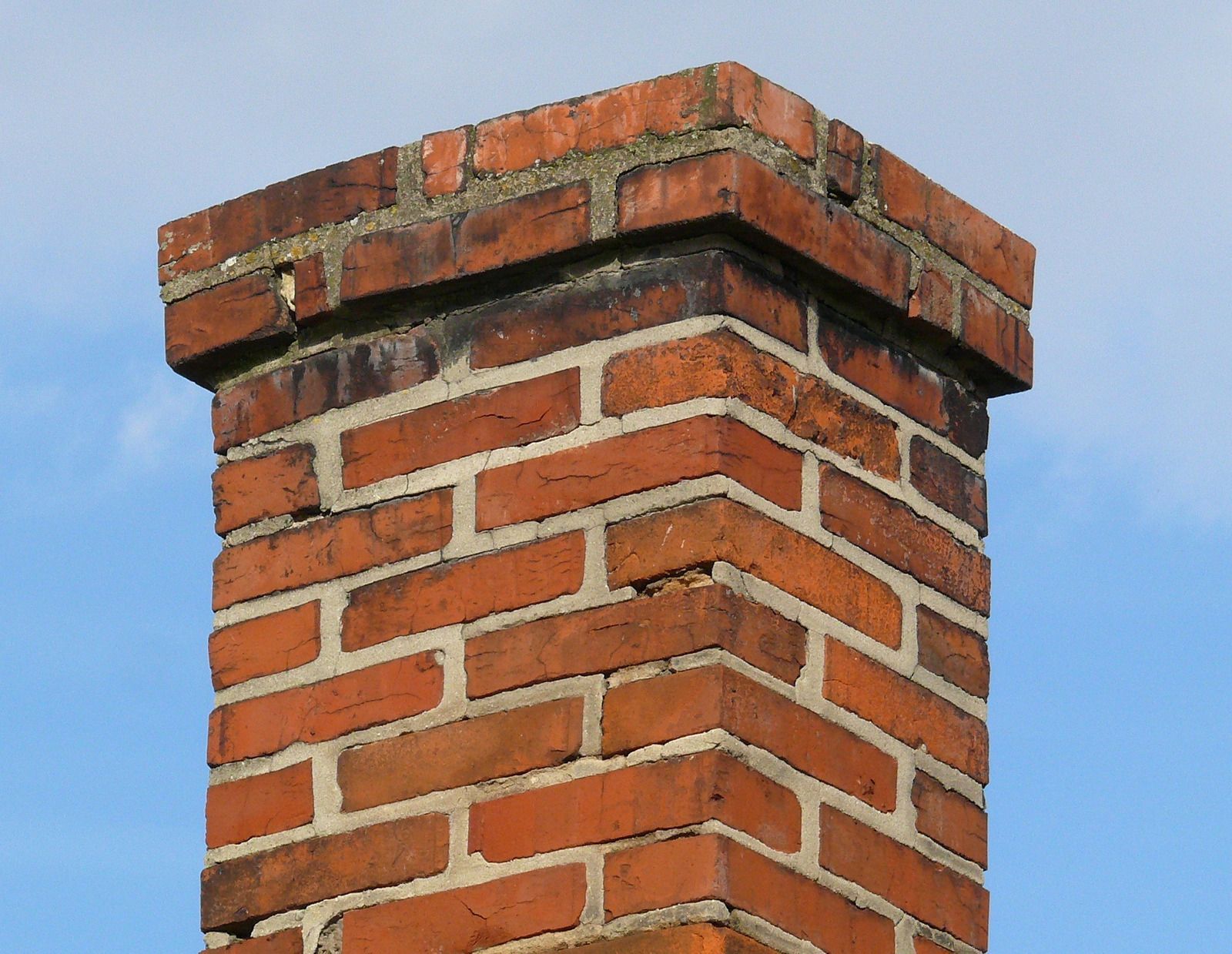
Older chimneys were often built on shallower footings than current standards call for, and after decades of ground movement and the chimney's own weight, some settling is common: a slight lean, a visible gap where the chimney meets the roofline, or a stair-step crack pattern following the mortar joints diagonally. A small, stable lean or an old, dormant crack isn't automatically an emergency, but telling "old and stable" from "active and worsening" benefits from a hands-on inspection rather than a guess from the ground.
A technician can often get a first read on mortar type without lab testing. Dragging a metal key or nail across a joint that leaves a visible scratch and a little powder points toward a softer, lime-rich mix, while a joint that resists scratching and holds a sharp edge points toward a harder, Portland-heavy mix. This test doesn't replace a proper inspection or lab analysis of the actual composition, but it's a useful first check before assuming a chimney can be treated like standard modern construction.
The damper is the movable plate that opens and closes the path between the firebox and the flue above it. Traditional dampers are a hinged metal flap mounted at the throat, right in front of the smoke shelf at essentially the same level; newer systems often use a top-mount damper instead, a sealing plate at the very top of the flue operated by a cable or lever from the firebox. The damper's job: it closes off the flue when there's no fire burning, so conditioned indoor air doesn't pour straight up the chimney, and it opens fully to let smoke and gases draft out when you do have a fire going. A damper that won't seat properly, whether warped, rusted, or coated in old creosote, wastes energy and can also affect how well a fireplace drafts once lit.
Hearth Extension
When a Post-Renovation Inspection Is (and Isn't) Warranted
The hearth extension, the noncombustible floor pad in front of the firebox opening, catches stray ash, bark, splinters, and the occasional ember that pops clear of the fire. A quick vacuum with a shop vac or a canister vacuum's brush attachment once a week during active burning keeps this debris from working into carpet fibers or wood flooring at the hearth's edge, and it's your chance to glance for embers that landed outside the firebox and cooled without your noticing. Check that logs, kindling, and any decorative items on the mantel or nearby furniture haven't crept closer to the opening than the several feet of clearance most fireplace manufacturers and fire-safety groups recommend as a baseline. This is also a good moment to make sure nothing- a rug corner, a stack of kindling, a pet bed- has migrated into that clearance zone since the last time you checked.
What Waterproofing Actually Treats
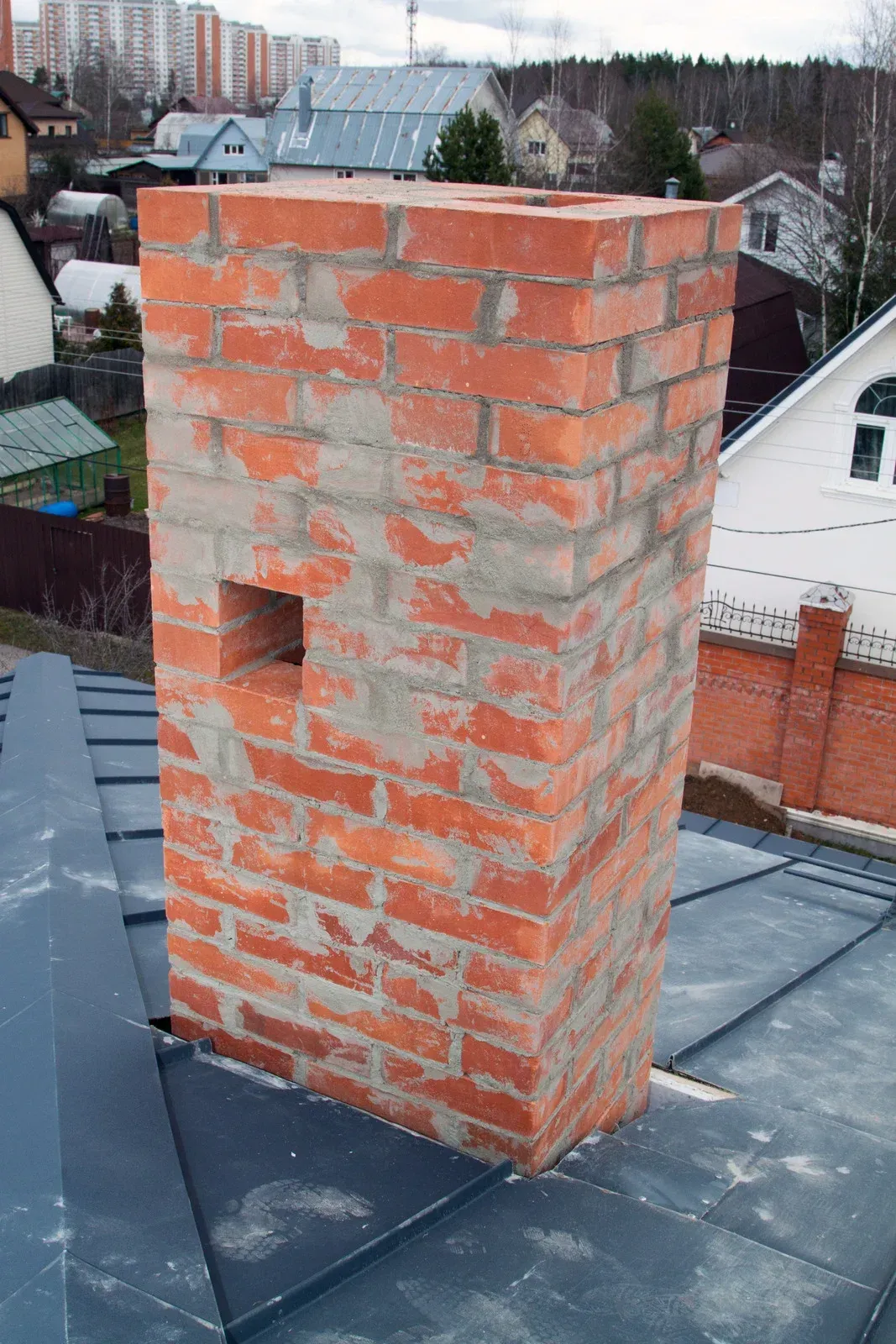
Brick and mortar are not solid barriers. Under magnification, ordinary masonry looks more like a sponge than a wall: a network of tiny interconnected pores that draws in water the moment it touches the surface. That absorption is normal and, in small amounts, harmless. The trouble starts when water saturates deep into the material and then has nowhere to go, whether it freezes and expands inside the pores or simply sits there long enough to dissolve the minerals holding the mortar together.
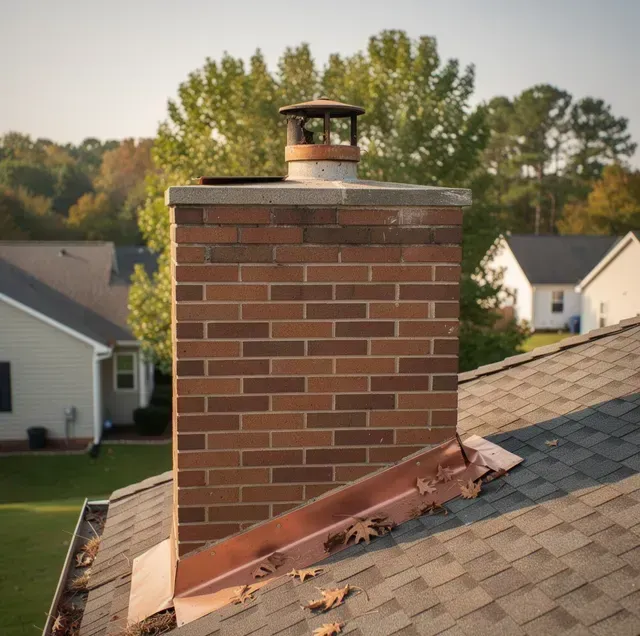
Chimney waterproofing is a treatment aimed at that pore structure, not at any single crack or gap. It does not patch a specific leak point the way flashing repair or crown resurfacing does. Instead, it changes how the masonry itself interacts with water at a molecular level, so less moisture gets absorbed in the first place. Understanding that distinction matters, because a chimney can be structurally sound and still need this treatment simply because its brick is porous and exposed to weather on all four sides, at height, with no roof overhang to shield it.
Vapor-Permeable Water Repellents vs Film-Forming Sealers
Not every product sold as a "waterproofing sealer" works the same way, and the difference determines whether the treatment helps or slowly damages the chimney.
Film-forming sealers: These include acrylic and some polyurethane-based coatings that cure into a continuous skin across the brick surface, similar to a layer of paint. They block liquid water from getting in, but they also block water vapor from getting out. Masonry chimneys hold residual moisture from rain, from combustion byproducts venting through the flue, and from humidity in the surrounding air. If that moisture can't evaporate through the surface, it gets trapped behind the film. When a freeze comes, the trapped water expands with nowhere to release the pressure, and the face of the brick pops off in flakes, a failure called spalling. Film-forming products are a common cause of the very damage they were meant to prevent.
Vapor-permeable water repellents:
These are the products a properly done waterproofing job actually uses, most often silicone- or siloxane-based formulations. Rather than forming a skin, the active molecules penetrate the pores and line the interior pore walls with a water-repellent coating while leaving the pore openings themselves unobstructed. Liquid water beads up and rolls off the surface because it can't wet the treated pore walls, but water vapor already inside the masonry can still pass through and escape. The masonry breathes; it just stops drinking.
How the Treatment Bonds to Masonry
Siloxane and silane compounds work because their molecules are small enough to migrate below the surface, typically a few millimeters into sound brick and deeper into more porous units, before reacting with silica and other minerals naturally present in masonry. That reaction forms a durable, water-repellent lining on the pore walls rather than sitting as a film on top of them. This is why the treatment is sometimes called a "penetrating sealer." However, that name causes confusion since it's the opposite of the film-forming products people usually picture when they hear "sealer."
The bond is chemical, not just physical, which is part of why the effect holds up for years rather than washing off in the next storm. It also means the treatment can't correct masonry that is already too far gone. A brick with an existing crack, a mortar joint that has eroded to a soft crumble, or a crown with a structural fracture needs that specific repair first. Waterproofing treats intact pore structure; it doesn't rebuild material that has already failed.
The Application Process
A waterproofing job starts with a clean, dry surface. Any deposits of soot, efflorescence (the white mineral staining left behind by evaporating water), moss, or loose mortar debris need to come off first, because the water repellent has to bond directly with the brick and mortar rather than with whatever is sitting on top of them. Technicians typically clean the masonry, let it dry fully (a process that can take a day or two depending on humidity and temperature), and inspect the crown, flashing, and mortar joints while they're up there so any repair needs get flagged before the treatment goes on.
The product itself is applied with a low-pressure sprayer or, on smaller or detail-heavy areas, a brush, working from the top of the chimney down so the material can flow into vertical mortar joints as it's applied. Coverage has to be even and complete, since a missed section stays fully porous and becomes the entry point water finds. Most professional-grade siloxane treatments call for two coats applied wet-on-wet, which drives the active compound deeper into the pore structure than a single pass would. Application also has a weather window: masonry needs to stay dry through curing, usually a matter of hours, and extremes of heat or cold on application day can affect how well the product penetrates and cures.
How Long Waterproofing Lasts and What Shortens It
A quality vapor-permeable treatment, applied correctly to sound masonry, typically holds up for somewhere in the range of five to ten years before it needs reapplication. However, the honest answer is "it depends on exposure." A chimney is one of the most weather-exposed surfaces on a house: full sun on one side, shade on another, rain hitting it from every direction, and it sits above the roofline with no overhang to deflect anything.
Two opposite seasonal stresses wear on the treatment and the masonry beneath it in different ways. In a hard winter, repeated freeze-thaw cycling puts mechanical stress on both the brick and the repellent coating as moisture in the surrounding air and any residual dampness expands and contracts. In a humid or heavy-rain stretch, sustained saturation and repeated wetting-and-drying cycles between storms gradually wear down the repellent's surface bond, even without a single freeze involved. Neither season is the "real" threat; both wear at the same mechanism from different directions, and a chimney sees both across a typical year, no matter which season it happens to be right now.
A simple field test tells you where things stand: splash water on the brick face. If it beads and rolls off, the treatment is still active. If it darkens and soaks in within a few seconds, the repellent has worn down, and reapplication is due.
When Waterproofing Is (and Isn't) the Right Fix
Waterproofing is a preventive and protective treatment for masonry that's fundamentally in good shape but exposed to the elements, not a repair for masonry that's already showing damage. If the brick or mortar has visible deterioration such as spalling, crumbling joints, or a cracked crown, that damage needs to be addressed on its own terms before waterproofing goes on top of it, since sealing over a compromised surface just locks moisture problems in rather than out. Once repairs are handled, waterproofing is a reasonable next step for extending the life of the masonry and reducing how much water it absorbs going forward, particularly on a chimney with no roof overhang or nearby shelter shielding it from direct weather. It's also a sensible addition anytime a chimney gets rebuilt or has significant tuckpointing done, since new mortar is at its most porous in the first year or two.
Frequently Asked Questions
Will waterproofing stop water that's coming in around the flashing?
No. Flashing is the sheet metal where the chimney meets the roofline, and its leaks come from a different failure mode entirely, usually corroded metal, lifted step flashing, or failed caulking, none of which masonry waterproofing addresses. A chimney can have perfectly treated brick and still leak at the flashing line, so that repair has to be handled as its own job.
Can a homeowner apply chimney waterproofing themselves?
It's possible with off-the-shelf siloxane products, but professional application typically uses a higher-concentration formulation, a calibrated low-pressure sprayer for even coverage, and fall-protection equipment to safely reach and cover the full height of the stack, including the crown, which is usually the hardest area to treat evenly from a ladder alone.
Does the treatment change how the brick looks?
Most vapor-permeable products dry clear or with a slight matte finish rather than a glossy coating, though brick can darken temporarily right after application as it absorbs the liquid; that darkening typically fades within a few days to a week as excess product cures off the surface.
Is every type of masonry a candidate for this treatment?
Not automatically. Historic chimneys built with soft, lime-based mortar or older, more porous handmade brick can react differently to modern siloxane formulations than the harder brick and Portland-cement mortar used in most homes built in the last several decades, so those need a compatibility check or a product formulated for softer masonry before anything gets sprayed on.
How soon after a chimney cleaning can waterproofing go on?
The masonry has to be fully dry, not just rain-free, which usually means allowing 24 to 48 hours after cleaning or the last rainfall before application, longer in humid conditions. Application also needs a moderate temperature window, generally above roughly 40°F and below 90°F, since curing outside that range can leave the bond incomplete.
How do I know if my chimney was ever treated before?
Beyond the water-bead test, a technician can often tell by checking service records or by looking at how water behaves on different sections of the stack; an unevenly treated chimney (from a partial or missed prior application) will show beading in some spots and absorption in others, which is itself a sign a fresh, complete application is overdue.
Waterproofing is one of the few chimney treatments that works by changing a material property rather than fixing a single defect, which is exactly why it gets confused with paint-on sealers that do the opposite of what's intended. Done with the right product, on masonry that's already sound, it's a reliable way to keep a chimney absorbing less water year after year without interfering with the venting it's built to do.
Schedule a chimney waterproofing evaluation — get an honest read on whether your masonry needs repair first or is ready to be sealed. Perfect Chimney Cleaning serves Greensboro, High Point, and Winston-Salem. Call (336) 604-6711.
Recent Posts