
Signs Your Dryer Vent Is a Fire Hazard (Catch It Early)
| Cause | Where water gets in |
|---|---|
| Missing/damaged cap | Straight down the open flue |
| Cracked crown | Through cracks in the concrete top |
| Worn/failed flashing | Where the chimney meets the roof |
| Porous/damaged masonry | Absorbed through brick and mortar |
Signs of Animals or Debris
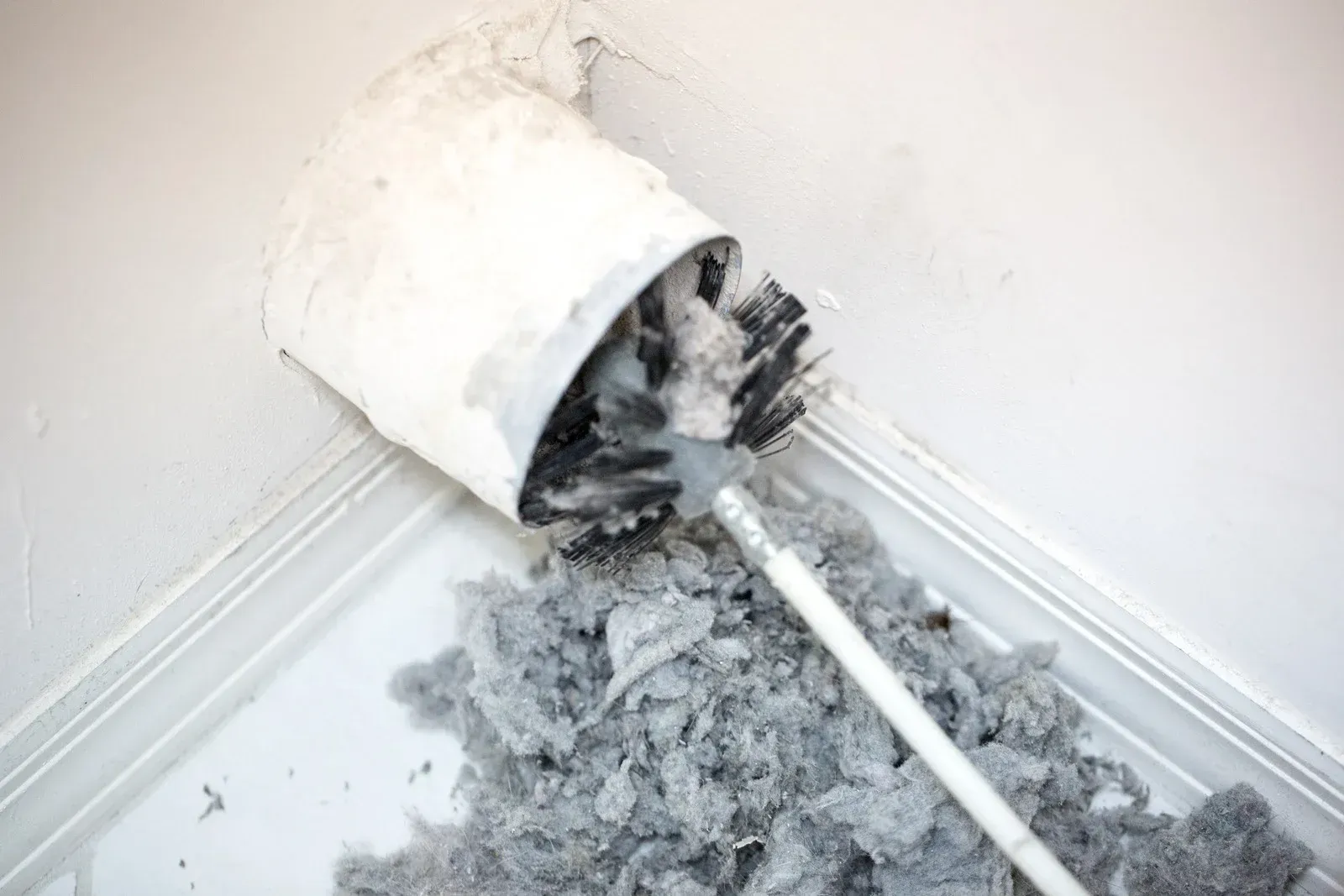
Your clothes dryer does more than tumble a load. Every cycle, it pushes hot, moist air out of your home through a duct that runs behind the machine and terminates outside. Riding along in that air is lint, the fine fiber that sheds off fabric as it dries. Most of it gets caught by the lint trap, but a steady amount slips past and settles inside the duct. Over months and years, that fuzz packs together, narrowing the passage through which the air is supposed to move.
Here is why that matters. When the duct restricts airflow, the heat the dryer generates can no longer escape at the rate it should, so it backs up inside the machine and inside the duct itself. Now pair that trapped heat with the lint coating the walls of the duct. Dryer lint is essentially dry, loose tinder, and it ignites easily. Restricted hot air sitting against flammable fiber is the exact combination behind thousands of dryer fires every year, which is why a clogged vent ranks among the leading causes of house fires linked to home appliances.
The reassuring part is that a failing dryer vent almost always warns you first. The signs are easy to read once you know what they mean, and catching them early is the difference between a routine cleaning and an emergency. This guide walks through the warning signs, the conditions that make a duct clog faster, and the practical steps that keep the run clear.
Why A Clogged Vent Turns Dangerous
Think of the duct like a drinking straw. Sip through a clean straw, and the liquid flows freely. Pinch that straw partway, and you have to pull much harder to get the same amount through. A dryer works the same way. When lint pinches the duct, the blower has to fight to move air, the machine runs hotter and longer, and the heat that should be leaving the house stays trapped against a lining of flammable fiber.
That single mechanism, restricted airflow trapping heat, is the root of nearly every warning sign below. Once you see the pattern, the symptoms stop looking random and start pointing to the same cause: the air is not getting out the way it should.
Warning Signs Your Dryer Vent Needs Attention
Clothes Take Longer To Dry
This is the most common and most reliable early sign. A load that used to finish in one cycle now needs two, or comes out warm and still damp. When the duct is restricted, the humid air cannot exhaust fast enough, so moisture lingers around the clothes instead of leaving the house. If your drying times have crept up with no change in load size or fabric, suspect the duct before you blame the machine.
The Dryer Or Laundry Room Runs Hot
Reach behind or on top of the dryer mid-cycle. It should feel warm, not alarmingly hot. When exhaust heat cannot escape, it radiates off the cabinet and into the room, leaving the whole laundry area noticeably warmer and more humid than the rest of the house. A dryer that feels hot to the touch is holding heat it was designed to send outside.
A Burning Or Hot-Lint Smell
That distinctive scorched, dusty odor means lint somewhere in the system is getting hot enough to singe. It is one of the most serious signs on this list. If you catch it, stop the dryer and do not run another load until the duct has been cleared and checked.
The Lint Trap Collects Very Little
It sounds backward, but a lint screen that comes out nearly empty can signal trouble. If the duct downstream is packed, lint gets caught in the clog instead of traveling to where you would normally see it. A screen that used to fill and now barely does is a hint that the fiber is piling up out of sight inside the run.
Weak Or No Airflow At The Outside Vent
Go outside while the dryer runs and find the exterior termination, usually a flap or louvered hood on an outside wall. You should feel a strong, warm gust and see the flap held open. A flap that barely lifts, or air that feels weak, tells you the run is choked somewhere between the machine and the wall.
Visible Lint Or Debris Around The Outside Vent
Lint collecting on the ground below the exterior vent, or fuzz clinging around the opening, shows the system is shedding more than it can clear. It is a clear sign that the duct is overloaded and warrants a closer look.
The Dryer Shuts Off Mid-Cycle
Many dryers have a thermal safety switch that cuts power when the internal temperature climbs too high. If your machine keeps stopping partway through and you have to restart it, that switch is likely tripping on overheating, and blocked airflow is a leading reason. The dryer is protecting itself, and it is telling you the vent needs attention now.
A Musty Smell Or Excess Humidity In The Laundry Area
When moist exhaust air cannot exit cleanly, some of that humidity ends up in the room instead of outdoors. Over time, you may notice a damp, musty odor or condensation near the machine. That lingering moisture is another symptom of a duct that is no longer moving air the way it should.
What Makes A Dryer Vent Clog Faster
Some setups trap lint far quicker than others. Knowing your risk factors tells you how closely to watch and how often to clean.
The duct material and shape matter most. Long runs give lint more surface to cling to, and every bend or elbow creates turbulence where fiber snags and collects. Flexible foil or thin ribbed plastic transition hose is a frequent culprit: the ridges catch lint, the tubing sags between supports, and any low spot becomes a fiber trap. A duct that has been crushed or kinked behind the dryer, common when the machine is pushed tight against the wall, chokes airflow at that pinch point.
The outside termination is the other weak spot. Birds, squirrels, and mice are drawn to the warmth and shelter of a dryer vent, and a nest inside the hood blocks airflow exactly the way a lint clog does. An exterior flapper that sticks shut, whether from age, paint, or debris, traps everything behind it. And the simplest risk factor of all is time. A duct that has not been cleaned in years has had every one of these problems working on it, load after load.
What To Do About It
The good news is that keeping a dryer vent safe comes down to a short list of habits and a few one-time fixes.
Clean the lint trap before or after every single load. This is the easiest and most important habit, and it slows how fast lint reaches the duct. It is not, however, a substitute for cleaning the duct itself. The screen catches only part of the fiber; the rest travels down the run and has to be removed separately.
Have the full duct run cleaned periodically. For most homes, about once a year is a reasonable rhythm. Households that dry heavy volume, own shedding pets, or have a long or twisty duct should clean more often. A thorough cleaning removes the packed lint from the entire length, not just the ends you can reach.
Upgrade the ducting if yours is the flimsy kind. Replace ribbed foil or plastic transition hose with smooth-wall rigid or semi-rigid metal duct. The smooth interior gives lint far less to grab, resists sagging, and will not melt the way plastic can under heat. Keep the run as short as you reasonably can and use as few bends as possible so the air has a straight, easy path out.
Confirm the dryer vents are fully outside. The exhaust must terminate outdoors, at an exterior wall or roof cap, never into a crawlspace, attic, garage, or basement. Venting indoors dumps moisture and lint into your home, feeding mold and fire risk at once. If yours empties anywhere but outside, that is the first thing to correct.
A Note On Safety
A few situations call for stopping, not troubleshooting. If you smell burning, if the dryer is hot to the touch, or if the machine keeps shutting off on its own, quit using it until the duct has been professionally cleared and inspected. Running a dryer against a blocked vent is exactly the condition that starts fires.
Gas dryers add a second hazard. They produce combustion gases, including carbon monoxide, that are meant to leave the house through that same exhaust path. If the vent is blocked, those gases have nowhere to go and can push back into your living space. That makes a clogged gas-dryer vent both a fire risk and a carbon monoxide risk, so keeping the run clear protects your home on two fronts. If you run a gas dryer, treat the warning signs above as doubly urgent.
Frequently Asked Questions
How often should a dryer vent be cleaned?
For most homes, cleaning the full duct about once a year keeps it clear. Homes with a long duct run, a large household running frequent loads, or shedding pets should be cleaned more often, sometimes twice a year. Keep in mind that the duct cleaning is separate from the lint trap, which you should empty every load. The trap and the duct are two different jobs, and doing one does not cover the other.
Why do my clothes take two cycles to dry now?
Restricted airflow is almost always the reason. When lint narrows the duct, the humid air the dryer produces cannot exhaust fast enough, so heat and moisture back up around the clothes instead of leaving the house. The machine keeps running, but the load stays damp. In most cases, the dryer itself is fine, and the clog is in the duct, which is why a cleaning often restores normal drying times without any repair.
Is flexible foil or plastic duct dangerous?
It is the riskier choice. Ribbed foil and thin plastic transition hose sag between supports, and the ridges along the inside snag lint that then piles up in the low spots. Plastic can also soften or melt under sustained heat. Smooth-wall rigid or semi-rigid metal duct is the safer alternative because its smooth interior sheds lint, it holds its shape without sagging, and metal tolerates the heat that plastic cannot.
Can animals or a stuck flap cause a vent fire risk?
Yes. A bird nest, a rodent, or a jammed exterior damper blocks airflow the same way a lint clog does, and blocked airflow is what traps the heat. The outside termination is easy to overlook because it sits out of sight on an exterior wall, so it is worth checking directly: run the dryer, go outside, and confirm the flap opens and pushes a strong, warm gust of air. If it stays shut or the airflow is weak, something is obstructing it.
Does a longer duct run or too many bends matter?
It matters a lot. Every foot of length and every elbow adds resistance the blower has to overcome, and each bend creates a spot where lint catches and collects. Building codes limit the total equivalent length of a dryer duct for exactly this reason, counting each bend as added length. A long, twisty run clogs faster and strains the dryer more, so the goal is always to keep the path short and as straight as the space allows.
Title or Question
Describe the item or answer the question so that site visitors who are interested get more information. You can emphasize this text with bullets, italics or bold, and add links.What is different about a gas dryer vent?
A gas dryer burns fuel to make heat, so its exhaust carries combustion gases, including carbon monoxide, that a blocked vent can force back into your home. That is a hazard that an electric dryer does not share. With a gas dryer, a clogged vent is both a fire risk and a carbon monoxide risk at the same time, so keeping the run clear is a health issue as much as a safety one. Never vent a gas dryer indoors, and treat overheating or a burning smell as a reason to stop immediately.
Schedule a dryer vent cleaning today — clear the lint before it becomes a fire. Perfect Chimney Cleaning serves Greensboro, High Point, and Winston-Salem. Call (336) 604-6711.