House Smells Like Smoke When the Furnace Runs? 4 Causes
The first sign most homeowners notice isn't rain at all. It's a faint tapping behind the damper during a storm, or a ring of gray water sitting in the firebox the next morning with no obvious source, because the roof is dry and the gutters are clear. The chimney itself is the leak. What that one morning shows is only the first frame of a much longer sequence, though: an open flue doesn't do the same damage on night one that it does after three winters of the same neglect, and which stage you're looking at changes what actually needs fixing.
What follows is the order in which damage actually occurs, from the top of the stack down to the framing behind the wall, and from the first storm to years of neglect. This is about a flue with no cap at all; a cap that's present but too small or the wrong shape for what it's covering is a separate problem with its own failure pattern.
| Factor | Older/historic masonry | Modern masonry |
|---|---|---|
| Mortar binder | Lime-based, low or no Portland cement | Portland-cement-based, harder curing |
| Mortar flexibility | Softer, some self-healing of hairline cracks | Rigid once cured, cracks stay cracked |
| Brick type | Handmade or soft-mud, lower fire temperature | Extruded, wire-cut, higher fire temperature |
| Brick porosity | More absorbent, prone to spalling | Denser, less water uptake |
| Typical liner status | Often unlined, undersized, or original clay tile | Liner sized and installed to current standards |
| Repair priority | Match mortar chemistry, not just color | Standard modern mortar mixes generally compatible |
| Common failure pattern | Brick face spalling; joint self-healing can mask real deterioration | Joint cracking tends to precede brick damage |
Older chimneys were often built on shallower footings than current standards call for, and after decades of ground movement and the chimney's own weight, some settling is common: a slight lean, a visible gap where the chimney meets the roofline, or a stair-step crack pattern following the mortar joints diagonally. A small, stable lean or an old, dormant crack isn't automatically an emergency, but telling "old and stable" from "active and worsening" benefits from a hands-on inspection rather than a guess from the ground.
A technician can often get a first read on mortar type without lab testing. Dragging a metal key or nail across a joint that leaves a visible scratch and a little powder points toward a softer, lime-rich mix, while a joint that resists scratching and holds a sharp edge points toward a harder, Portland-heavy mix. This test doesn't replace a proper inspection or lab analysis of the actual composition, but it's a useful first check before assuming a chimney can be treated like standard modern construction.
The damper is the movable plate that opens and closes the path between the firebox and the flue above it. Traditional dampers are a hinged metal flap mounted at the throat, right in front of the smoke shelf at essentially the same level; newer systems often use a top-mount damper instead, a sealing plate at the very top of the flue operated by a cable or lever from the firebox. The damper's job: it closes off the flue when there's no fire burning, so conditioned indoor air doesn't pour straight up the chimney, and it opens fully to let smoke and gases draft out when you do have a fire going. A damper that won't seat properly, whether warped, rusted, or coated in old creosote, wastes energy and can also affect how well a fireplace drafts once lit.
Hearth Extension
When a Post-Renovation Inspection Is (and Isn't) Warranted
The hearth extension, the noncombustible floor pad in front of the firebox opening, catches stray ash, bark, splinters, and the occasional ember that pops clear of the fire. A quick vacuum with a shop vac or a canister vacuum's brush attachment once a week during active burning keeps this debris from working into carpet fibers or wood flooring at the hearth's edge, and it's your chance to glance for embers that landed outside the firebox and cooled without your noticing. Check that logs, kindling, and any decorative items on the mantel or nearby furniture haven't crept closer to the opening than the several feet of clearance most fireplace manufacturers and fire-safety groups recommend as a baseline. This is also a good moment to make sure nothing- a rug corner, a stack of kindling, a pet bed- has migrated into that clearance zone since the last time you checked.
Waterproofing is a preventive and protective treatment for masonry that's fundamentally in good shape but exposed to the elements, not a repair for masonry that's already showing damage. If the brick or mortar has visible deterioration such as spalling, crumbling joints, or a cracked crown, that damage needs to be addressed on its own terms before waterproofing goes on top of it, since sealing over a compromised surface just locks moisture problems in rather than out. Once repairs are handled, waterproofing is a reasonable next step for extending the life of the masonry and reducing how much water it absorbs going forward, particularly on a chimney with no roof overhang or nearby shelter shielding it from direct weather. It's also a sensible addition anytime a chimney gets rebuilt or has significant tuckpointing done, since new mortar is at its most porous in the first year or two.
Reading Your Results
| Red Flag | What a Legitimate Technician Does Instead |
|---|---|
| Rock-bottom advertised price, then "mandatory" add-ons once the tech is on-site | States the base price and what could change it before the appointment; add-ons are optional and explained, not sprung |
| Claims of imminent fire or CO danger with no proof | Shows photos or video tied to the specific finding, or explains it in plain language you can follow |
| Vague or evasive about certification and training | Names the certifying body (e.g., CSIA), can describe what the credential covers |
| No mention of insurance, no findable business address | Carries liability coverage and can provide proof if asked; operates from a verifiable business |
| Refuses to show camera footage or "you wouldn't understand it" | Walks you through findings, translating technical detail into plain terms |
| "This price is only good if you sign today" | Gives you time to think it over; urgency is reserved for genuine active hazards, not routine repairs |
| Unmarked vehicle, cash-only, no paperwork | Provides a written estimate or service report you can keep |
Checking a company's standing takes a few minutes and heads off most of the above. Look up online reviews for specific complaints, not just the star rating. Confirm the business has a physical address you can find, not just a phone number. Ask about certification and insurance before scheduling, not after a technician is in your driveway. If your state or municipality licenses chimney sweeps, that license number should be something the company provides without hesitation, and a short phone call asking directly usually tells you a lot from how readily it gets answered.
Set the red flags aside for a moment, because it helps to know what you're aiming for, not just what you're avoiding. A technician doing this job the right way walks you through the visit almost like a translator: here's what I found, here's what it means, here's what happens if it's left alone versus addressed. If a camera scan turns something up, you see the footage, or at minimum get a clear description tied to a specific location in the flue, not a vague reference to "damage up there." Recommendations get written down, often in a service report you keep, so you have a record to compare against next year rather than a verbal claim you have to just remember and trust.
Pricing is explained before work starts, and changes to that price come with a reason you can follow, not a mandatory bundle sprung mid-visit. And critically, nothing about the timeline pressures you into deciding on the spot. A technician confident in the finding doesn't need you to decide before he's back in the truck.
| Symptom | Likely Cause | What to Do |
|---|---|---|
| White, chalky staining on the brick | Efflorescence: water moving through porous masonry and leaving mineral deposits behind as it evaporates | Leak detection to find the entry point, then a breathable waterproofing treatment |
| Rust stains or flaking metal around the damper or firebox | Water reaching the damper assembly, firebox, or metal chimney components | Damper inspection and repair, plus a check of the cap and crown for openings |
| Crumbling, flaking, or pitted brick faces (spalling) | Repeated saturation, worsened by freeze-thaw cycling, pushing the brick's face apart from the inside | Masonry repair, or a partial to full rebuild in advanced cases |
| Cracks or erosion in the chimney crown | The concrete or mortar wash at the top of the stack has failed, letting rain track straight into the flue | Crown repair or replacement, paired with a properly fitted cap |
| Water stains on the ceiling or wall near the fireplace | Flashing where the chimney meets the roofline has separated, corroded, or was installed poorly | Leak detection to confirm the source, then flashing repair |
| A musty, damp smell from the fireplace, especially after rain | Trapped moisture in the flue liner, firebox, or smoke chamber that never fully dries out | A Level 2 inspection of the interior, plus waterproofing if the masonry is porous |
What Comes After the Inspection
Load the Firebox Right-Sized
If more than one of these looks off at the same time, a technician typically checks all three anyway, since they sit inches apart around a single roof penetration and a problem at one often points to strain on another.
WARNING: Climbing onto a steep or wet roof to inspect these parts up close carries a real risk of falling. Identify what you can see from the ground, and leave close-range inspection to a professional. (336) 604-6711.
| Fuel Type | Core Upkeep Tasks | Typical Frequency | Who Handles It |
|---|---|---|---|
| Wood-burning | Creosote/soot sweep, flue liner inspection, cap and crown check, damper seal, ash removal | Sweep and inspection at least annually (NFPA 211 baseline); ash removal as needed between burns | Certified sweep for the flue/liner/cap; ash removal is a homeowner task |
| Gas fireplace/insert | Pilot or ignition system check, burner and orifice cleaning, vent inspection, glass gasket check, log placement | Annual professional inspection; light dusting of the surround as needed | Professional for burner, venting, and ignition components; surface dusting is a homeowner task |
| Electric | Dust heat exchanger and fan intake, wipe glass front, replace LED/bulb occasionally | Dusting every few weeks during regular use; bulb/LED replacement over a period of years | Homeowner task for routine upkeep; component failures go to appliance/electrical repair, not chimney service |
If they won't come back or can't explain the fit, a second CSIA-certified sweep can inspect cap and flue together and say which is at fault.
What a Previous Repair Substituted
You are not going to read the assembly from an armchair, but a few things carry out into the room, and they are the reasons to pick up the phone.
A door that will not latch without lifting or leaning on it has moved. A dark line at a panel joint that was not there last year, visible with a flashlight from outside the opening, is a gap opening up. Rust-colored staining in the floor of a cold firebox after heavy rain means water is arriving where it should not be. A smell of old smoke in the room while nothing is burning points to a flue that is not carrying the way it did. A metallic rattle from the chimney in wind should be reported exactly as you heard it.
None of these will tell you which component moved, and none of them need to. They tell you when to call. Emergency work is covered around the clock, and ordinary scheduling is fast, so a fireplace that has started behaving differently does not have to wait.
| Construction Method | How the Joint Holds | Where Moisture Can Sit | What Changes Over Time |
|---|---|---|---|
| Continuous weld | Fused along the full seam | No gap along the seam | Rigid; movement handled by design, not the joint |
| Spot or resistance weld | Fused at discrete points | The lap between weld points | Single welds can release with no visible change |
| Rivet or screw assembly | Clamping at each fastener | The lap joint and fastener hole | Joints loosen under vibration and thermal cycling |
A cap can land in both condition columns at once, and every finding stands on its own rather than being averaged into a verdict for the assembly.
Tiles Larger Than the Catalog Goes
Telling the metal parts apart up there, cap against chase cover against storm collar, is set out in this site's comparison of chimney caps and chase covers.
WARNING: A shroud whose maker cannot be identified leaves a technician with no description at all of the termination it encloses. Expect that question first at a factory-built top, ahead of any conversation about matching the finish or the metal.
| Manufacturer-Matched Cap | Universal Cap | Aftermarket Decorative Shroud | |
|---|---|---|---|
| Specified by | Model and part number for your system | Outside diameter and pipe class | Chase opening and appearance wanted |
| How it attaches | Engages the pipe series' own locking detail | Clamp band or slip fit sized to diameter | Fastens to the chase cover or chase framing |
| What the system's literature says | Names this part for this system | Silent on your system by name | Named only if the system's own maker built it |
| What is known about the top afterward | The arrangement matches the one specified | Dimension known; arrangement not | The enclosure has changed, and its behavior is unknown |
| Where it is sourced | The system's maker, or whoever supports the series | A general chimney supplier's catalog | A sheet metal shop or shroud fabricator |
| What a technician confirms on site | Part number read against the data plate | Diameter, pipe class, and that the clamp seats | How it is fastened and how it sits |
What "Universal" Covers and What It Stays Silent About
WARNING: Water trapped inside a chase wall can soak the framing and sheathing for months before any sign appears on the visible surface. A ceiling stain or musty smell near a decorative chase is worth having checked rather than watched.
Flies that keep showing up in the same room usually aren't the actual problem. They're a sign pointing at something else, sitting somewhere you can't see from where you're standing. Chasing the window, the screen, or the baseboard treats the sign instead of the source. The flue is worth ruling out first, not last, especially once every other explanation in the room has already come up empty.
An alarm is a last line of defense, not a way of finding a venting problem. The marks at the draft hood come first.
WARNING: If a report describes a crack or opening into the flue itself, don't operate the fireplace or wood stove while you wait on a second opinion. A second scope can wait; smoke or gas escaping through a breach in the liner can't.
WARNING: Discolored drywall, scorched trim, or a resinous smell near the pipe means heat is reaching something it should not. Stop using the stove and have the assembly inspected before the next fire; do not reposition pipe or add shielding yourself.
None of this depends on the calendar. A system that has sat idle through warm months is easier to open up and examine closely, while one in regular use shows heat effects and staining that an idle assembly hides. Both are good conditions to inspect in, for different reasons.
Anything with a burner in it counts: a water heater, a boiler, a furnace in a crawlspace nobody opens, a gas log set in a room nobody sits in. Until each one has been traced to the shaft that carries its exhaust, the flue in question has not been shown to be out of use.
| Approach | What It Settles | What It Leaves Open |
|---|---|---|
| Leave it as it is | Nothing. The shaft stays available if an appliance is ever added back | Weather, air movement, falling debris, and the same unanswered question for whoever owns the house next |
| Close the top | Weather and most of what comes in from above | The interior condition, the openings lower down, and any assumption made about what the shaft carries |
| Take it out of service | The shaft's status, handled as a change to the system by a professional and written down as such | Nothing, provided the venting question was answered first |
| Consideration | Open Masonry Fireplace | Insert Set in the Same Opening |
|---|---|---|
| What carries the exhaust | The full masonry flue as built | A continuous liner running to the appliance |
| Air supply | Room air pulled freely through the opening | A restricted, controlled combustion air feed |
| Exhaust behavior | Hot, diluted, fast | Cooler and slower, so condensation and deposits form more readily in an oversized space |
| Path required | Nothing beyond the masonry itself | An uninterrupted run, top to appliance, with no section left out |
| Damper | Opened and closed as needed | The plate normally sits in the path the liner has to take |
| How it is judged | Condition and cleanliness | Measured on site and compared to the appliance manufacturer's own venting instructions |
A pre-insert evaluation produces camera footage of the flue, photographs of the throat, smoke chamber, firebox, and hearth, and on-site measurements. Those photographs are supplied for your own records, so the file stays with the house rather than living in someone's memory. Measurements are taken at the chimney, never assumed from a phone description, because the tightest point in a flue is not visible from the living room.
Those three things do most of the work of choosing an appliance. They say which units your chimney can accept and which it cannot. They put any repairs that need to happen first in order. And they give whoever eventually fits the unit a set of real dimensions to work from, so the appliance and the chimney are matched on paper before they are matched in the room.
The dimensions are the part that saves the most trouble. An insert chosen against a measured flue arrives at a chimney already known to take it, and the fitting day is an installation and nothing more. An insert chosen against a guess arrives, with the fitting still an open question; by then, the unit is in the driveway, and the chimney has the last word anyway.
WARNING: If a firebox photo shows stored wood, cardboard, or other combustible material inside or against the opening, that's a hazard in its own right, separate from any structural issues. Clear the firebox before lighting any fire.
TIP: A camera inspection of the flue produces a set of still photographs you keep whether or not any repair follows, so the condition of the liner on the day the work next door started stays on record.
The heat kicks on, and the house starts to smell like a fire nobody lit. It fades when the furnace shuts off and returns on the next cycle. A smell that keeps time with the furnace means combustion products, or air that has passed through a sooty flue, are reaching the rooms you live in, and the path they took decides who has to fix it.
One question comes before any of that: does anyone in the house feel unwell?
If the Smell Comes with a Headache or Nausea, Get Out First
Carbon monoxide has no smell, no color, and no taste. The smoke you notice is accompanied by soot, unburned fuel, or the sharp odor of exhaust from a flame that is not burning cleanly. Exhaust reaching your living room can carry carbon monoxide whether the smoky part is strong or faint, so the smell is a reason to take the air seriously, never a gauge of how bad it is.
Headache, dizziness, nausea, weakness, confusion, or a flu-like feeling without a fever can change the order of everything, and so can the same feeling in two people at once or a pet that seems off. Get everyone out, pets included, opening doors on the way, and make the call from outside. Do not stay behind to find the source, open the furnace cabinet, or close a damper.
WARNING: Smoke smell plus headache or nausea can mean carbon monoxide: get everyone out, then call 911 from outside. Once responders clear the house, the furnace stays off until a qualified technician identifies the fault; restarting it as a test would repeat the exposure.
A quiet carbon monoxide alarm does not settle the question. Residential alarms are designed so that a low, steady concentration does not set them off, preventing nuisance-level sounds. Symptoms outrank a silent alarm. With no symptoms at all, the steps are the same, only calmer: open windows, get out of the house, and call.
Timing the Smell Against the Furnace Cycle
The useful details for whoever you call are where you noticed the smell and when in the furnace's cycle it appeared. A gas furnace runs its cycle in a fixed order: the burner lights, the heat exchanger warms, and then the blower starts pushing warm air through the ducts.
Near the furnace, as the burner lights, the exhaust is not making it up the flue, which points to a flue that no longer fits the furnace or is blocked.
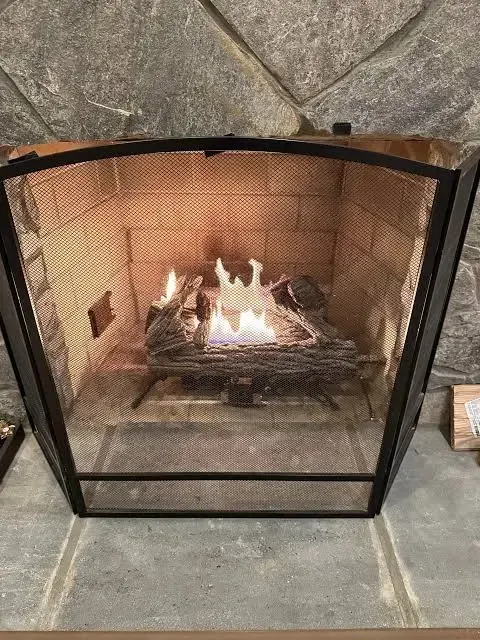
At the fireplace, while the furnace runs, air is coming down the flue instead of going up.
At the supply registers, once warm air starts blowing: the smell is in the air the furnace circulates, which points inside the furnace.
None of these is a diagnosis. They tell the person you call which end to start from.
A Replacement Furnace on a Flue Sized for the Old One
A masonry flue is sized to the exhaust it was built to carry. An older furnace sent a large volume of very hot exhaust up the chimney. A mid-efficiency replacement, the kind with a small fan that pushes exhaust into the vent, pulls more heat out of the gases first, so what reaches the chimney is cooler and carries less volume.
In the old flue, the exhaust meets a passage too wide and too cold to warm and fill, and it escapes at the joints of the vent connector or back out at the appliance. That is the smell near the furnace at burner start.
The mismatch runs the other way as well. A furnace, or a second appliance added to the same flue, can send more exhaust than a narrow or partly lined flue can carry, and the surplus backs up the same way.
Where the flue no longer fits what it connects to, the fix is to reline the passage to a size the current furnace was built to vent into.
A Blocked Flue Sends Exhaust Back Down
Nesting animals can build in a flue top with no cap, and the nest collects whatever blows in over it. Broken flue tile and loose mortar fall down the inside and collect at the base, where the connector enters, narrowing the opening the exhaust has to pass through.
Clean gas exhaust carries little odor, so a partly blocked flue can spill exhaust with nothing to smell. When a smoky smell does come from a blocked flue, it has a source of its own: a nest or dry leaves scorching in the path of the hot exhaust, or a flame burning poorly because its own exhaust cannot clear and the burner is breathing it back in.
The inspection for this cause looks for an open path from the connector to the top, including the cap, since a missing or damaged one is how animals and debris get in. Clearing it is sweep and removal work, and a cap keeps the flue from filling again. If what fell to the base was pieces of liner, though, the liner above has gaps, and the flue needs relining as well as clearing.
When the House Pulls Air down the Fireplace Flue
A chimney moves air upward only while the house is not pulling against it. While the furnace blower runs, leaks in the return ductwork, a return that draws from the basement where the furnace sits, or closed interior doors with no return path can leave parts of the house at lower pressure than the outdoors. Exhaust fans and a clothes dryer running at the same time add to the pull. A house short of air draws it back through any opening it can find, and an idle fireplace flue is a tall, open passage to the outdoors, with nothing in the way but the damper.
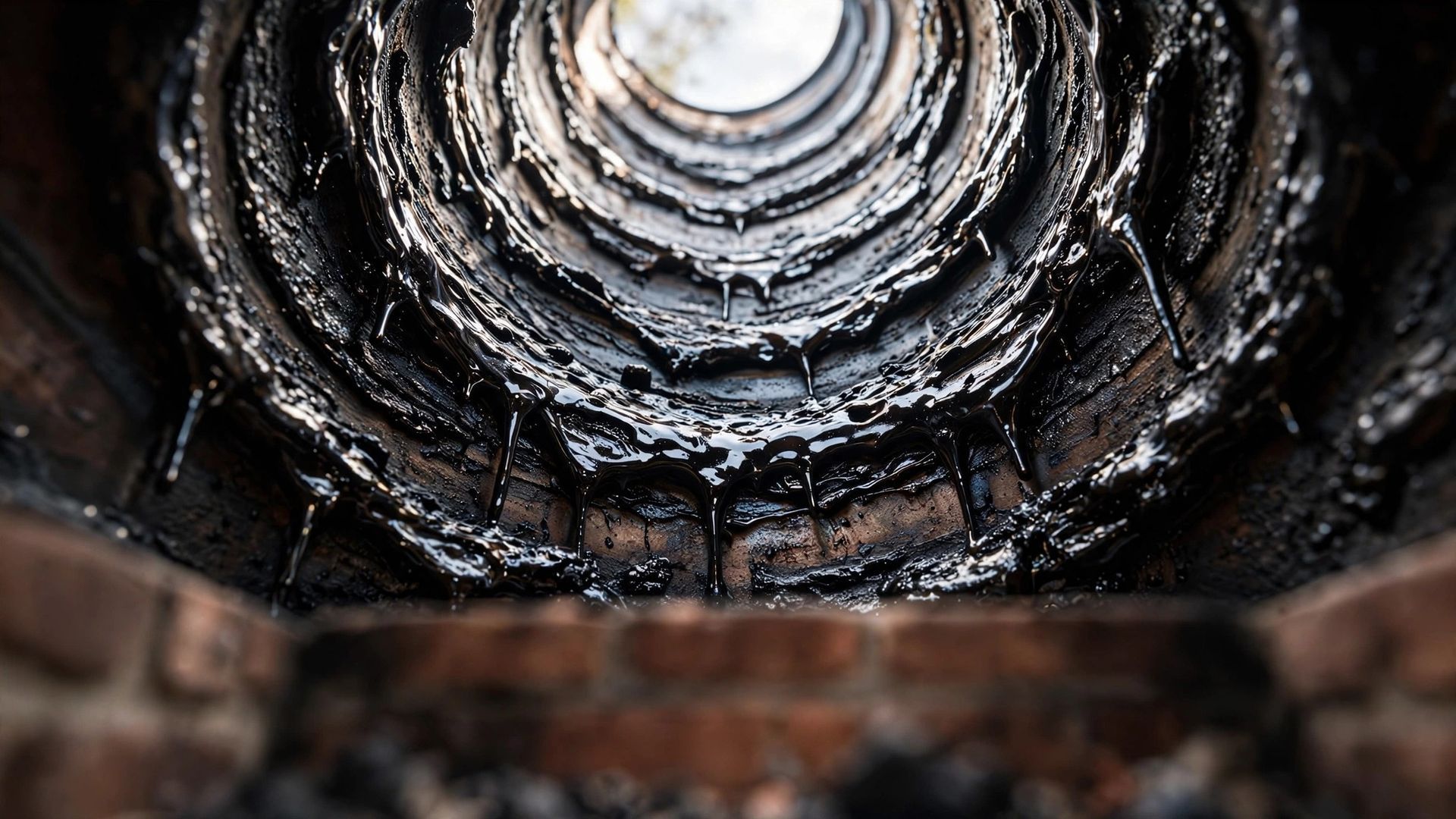
Air coming down that flue carries whatever lines it. Soot and creosote on the walls give off a smoky smell even when no fire is lit, per the furnace's schedule. That version is unpleasant, but it is only odor.
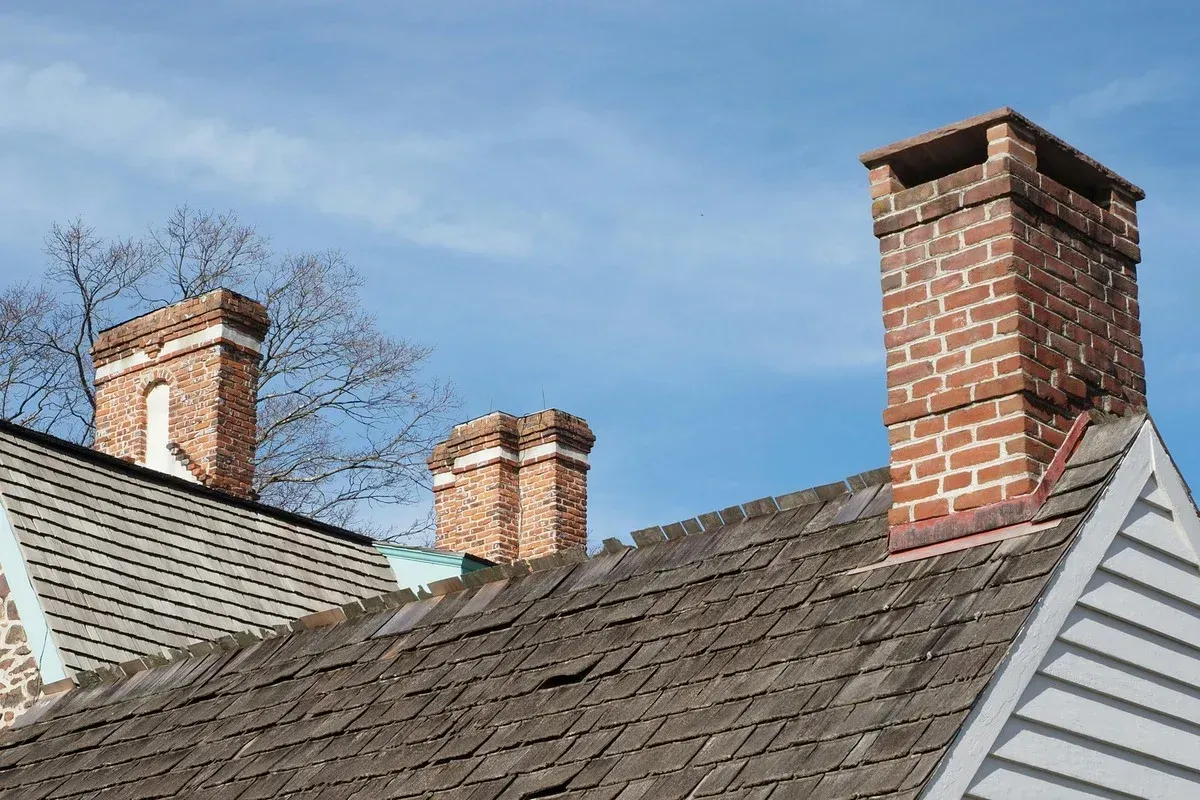
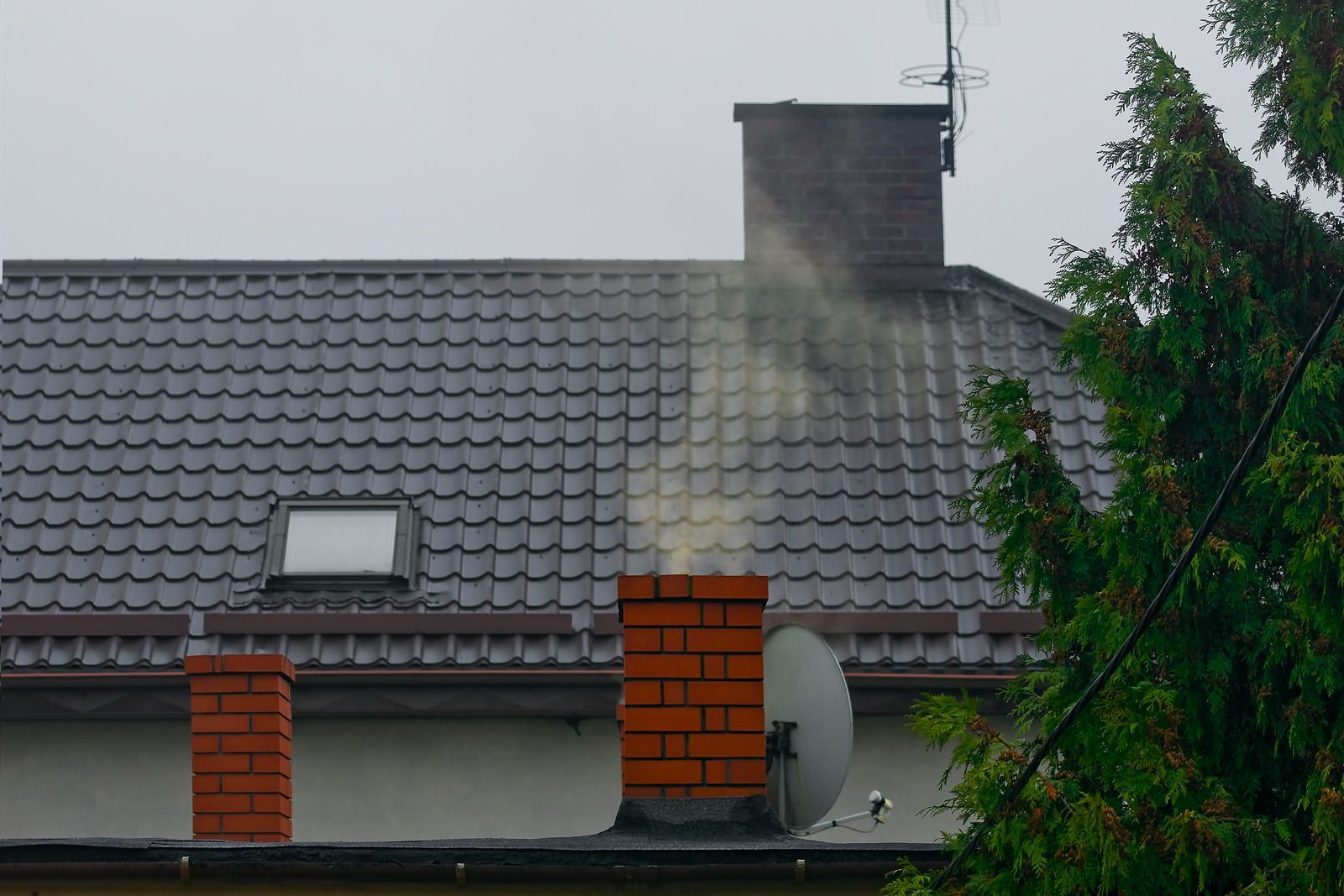
The version beside it is not. A chimney can hold a fireplace flue and a furnace flue side by side under the same crown. Furnace exhaust leaves the top of its flue and drifts across the chimney top; if the fireplace flue next to it is pulling air down at that moment, it carries the exhaust into the living room. The same thing happens lower down when the masonry wall between the two flues has cracked or lost mortar, and exhaust crosses from one flue to the other where nobody can see it.
The pressure can run the other way. In some houses, the blower pushes the fireplace room above outdoor pressure, air goes up the fireplace flue, and no smell comes down at all. Which way a house faces depends on where its supply and return registers are located and which doors are shut.
The chimney side of this cause sits inside the masonry: the wall between the flues, how the flue tops sit relative to each other, and whether the damper closes. Whether the fireplace flue maintains its draft with the house working against it is a measurement a technician takes on-site. The ductwork and returns belong to the HVAC contractor.
Burner and Heat Exchanger Problems Belong to Your HVAC Contractor
Some smoke smells start inside the furnace. A burner that is out of adjustment, dirty, or short on combustion air burns incompletely, and incomplete combustion produces soot and carbon monoxide. An oil burner that fails to light cleanly can let fuel vapor build up and then ignite all at once, a puffback that pushes soot through the furnace, into the ducts, and across the rooms. A hot-plastic or electrical burning smell is a different fault again, in the blower motor or wiring, and it belongs to the same contractor.
The heat exchanger is the metal wall that keeps the flame and its exhaust on one side and the air you breathe on the other. When it cracks or rusts through, combustion gases slip into the airstream, and the blower carries them to every supply register. That is why a smell from the registers points inside the furnace rather than up the chimney.
The chimney visit settles one half. A technician can confirm whether the venting path is sound and open, and can note fresh soot in a gas flue or connector, which a clean-burning gas flame does not lay down and which points back to the burner. The burner, heat exchanger, and controls are the HVAC contractor's work. When the smell could have either source, both trades need to see it before the furnace runs again: a sound chimney does not clear a cracked heat exchanger, and a new heat exchanger does not clear a blocked flue.
Who Clears the Furnace to Run Again
Responders on a carbon monoxide call carry meters that read the air in the room by room, and those readings determine when the house can be occupied again. Where a gas appliance is found unsafe, the fire department or the gas utility can shut off its gas and tag it, and it stays off until a qualified contractor repairs it and it is cleared to run.
Neither of them fixes the cause. Either repair visit can come first; what cannot happen is the furnace running on one answer when the cause could be the other.
Frequently Asked Questions
Is a burning smell normal the first time the heat comes on?
It can be. Dust settles on the heat exchanger and burners while the furnace sits idle, and the first firings of the season burn it off, sending a dusty, scorched smell out of the registers that clears once the dust is gone. A smoky smell that returns each time the furnace runs, or any smell that accompanies symptoms, is not dust burning off.
Where should carbon monoxide alarms be installed?
A carbon monoxide alarm belongs on every level of the house, including the basement, and outside each separate sleeping area, so it can wake the people sleeping there. Alarms wear out, too. Each carries a replacement date or an end-of-life signal from its maker, and a unit that keeps chirping after a fresh battery may be reporting that its sensor has expired.
Will a smoke alarm pick up carbon monoxide?
Not unless it is a combination unit. A smoke alarm detects particles in the air, and a carbon monoxide alarm detects the gas itself, so one does not stand in for the other. Combination alarms carry both sensors and say so on the label. A unit whose label names smoke alone will stay silent through a carbon monoxide leak.
What if the smell is rotten eggs instead of smoke?
That points to fuel gas rather than exhaust. Natural gas and propane have no smell of their own, so a sulfur-smelling odorant is added before the fuel reaches your house. Leave without flipping light switches, using a phone indoors, or starting a car in an attached garage, since any spark can ignite it, and call the gas utility or 911 once you are well away from the building.
Can closing the fireplace damper stop the smell?
It can cut the air coming down, but it is not a fix, and in one setup it is unsafe. Where the installation instructions for a set of vented gas logs call for the damper to be left fixed open, it stays open so the logs' exhaust always has a way out; closing it would send that exhaust into the room.
What should I tell the responders or the technician?
Say whether anyone felt ill and whether it eased once they were outside and came back home, a pattern that points to the house rather than a passing bug. If your carbon monoxide alarm has a digital display, mention it: some models retain a peak-level memory that shows the highest reading since the last reset, even if the alarm never sounded.
Trace a smoke smell that follows the furnace to its flue — a chimney inspection checks the furnace flue, the cap and the fireplace flue beside it for the path sending exhaust back indoors. Perfect Chimney Cleaning serves Greensboro, High Point, Winston-Salem. Call (336) 604-6711.
About the author
Yosef Hefetz founded Perfect Chimney Cleaning in 2021 after twenty-one years in property management and real estate. Our inspections and repairs are led by CSIA-Certified Chimney Sweep Hannah Kendrick (#12553). Read more about our team.
Recent Posts